
The following is a list of vegetables you can plant in July in Sydney, a temperate zone, (just click on the link for the growing guide for each vegetable)
Plant of the Month – The delicate Leucojum aestivum – (Summer Snowflake)

(All the images on this page can be viewed in more detail by clicking on them.)
Leucojum aestivum is one of two species in the family Amaryllidaceae. The other species in the genus Luecojum is Leucojum vernum. It should not be mistaken for the Snowdrop or (Galanthus nivalis).
Leucojum aestivum is native to most of Europe, with the exception of Scandinavia. and Russia. It is also native to Turkey, the Caucasus, and Iran.
It is naturalized in Denmark, in South Australia, New South Wales, Nova Scotia, and much of the eastern United States.
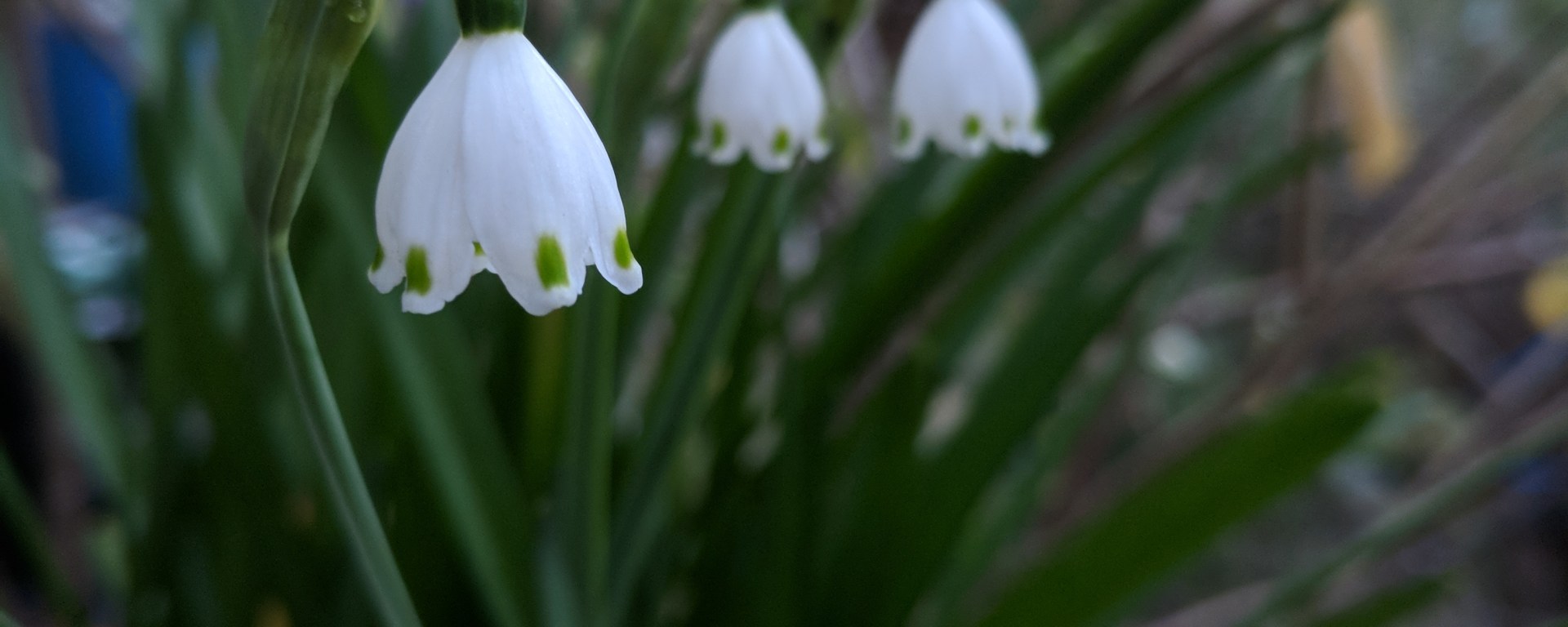
The delicate Leucojum aestivum, known as Summer Snowflake, is a hardy and easy to grow herbaceous perennial that grows from bulbs and has small pendulous, white bell-shaped flowers, which are marked with green at the tips of its petals.
Rather than Summer as the common name suggests, the flowers bloom in late winter to mid to late spring.
In Sydney the Snowflakes begin to appear in late May and bloom in June and July. The are the first of the flowering bulbs to appear in my garden.
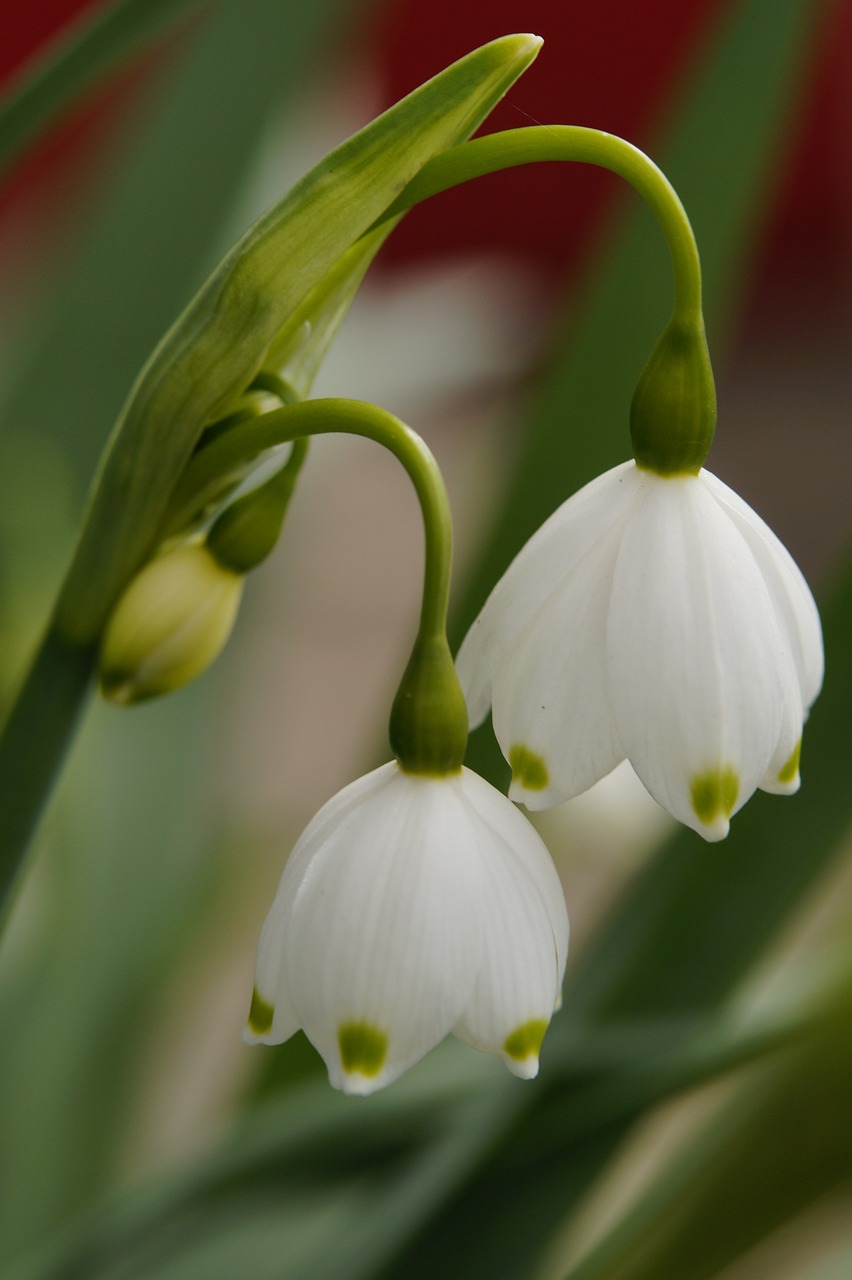
The beautiful and dainty flowers are lightly perfumed.
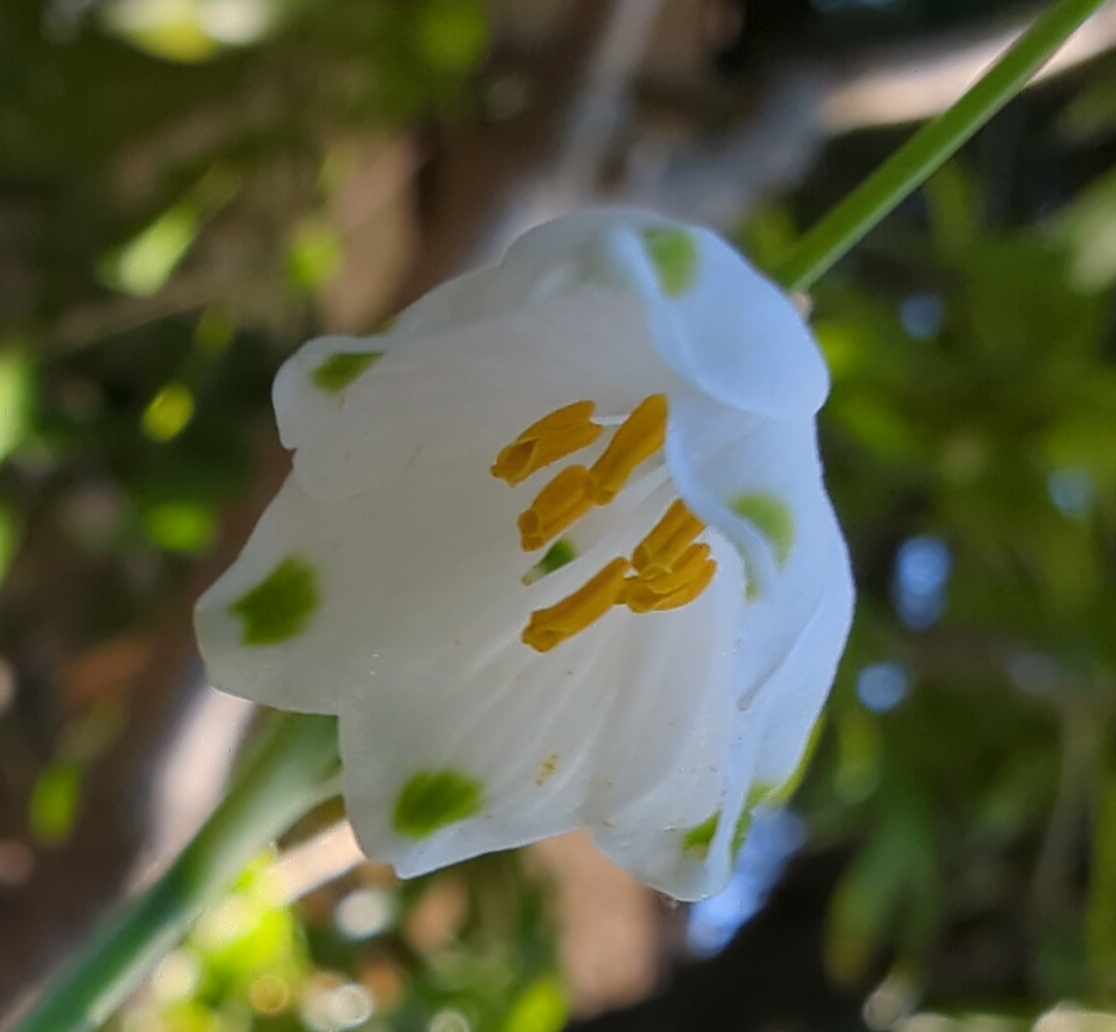
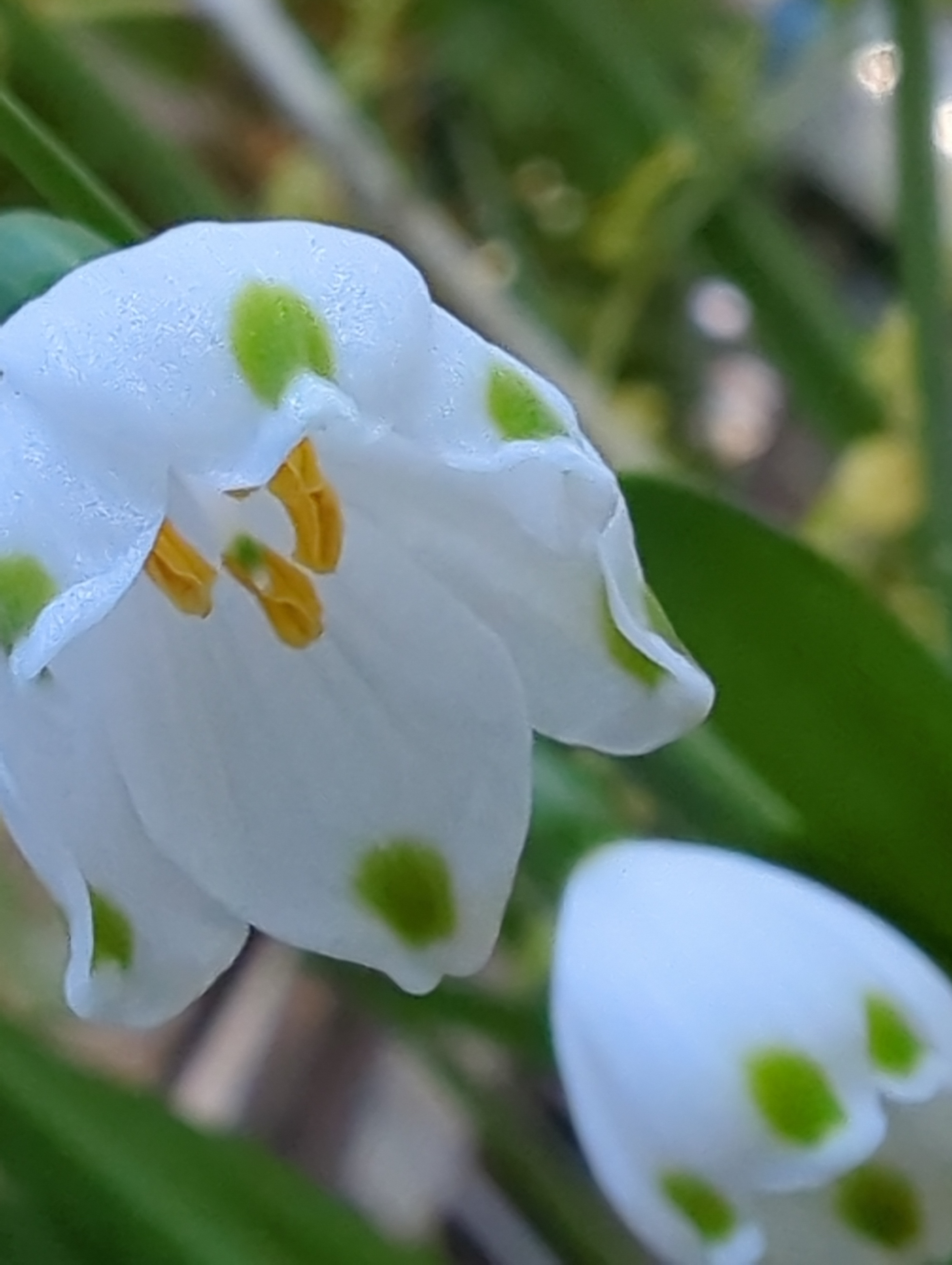
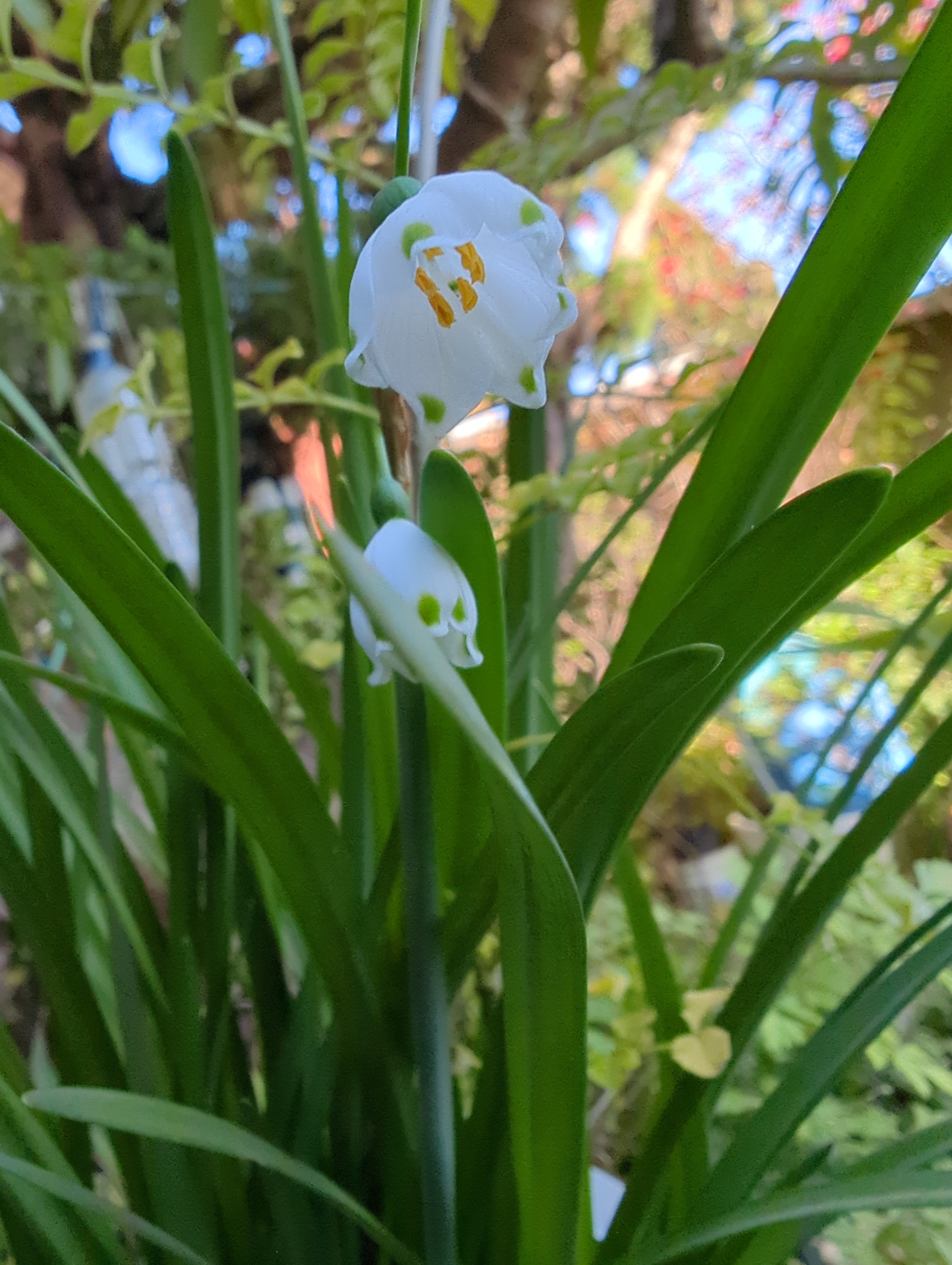
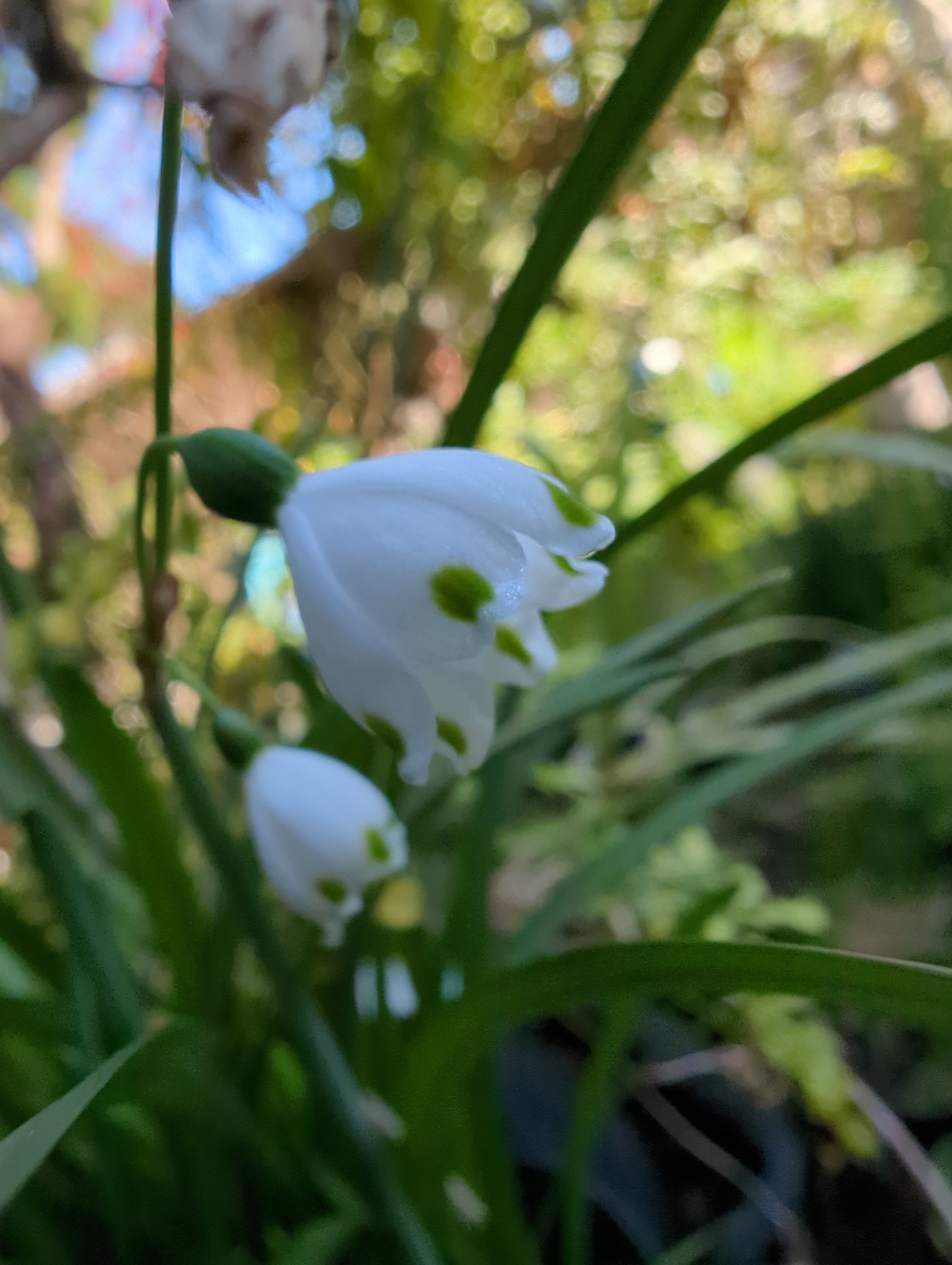
Each scape or stem is sturdy and hollow and rises above the leaves and is sheathed by the leaves at the base. It bears an inflorescence, or cluster of 2-5 nodding flowers on on 15-65 mm long arching stems. The flowers have 3 inner and 3 outer tepals (overlapping petals) each the same length, attached to the top of the ovary. Each tepal has bright green marks at the thickened apex.
The ovary is inferior, that is, the tepals, corolla tube and stamens (filaments plus anthers) and the style arise from above the ovary.
The Snowflake has 6 stamens and a style longer than the stamens, which narrows to a tiny stigma at the top.
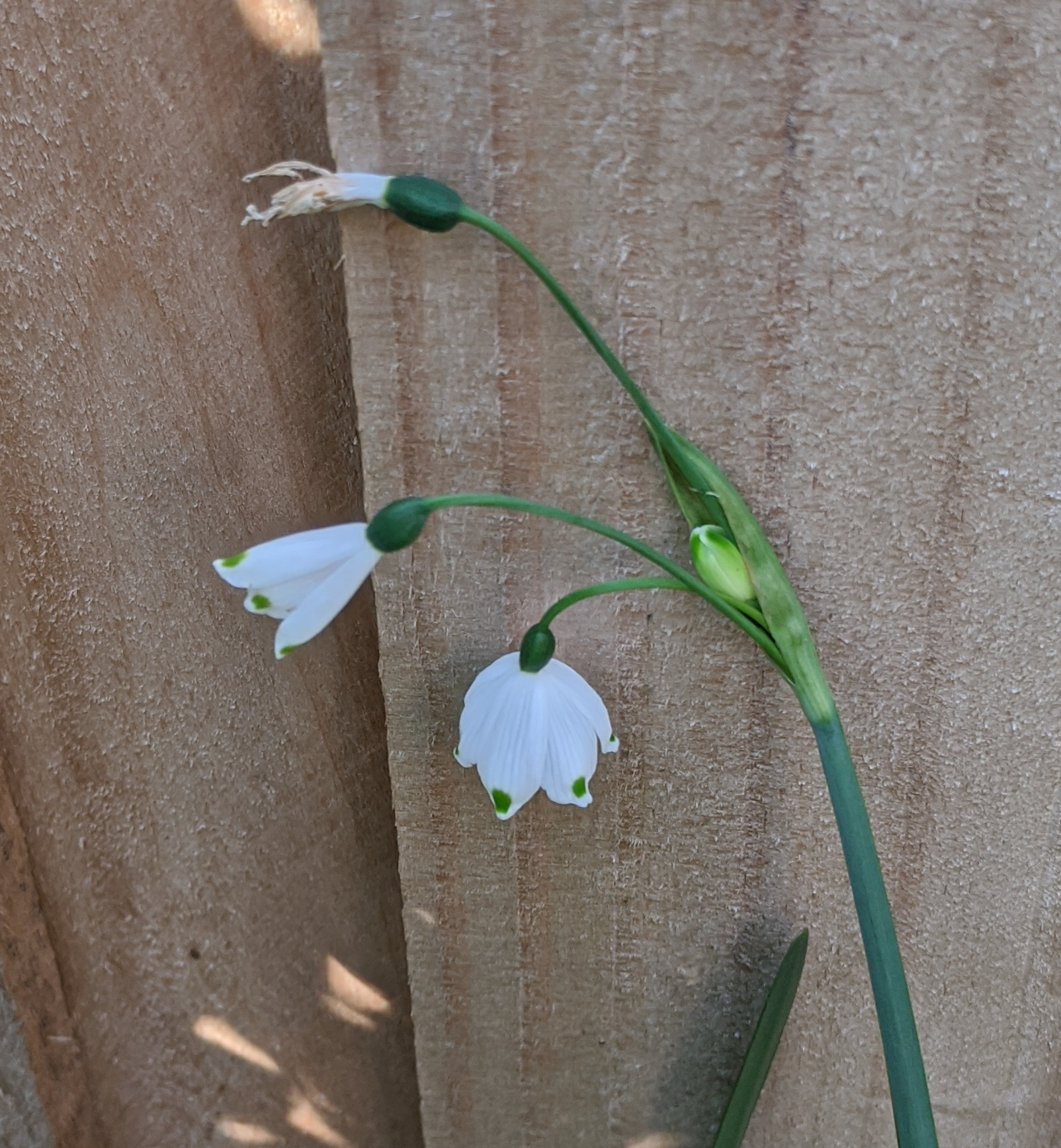
The image below shows the strong scape or stem, with an inflorescence of flowers at various stages. At the top is the 12 mm obovoid fruit capsule that is forming. Below it are 2 flowers, one just at opening, one at fully opened stage and a bud emerging. There may be other juvenile buds within the sheath.
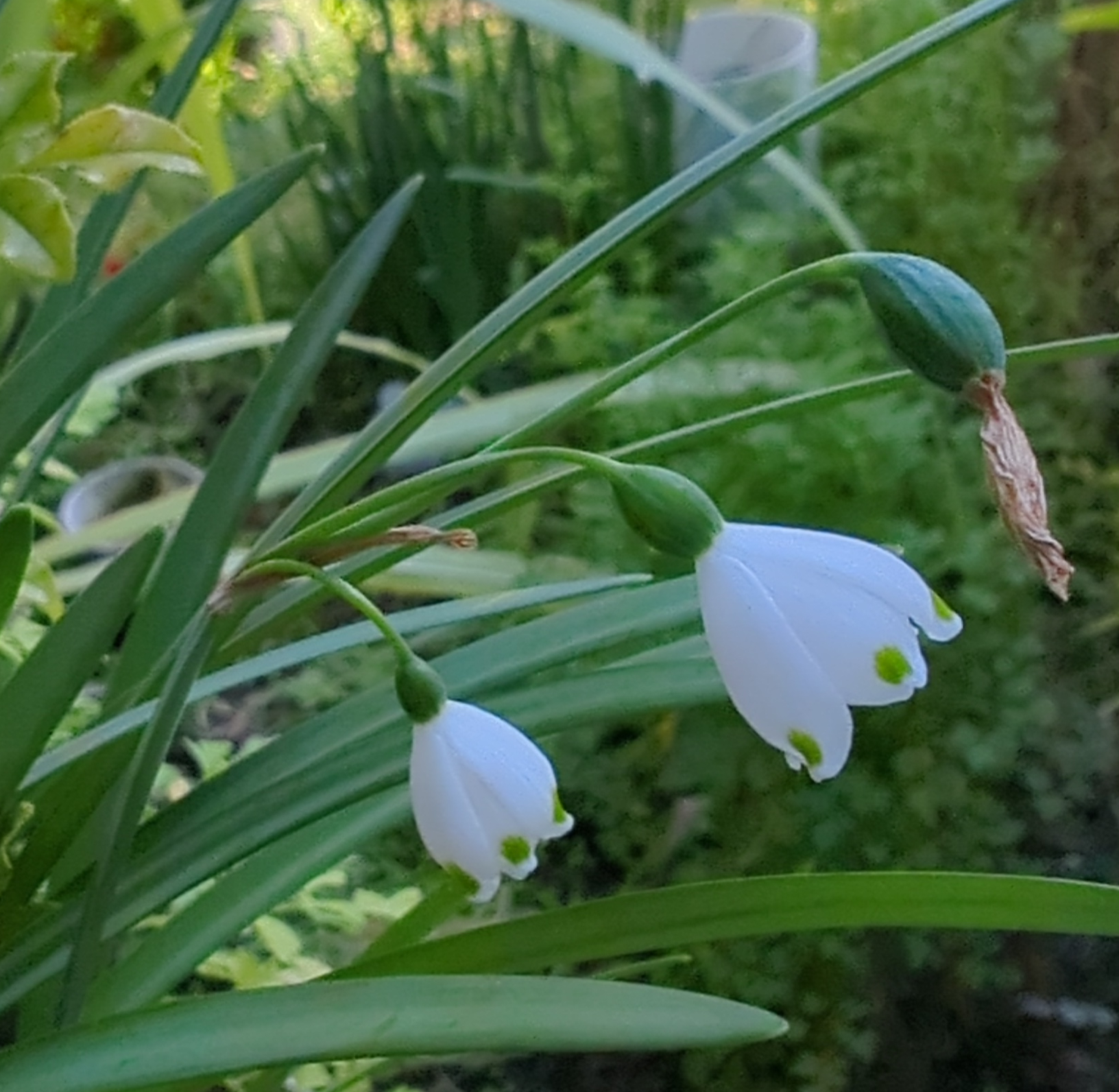
When the flower is spent, the seed pod develops. The white seeds are 7 mm long. The pod develops flotation chambers within it that allows the pod and along with the hollow stem to be carried down stream to new locations in wet areas like swamps during flooding.
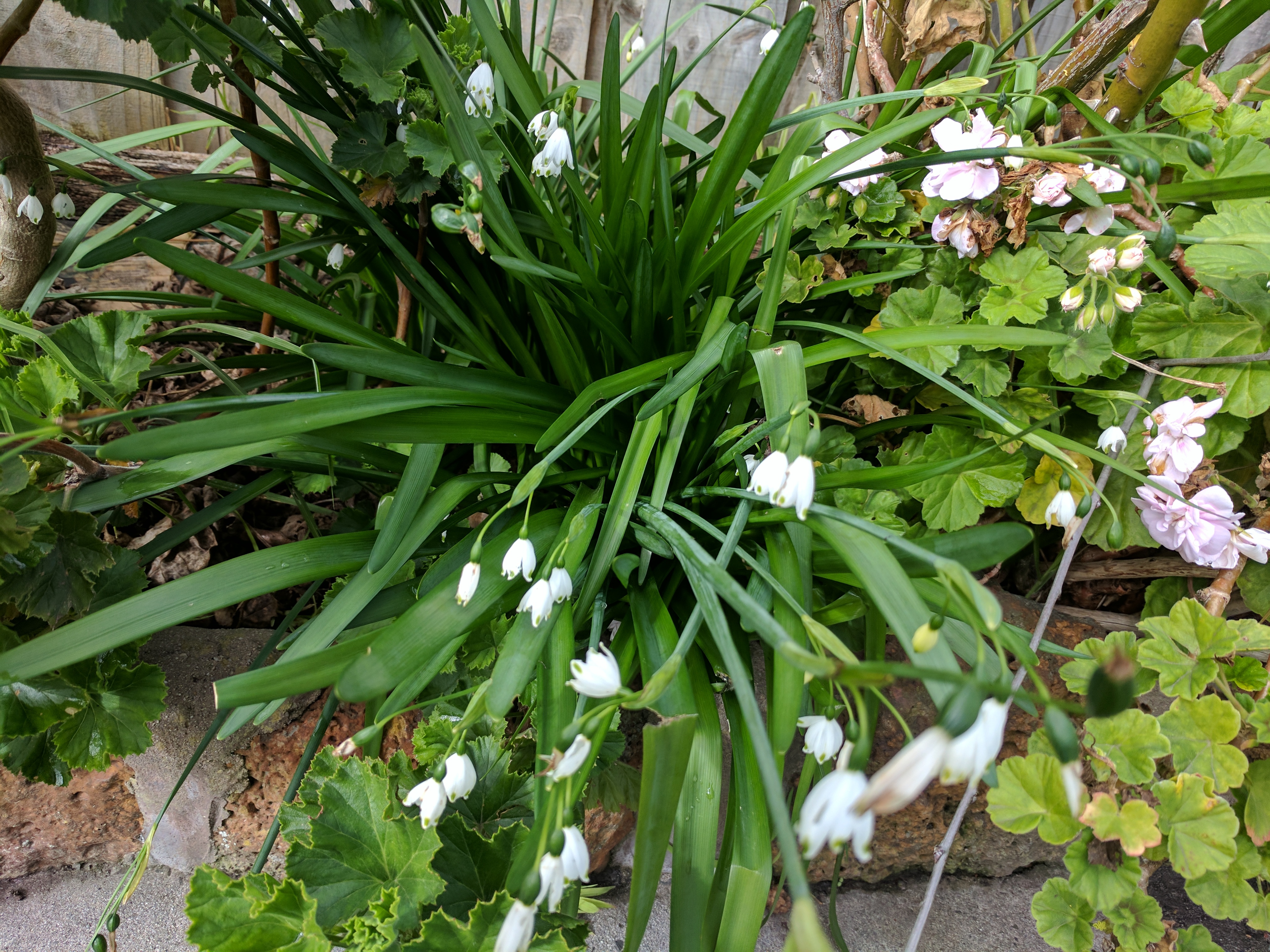
The long strap-like leaves have a rounded tip and are shiny green, narrow and linear . They form in a rosette arrangement growing in clumps to a height of between 35 and 60 cm tall.

The Snowflake’s leaves will last long after the flowers have faded and should be allowed to die down completely so that the plant can store all the nutrients necessary to help the plant grow again next year. This is important for the health of the bulbs so resist pruning them off too early.
The plant will form clumps over time as the bulbs multiply.
Growing site and soil:
In its natural habitat the Snowflake grows in damp places, in wet meadows and swamps and at the edges of woodland where the soil is moist. Bear this in mind when selecting the most appropriate site in your garden
Choose a site with full sun or part shade. The Snowflake will grow even in deep shade with only 2 hours sunlight but will flower best in sunny to dappled positions.
Snowflakes grow well in borders and rock gardens, under the canopy of trees and in massed plantings in more open parts of the garden.
The soil should be rich, of medium moisture and well drained. If your site does not have this improve the soil by digging in compost and aged cow manure . The Snowflake grows well on clay soils and can grow in acidic, neutral or alkaline soils.
This plant is also tolerant of and thrives in clay unlike many other plants.
Planting the Bulbs:
In Autumn, and after having prepared the site and allowed it to rest for 6 weeks, you will be ready to plant the bulbs.
Set them down 8-10 cm with the pointed tip upwards, into the soil and space 2 -5 cm apart. They are best planted in groups of 10-15 bulbs.
Water in well at planting and do not over water in the beginning just keeping the soil moist.
Water:
The Snowflake tolerates drought during dormancy, but needs moisture during its growth period when the soil should be moist at all times.
Water well when there is no local rainfall and keep watering until the plant dies down for its dormant period.
They will need an inch of water a week except during period of rain.
Mulching around the plants conserves moisture and prevents evaporation.
Propagation:
Snowflakes can self seed, aside from increasing by new bulb formation below the ground.
Propagate by dividing the bulbs in the dormant period.
In general the Snowflakes can be left in the ground where they will spread naturally (but not invasively) as the bulbs multiply and there is usually no need for regular division. In fact they do not like to be disturbed so can continue on for many years with good growing conditions.
When growing in pots, they may be potted on to a larger pot as the plants become overcrowded and to provide fresh growing medium.
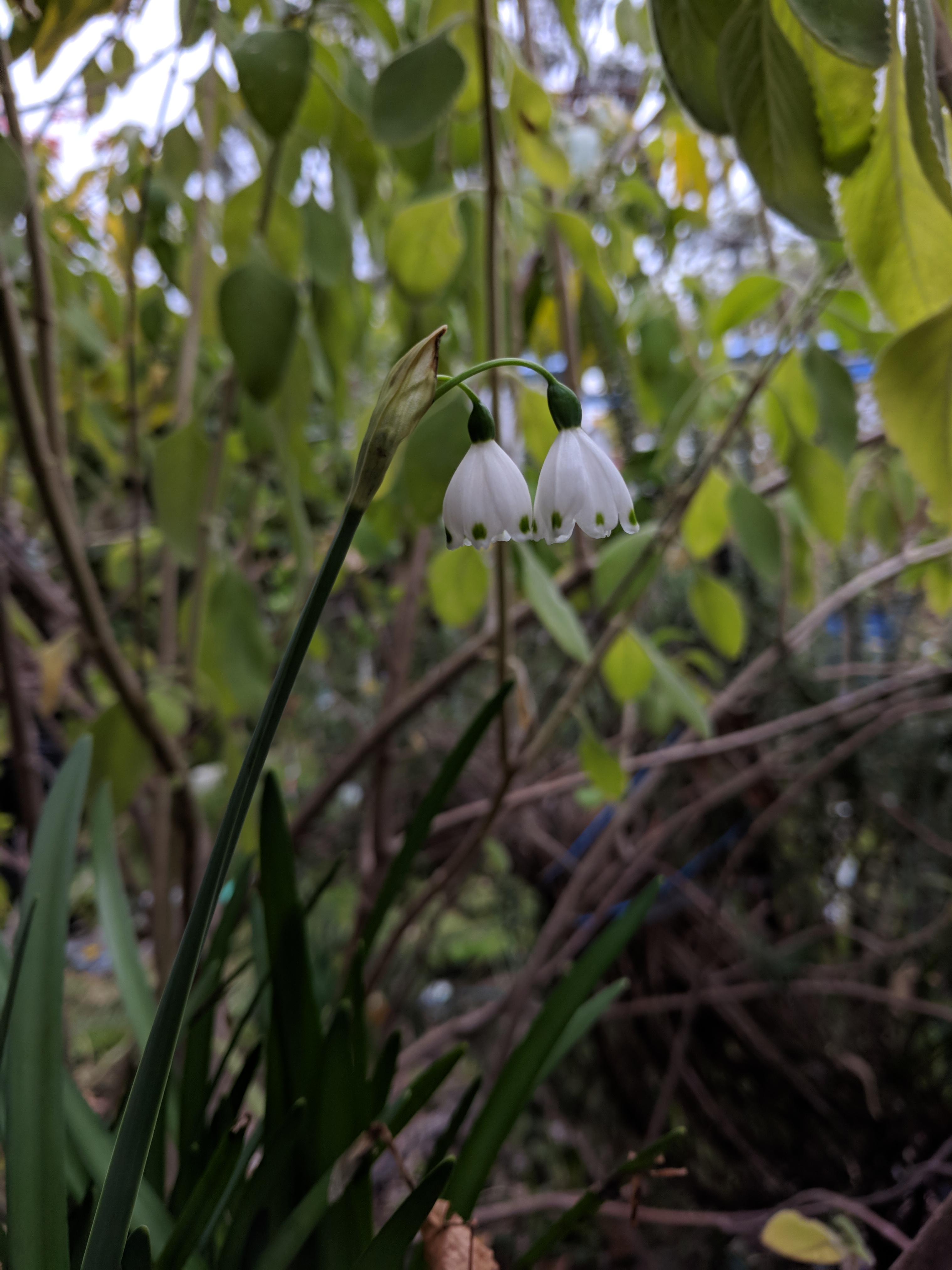
Small but delicately beautiful and flowering when other bulbous plants are still dormant, the delicate and lightly scented Snowflake with its green spotted, white bells that dance in the breeze is a gem and the harbinger of Springtime to come.
In Sydney’s late Autumn, look forward to seeing the leaves pushing upwards and even though mine are growing in a pot , they have survived the extreme Sydney summers and droughts and continue to bring me joy.
 The Grantham Gardener