

Today is the first day of summer and this is the first planting guide of the season.
The following is a list of vegetables and herbs you can plant in December in Sydney, a temperate zone. Just click on the name for the growing guide for each vegetable or herb:
- Basil
- Beans (dwarf and climbing)
- Beetroot
- Cape Gooseberry
- Capsicum seedlings
- Carrot
- Celery seedlings
- Chilli
- Choko
- Cucumber
- Eggplant seedlings
- Kohlrabi
- Leeks seedlings
- Lettuce
- Luffa seedlings
- Marrow
- Mustard greens
- Okra seedlings
- Pumpkin
- Radish
- Rockmelon seedlings
- Silverbeet
- Squash
- Sunflower
- Sweet corn
- Tomato seedlings
- Turnip
- Watermelon seedlings
- Zucchini seedlings
Plant of the Month – The Amazing Flowers of the Carrot

The humble carrot has so much to offer. Eaten raw and crunchy as a tuber, or in salads, glazed and baked, and as sweet part of so many dishes from soups, to casseroles, to sauces and cakes, it is a versatile and delightful vegetable.
Little known to many though, is what a spectacular flowering plant it can also be when allowed to grow to seed over the two years of its life as a biennial.
In Sydney carrots flower in late November and December.
The carrot (Daucus carota subsp. sativus), is a biennial plant in the umbellifer family, Apiaceae which includes about 2,500 species such as dill, caraway, cumin, chervil, coriander, fennel, anise, parsley, parsnip, and celery and is related to the plant Queen Anne’s Lace. It is a root vegetable, typically orange in color, though heirloom varieties include purple, black, red, white, and yellow varieties.
They are all domesticated forms of the wild carrot, Daucus carota, native to Europe and Southwestern Asia.
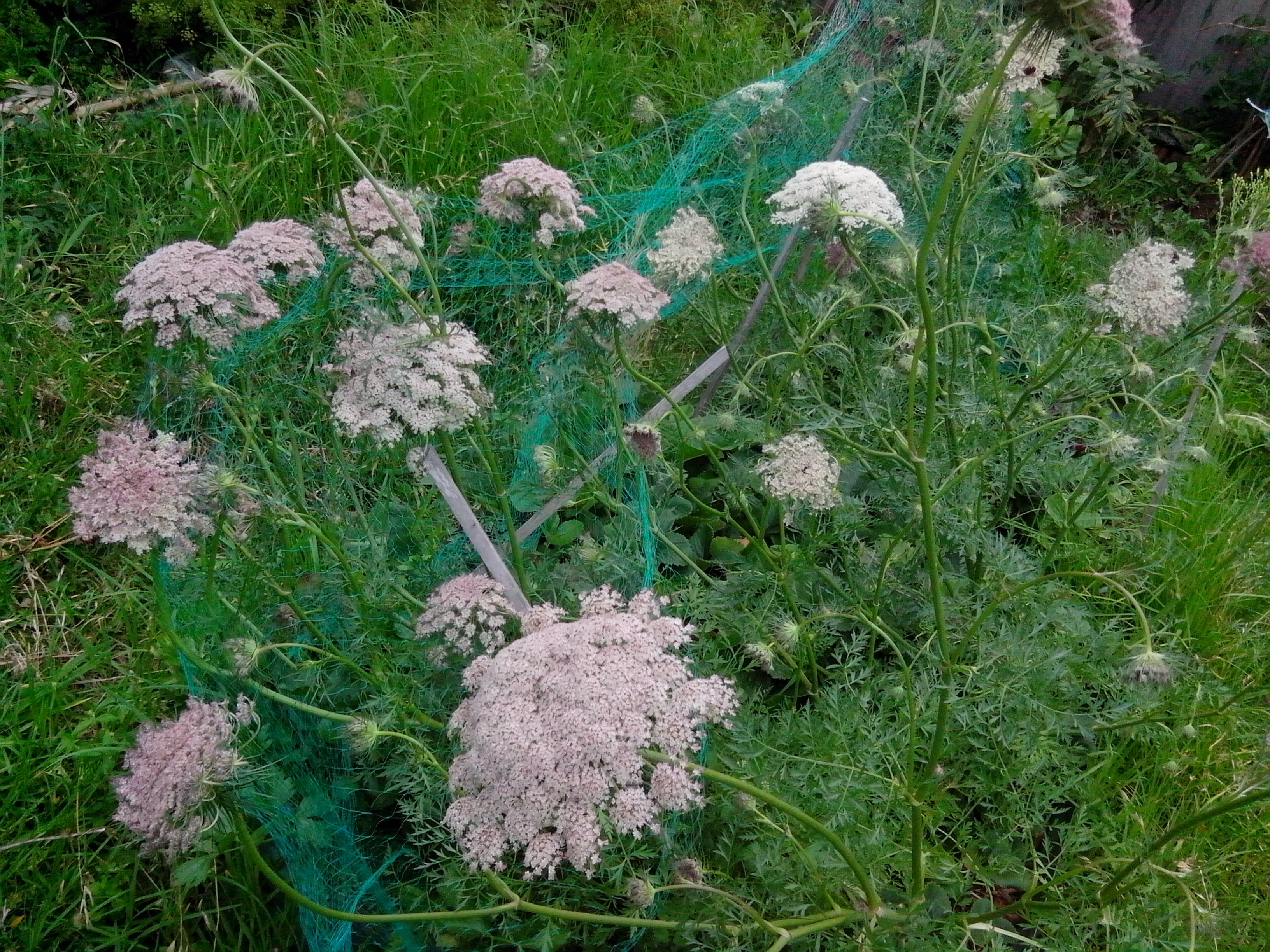
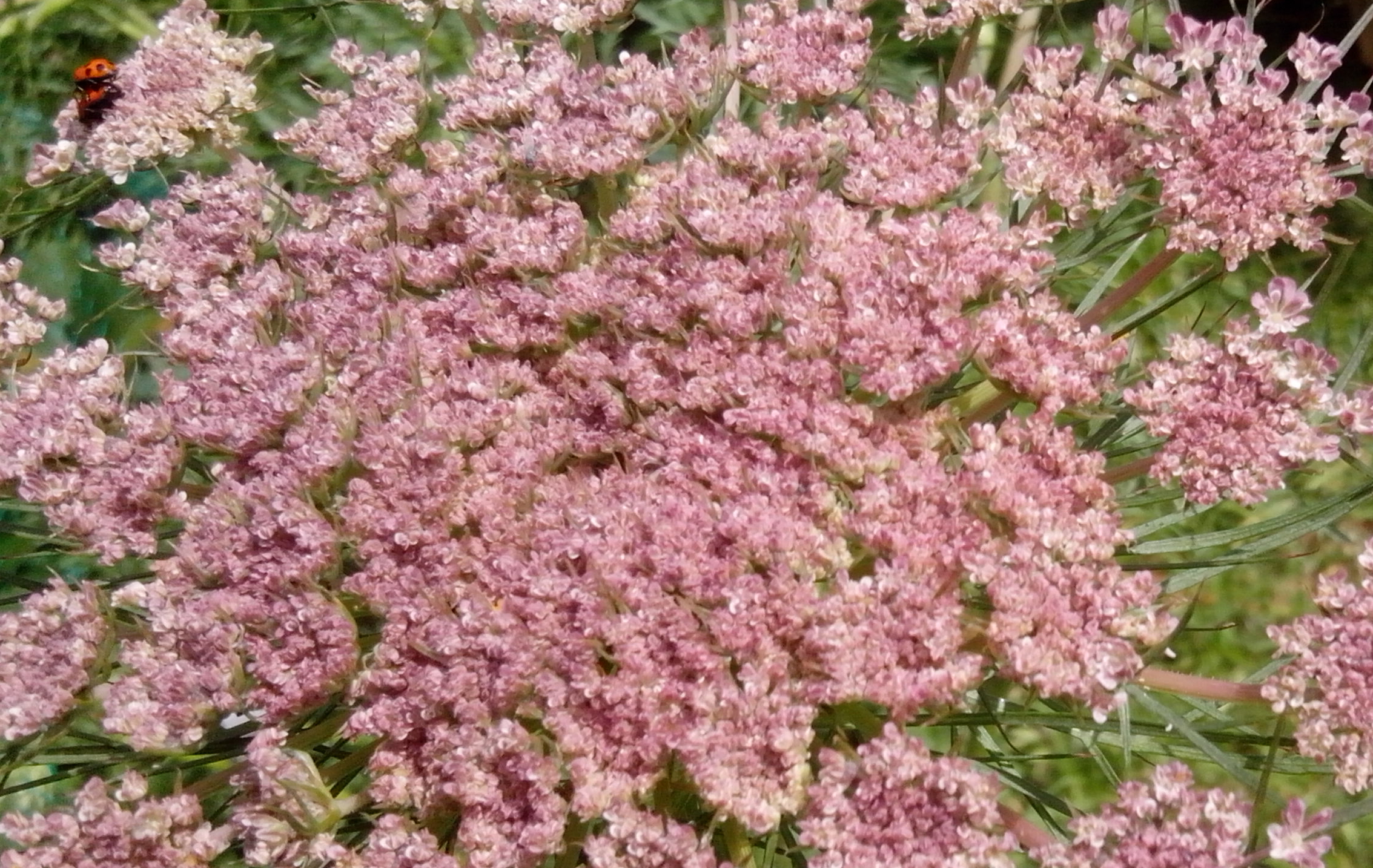
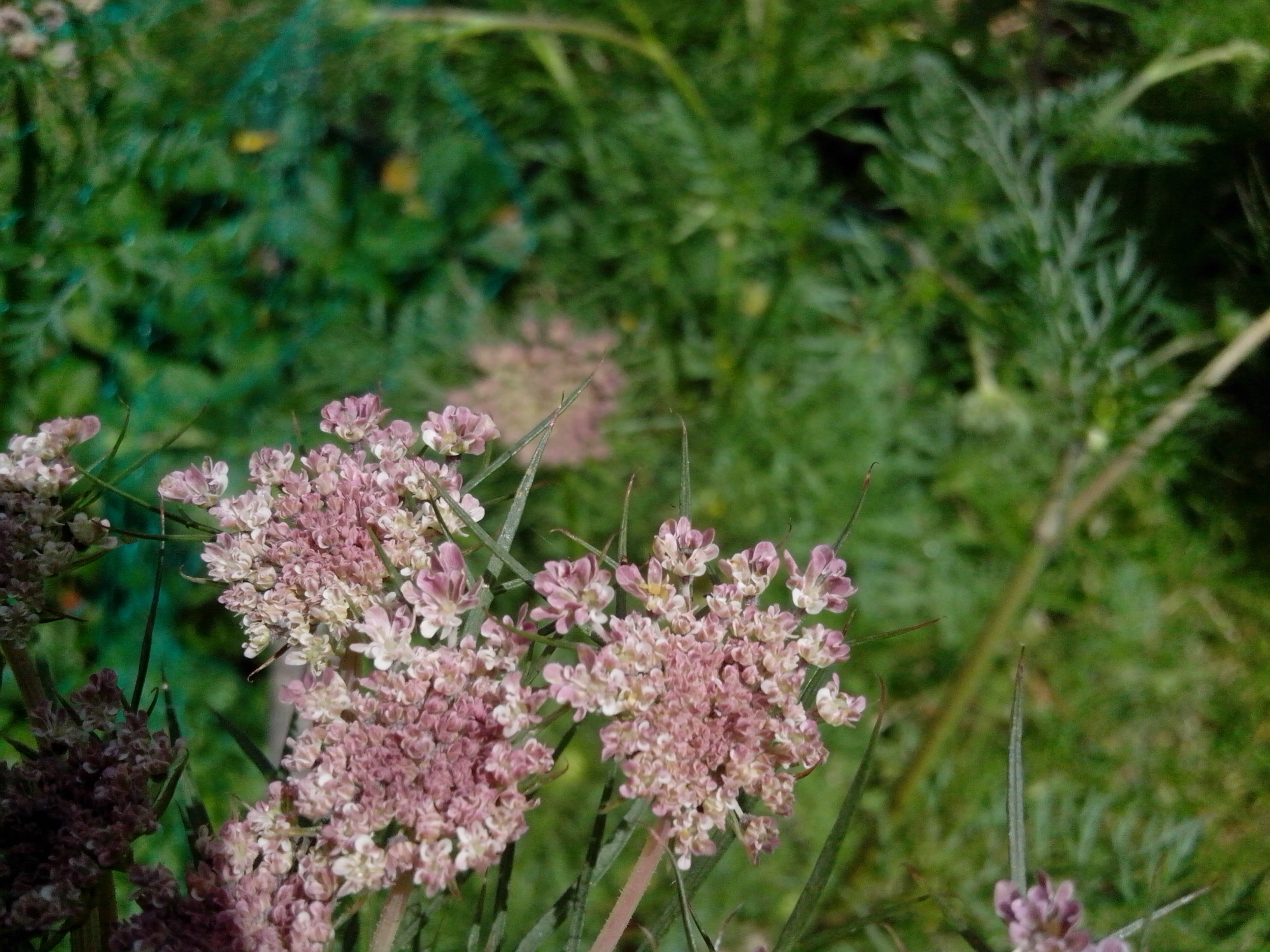
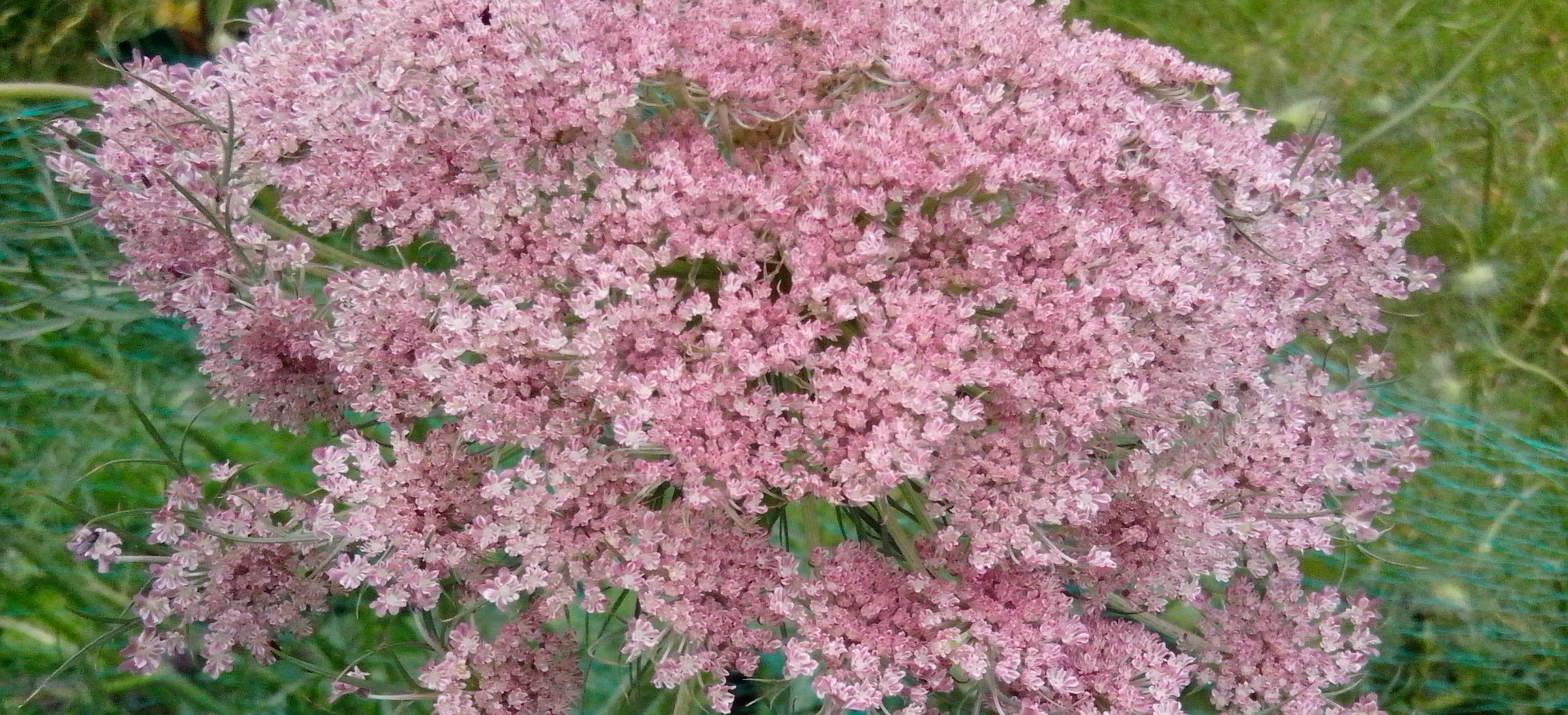
The beautiful flowers were a surprise to me after having left some heirloom coloured carrots in the ground for two years, a really delightful surprise and I would like to share this with you.
Click on the images in this post for closer detail of the flowers.

Details on how to grow carrots can be found here.
This post is dedicated to the second part of the carrot’s development, the production of flowers and then seeds. I want to share with you some beautiful images of carrot flowers grown from heirloom varieties of coloured carrots. These develop into a flowers in a multitude of shades other than the usual white flowers of the traditional orange carrot. The seeds from heirloom varieties will grow true to type unlike the commercially available F1 hybrid seeds so allowing your heirloom carrots to flower can then be a source of seeds for future planting.
The delicate beauty of the flowers make it worth keeping some of your carrots growing into their second year just to add their beautiful umbelliferous flowers to enhance your flower arrangements, to collect their seeds or just to watch how attractive they are to pollinators of all kinds.
In temperate areas you can leave your carrots in the ground as the plant dies down, mulching them heavily. The foliage will die back in autumn, but will then re-sprout and start to flower in the spring. They will send up a tall stem, which produces flowers, and eventually seeds.

The carrot plant grows to a height of 30–120 cm high with branched, ridged stems arising from thick 5–30 cm long tap roots that range in colour from white, yellow, orange, light purple, or deep red to deep violet and black. In shape they vary from short and stumpy to tapering.
Its fern-like leaves are dissected and pinnate, with segments 0.5–3 cm long. The clusters of carrot flowers are carried on flat umbels.

The cluster of flowers is a compound umbel, and each umbel contains several smaller umbels (umbellets). The first umbel occurs at the end of the main floral stem.
Smaller secondary umbels grow from the main branch, and these further branch into third, fourth, and even later-flowering umbels.
The large, main umbel can contain up to 50 umbellets, each of which may have as many as 50 flowers; later developing umbels have fewer flowers.
The outer flowers on the umbels are usually the largest. All the flowers have five petals and stamens, an inferior ovary that has two cells and one ovule per cell.The flowers have two styles.
The arrangement of flowers is centripetal, that is, the oldest flowers are near the edge and the youngest flowers are in the centre. Flowers first open at the outer edge of the primary umbel, followed about a week later on the secondary umbels, and then in following weeks in higher-order umbels.
The flowering period of individual umbels is 7 to 10 days, so a plant can be in the process of flowering for 30–50 days.


The fruits that develop after fertilization are oblong, with bristly hairs along ribs, 2–4 mm long. The seeds from these fruits are very small with about 2000 seeds per teaspoon.

When the seed head forms the umbel closes into a birds-nest-shape.
The carrot has an unusual method for seed dispersal. The stalks on the umbels are hygroscopic, that is, their movements are driven by changes in humidity. When environmantel conditions are dry and suitable for seed dispersal they bend outward, exposing the fruits to wind and animals; when conditions are wet, they bend inwards, forming a bird’s nest structure, which protects the seeds.

If you want to save seeds select the fruits from the flower umbels that opened first for the best quality seed.
I hope that I might have encouraged you to leave a few carrot plants in your vegetable garden to complete the full cycle of development. You will be astounded at their beauty. Do plant some heirloom coloured varieties whose flowers will also be of different colours.
Below are a few more images of the carrot in flower .

An amazing resource on everything you ever wanted to know about carrots can be found at this link. The World Carrot Museum includes details about the history, the wild carrot today, nutrition, cultivation, recipes, trivia and much more. There is some fascinating information for you to read.
As this Plant of the Month is a vegetable, here is a recipe using carrots for your culinary pleasure. Its Jackie’s Spicy Carrot and Celery soup, a delicious carrot soup with a fragrant kick of spices . Click on this link for the recipe.

 The Grantham Gardener