
The following is a list of vegetables and herbs that you can plant in January in Sydney, a temperate zone. Just click on the name for the growing guide for each vegetable or herb:
- Amaranth
- Beans (dwarf and climbing)
- Beetroot
- Carrot
- Chives
- Cucumber
- Eggplant seedlings
- Kohlrabi
- Lettuce
- Marrow
- Mustard Greens
- Okra seedlings
- Parsley
- Radish
- Rosella
- Silverbeet
- Sunflower
- Sweet corn
- Turnip
- Zucchini
Plant of the Month – Backhousia Citriodora (Lemon Myrtle)
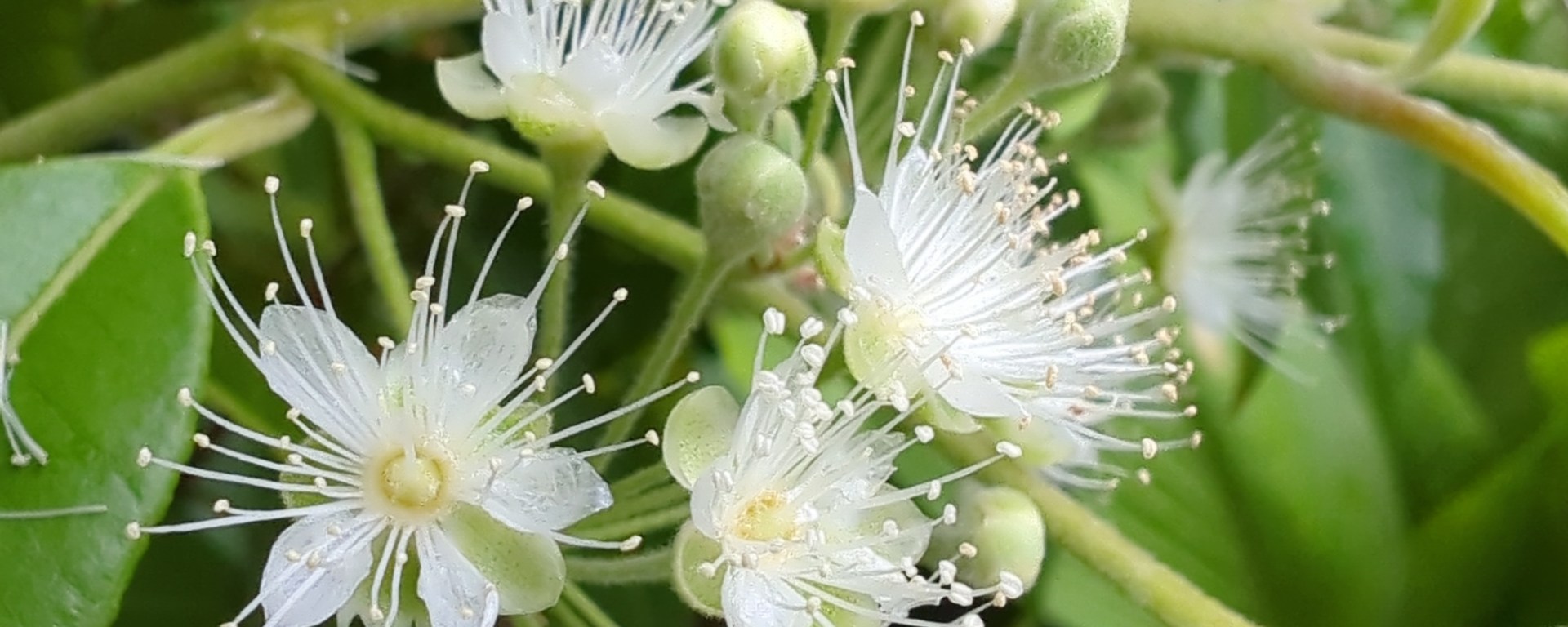
Backhousia Citriodora , or the Lemon Myrtle, is a compact, evergreen tree endemic to the subtropical rainforests of central and south-eastern Queensland, Australia.
The lemon myrtle can reach 6 m in height, but is often smaller.
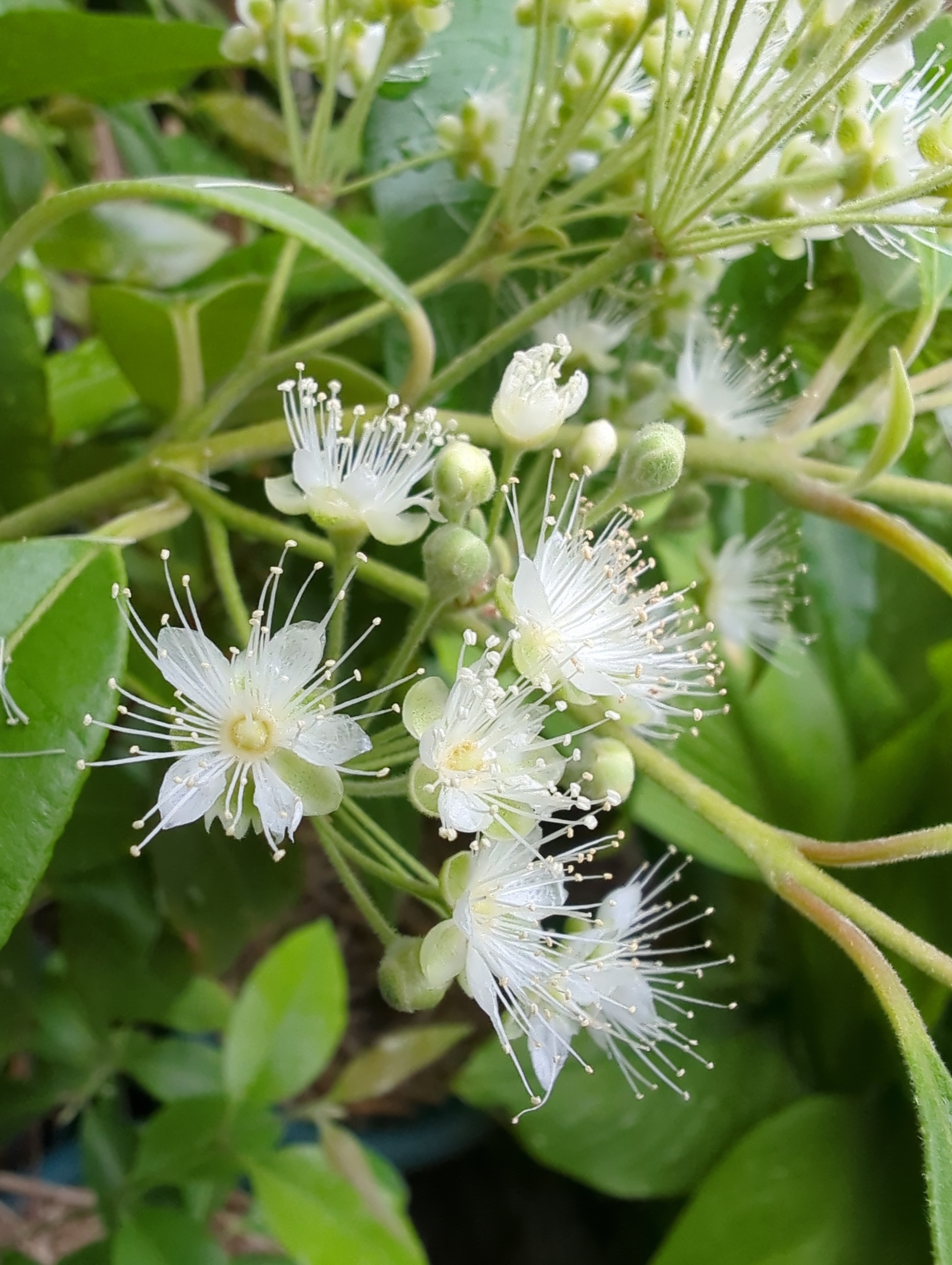
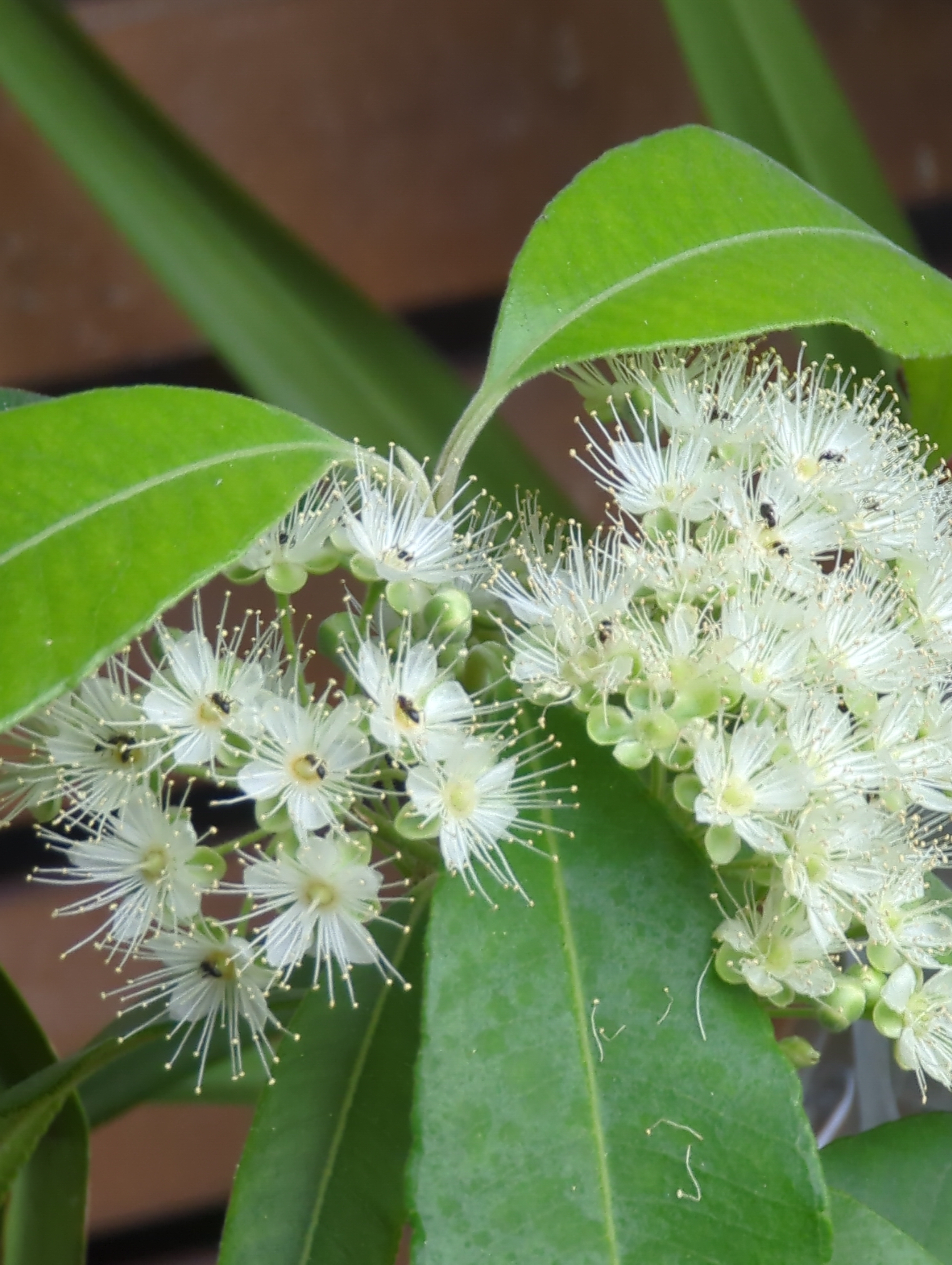
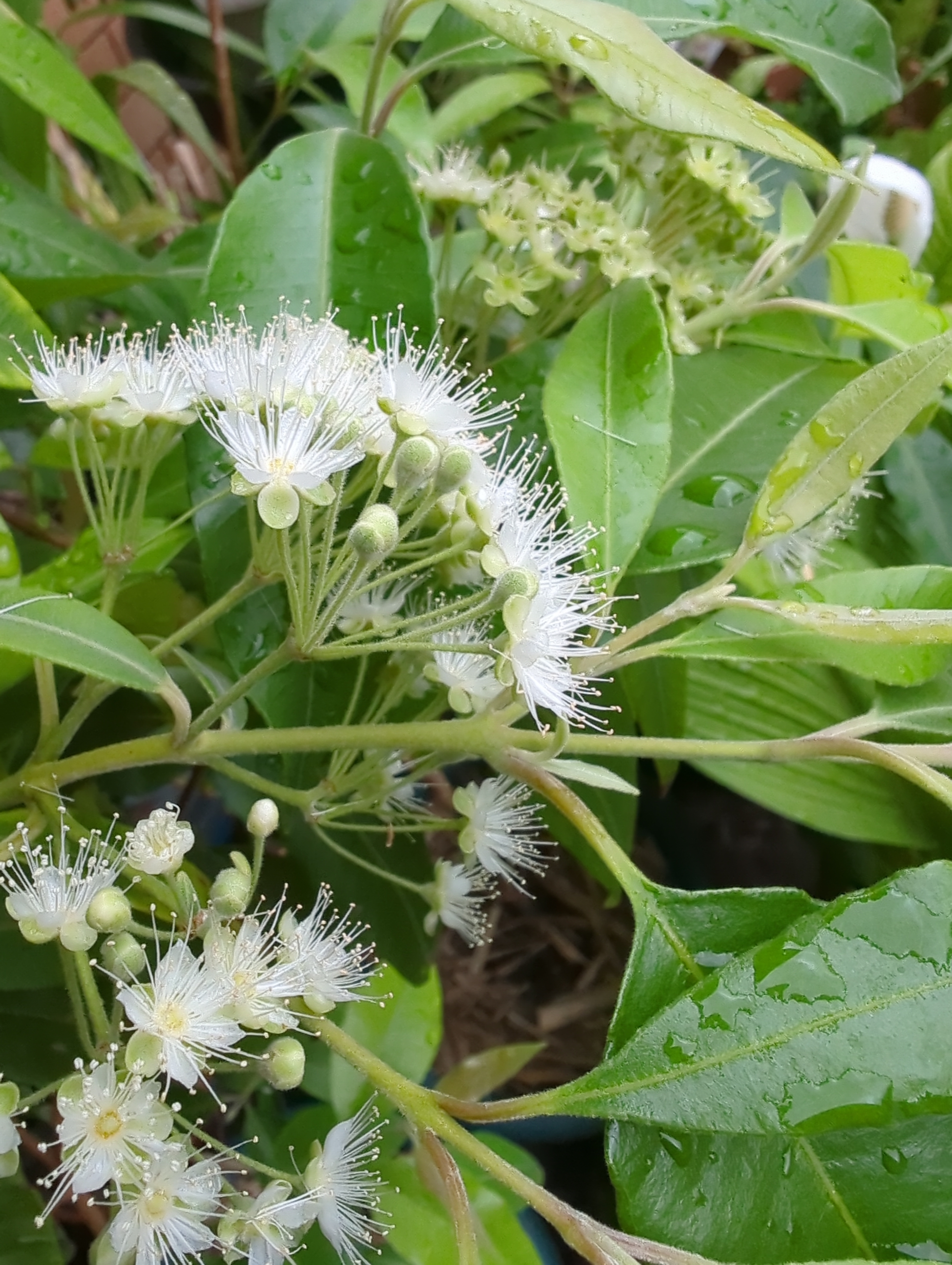
The flowers are numerous, perfumed and creamy-white, 5–7 mm in diameter that grow in attractive fluffy bunches that attract pollinators and butterflies.
They are produced in long hairy stalked clusters at the ends of the branches from summer through to autumn.
I have chronicled the flowering of my own 2 year old potted lemon myrtle plants that have flowered for the first time this year.
(click on any of the images below to see detail of the beautiful lemon myrtle)
The first buds appeared on the first day of November.

Once the clusters of buds form at the end of the branches the leaves on the branches continue to form as the clusters develop.
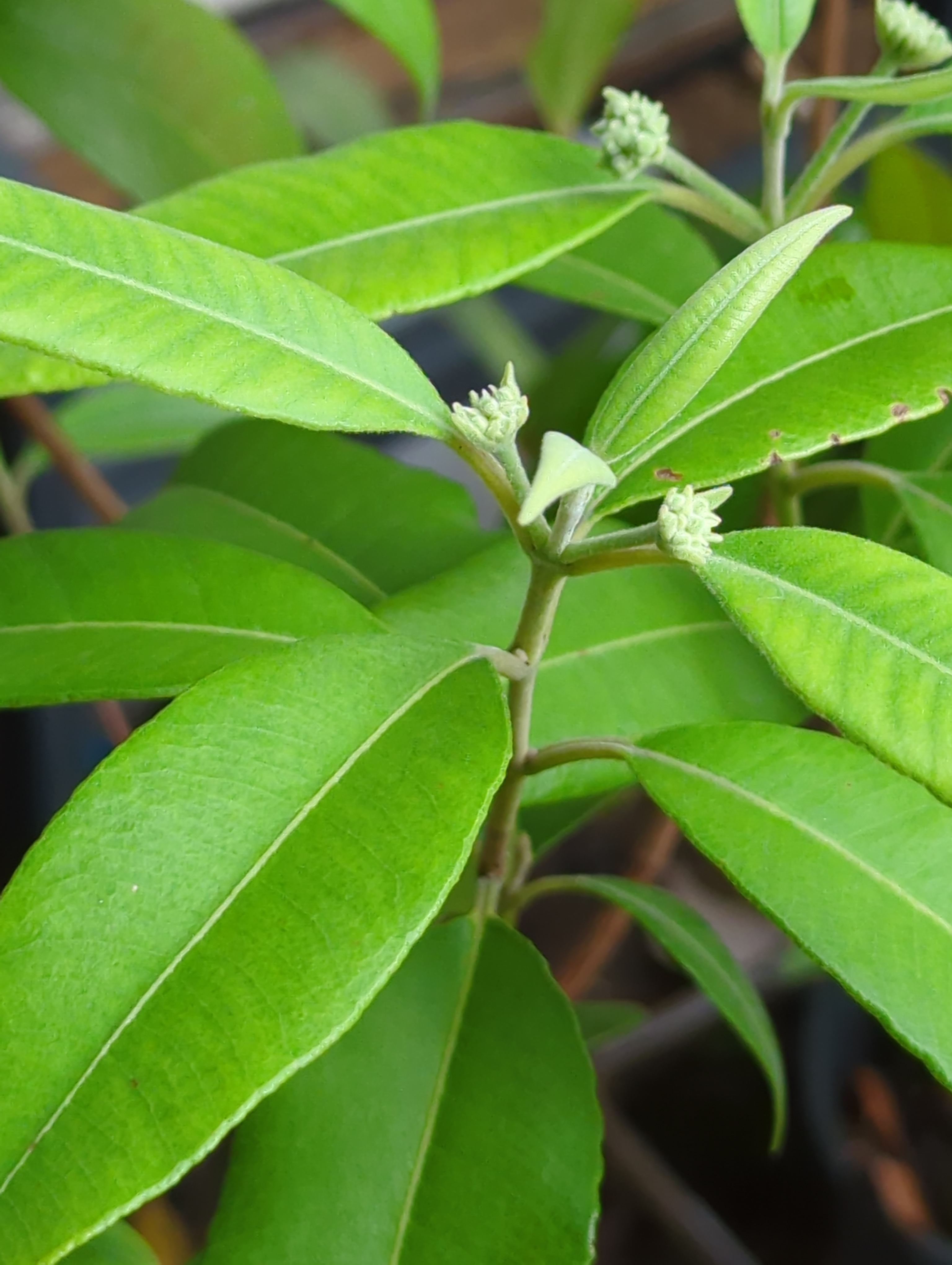
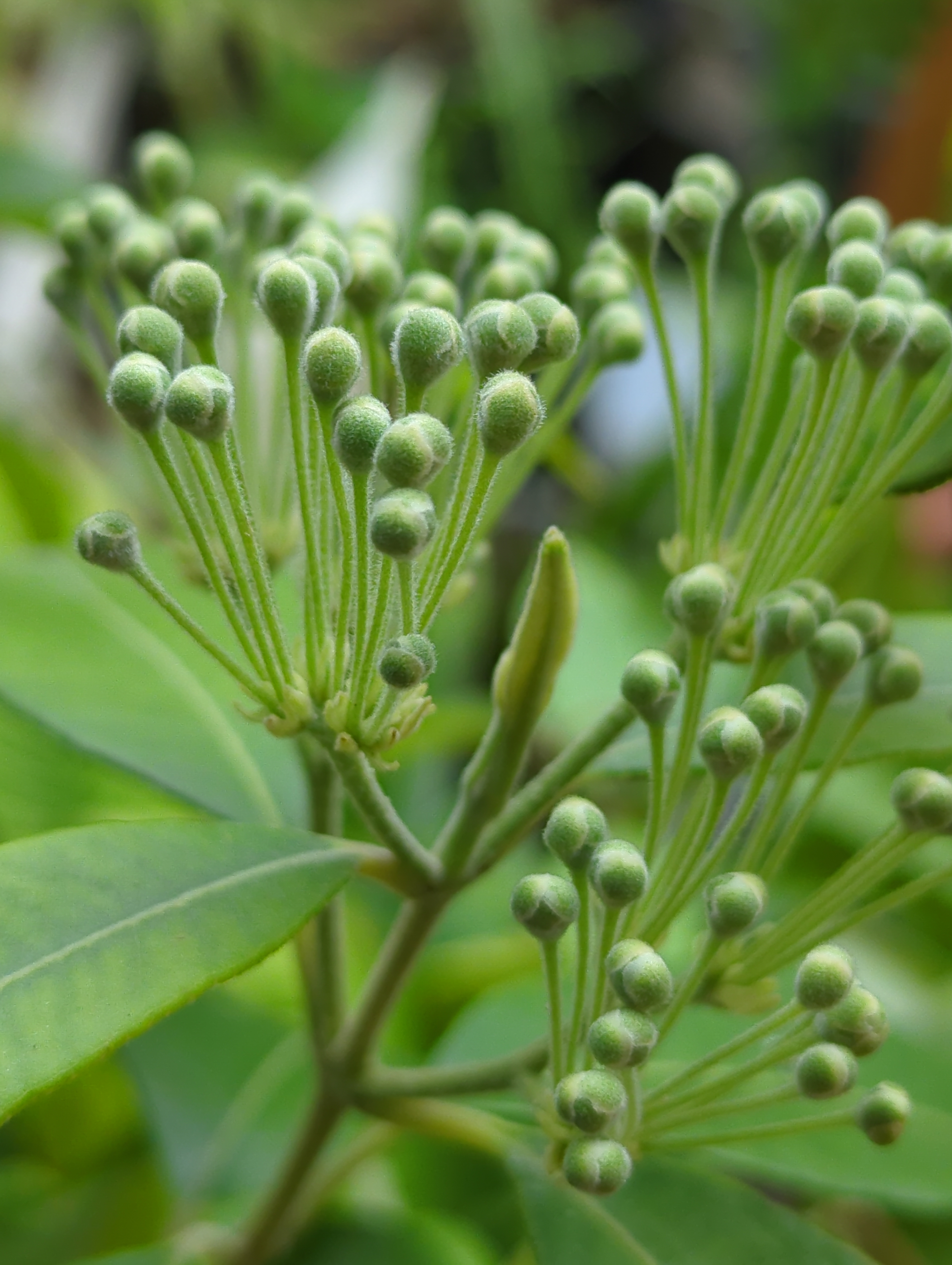
18 days later the small buds had developed into clusters of buds on long stalks that branched out.
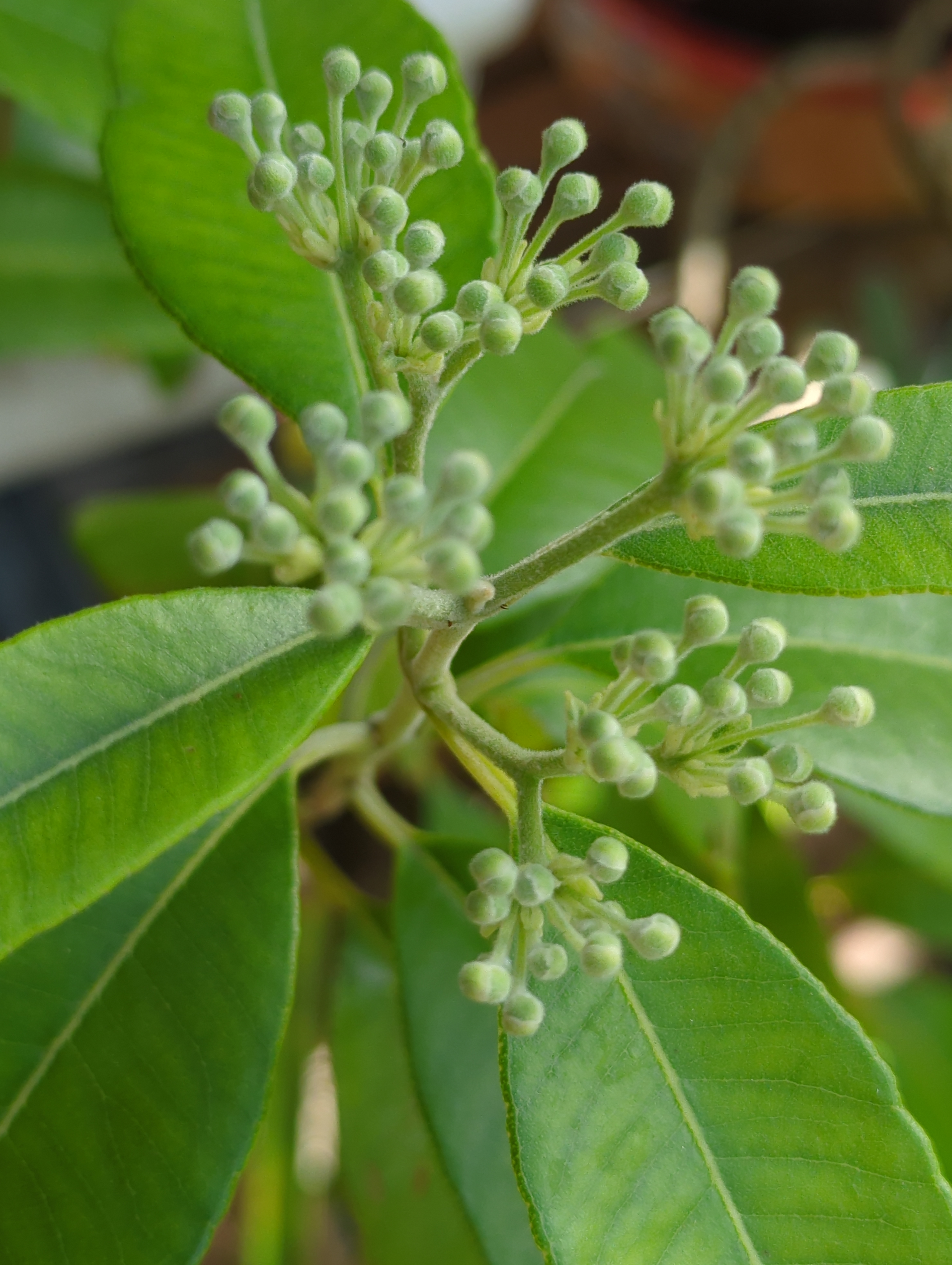
By early December the tightly closed buds had developed further and the stalks had grown longer. The branch was growing new leaves beyond the clusters.
By mid December the flowers began to emerge from the buds, much to the delight of the many visitor ants that were the immediate pollinators.

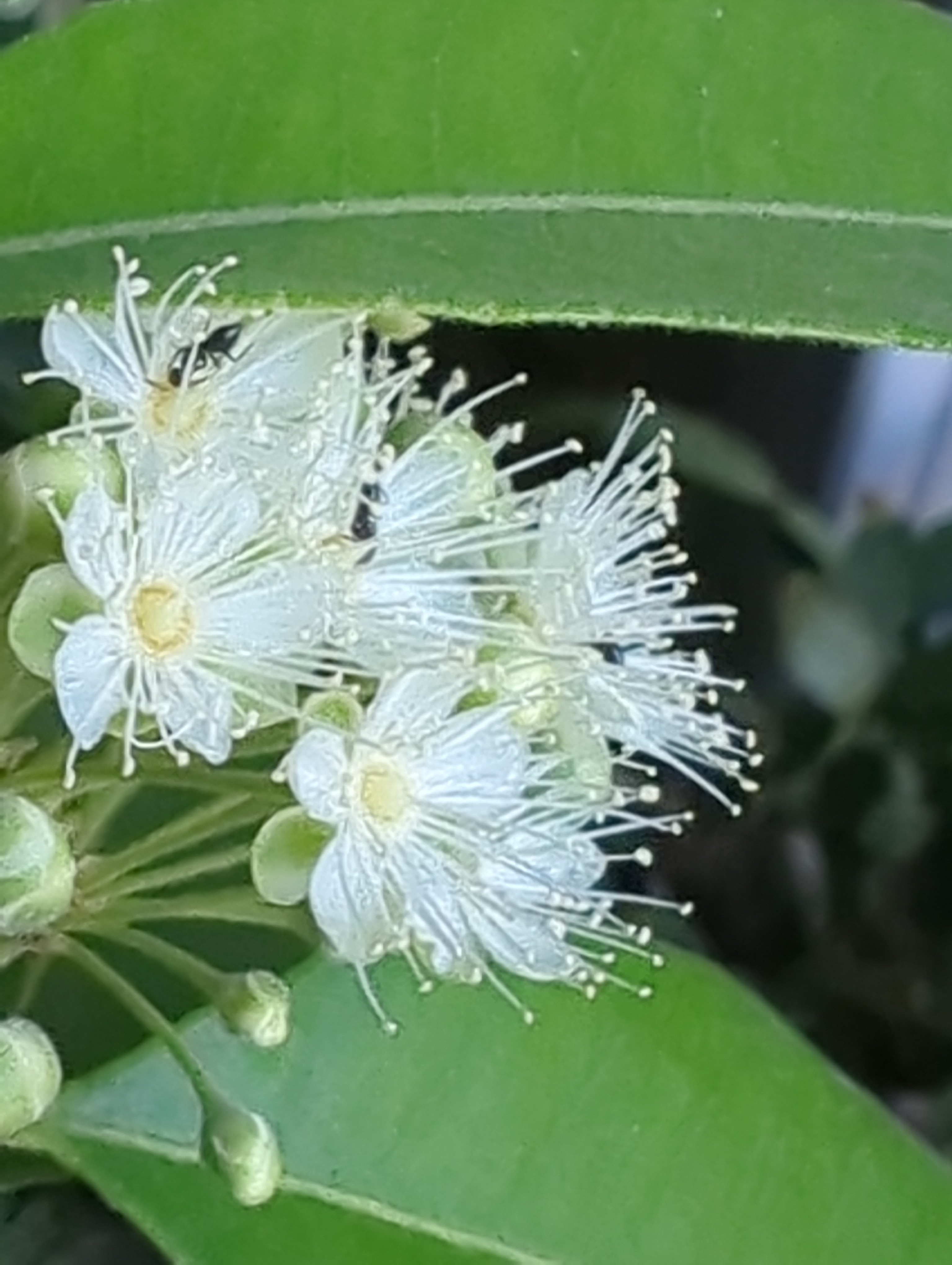
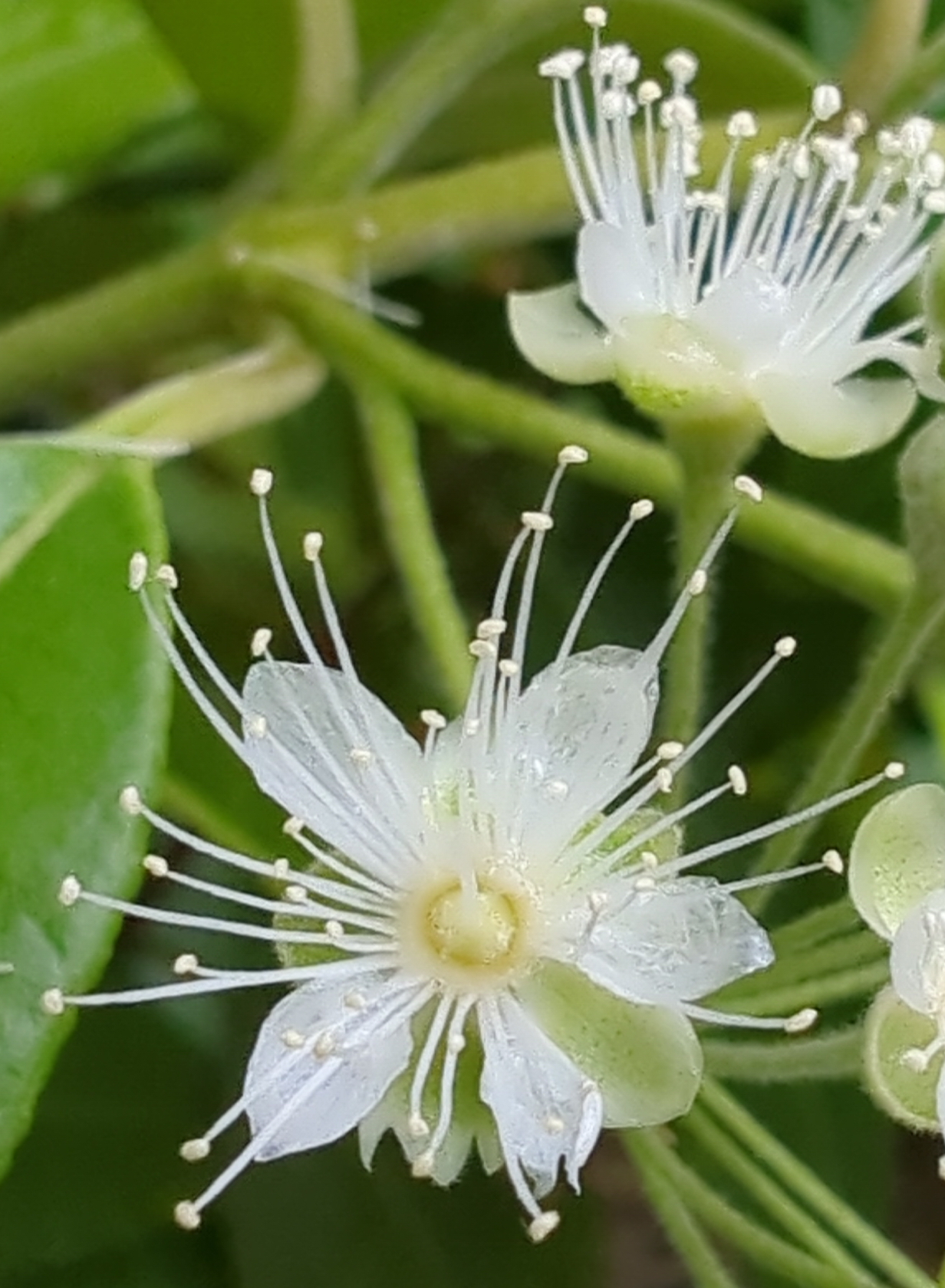
The outer part of an individual flower is made up of a bell-shaped hairy receptacle with 5 spreading, cupped calyx lobes. These are topped by 5 small, delicate petals about 5 mm long and numerous stamens which are twice as long as the petals and with their pollen containing anthers at the tips, give the flower a ‘fluffy’ look.
The style arises from the half inferior ovary in the middle of the flower.
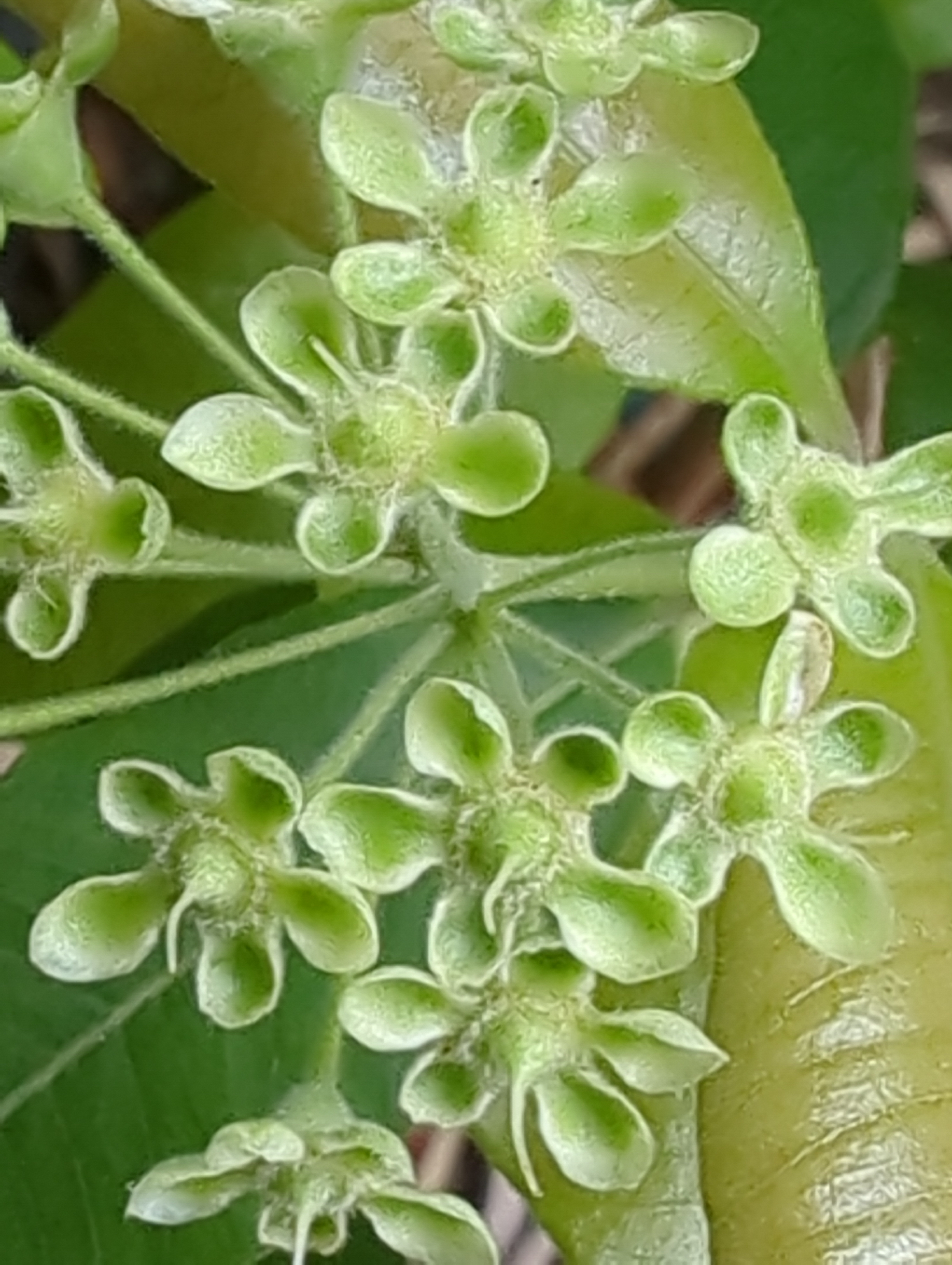
By late December the petals and stamens had fallen. After petal fall, the calyx is persistent (does not wither and fall as happens in other flowering plants) and remains as the fruit containing the seeds develop. The plant then has clusters of the attractive green flower-like calyx lobes which add another beauty to the overall plant.
The fruit is a nut-like capsule which contains several small seeds. These are occasionally released but are generally retained until the whole fruit fails from the tree.
At the time of writing this the fruit is still developing.
The weeks when the lemon myrtle is is flower is a special moment to witness. The beautiful, delicate bunches of flowers all over the plant that peep through the new leaves create a spectacular fragrant display, even on a small potted plant.
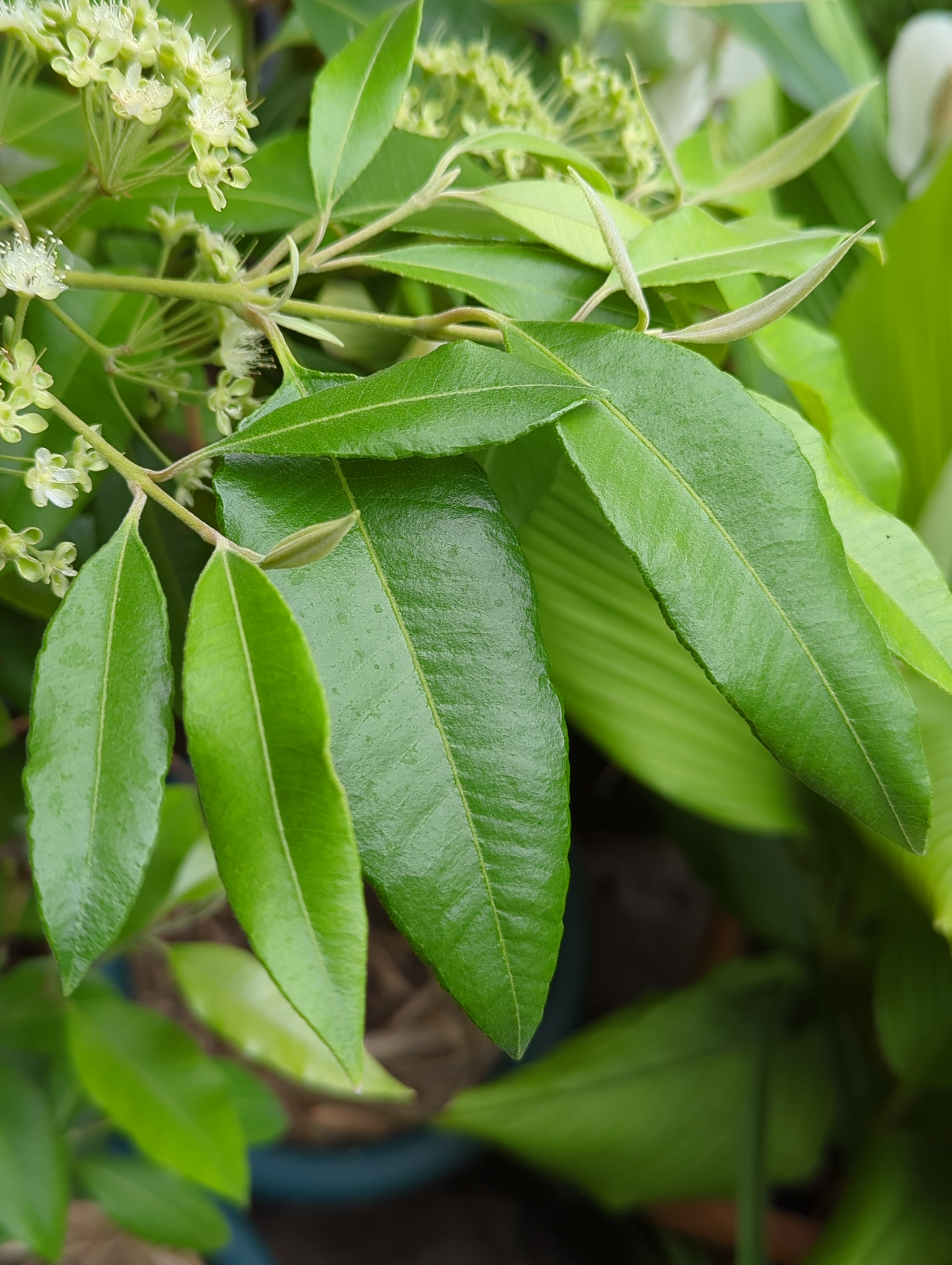
The leaves of the lemon myrtle are a bright green colour and are strongly lemon scented. The leaves have an amazingly intense citrus fragrance when crushed, and are used in teas, as herbs, in cuisine and in medicine.
They are evergreen, opposite, lanceolate, 5–12 cm long and 1.5–2.5 cm broad, glossy green, with a an ever so slightly toothed margin and are pointed at their apex.
The young foliage is reddish and the young shoots and undersides of the leaves are often hairy.
The beautiful shiny green leaves of the lemon myrtle with its bunches of delicate scented flowers has been the highlight of the last months. Careful nurture means that even if space is at premium you can grow this amazingly useful plant in pots outside on patios or verandahs or near a brightly lit window indoors.
Lemon myrtle can be grown as a hedge or as a large specimen plant in more spacious gardens.

Soil and Site:
Though it is a plant of the subtropical to tropical areas of Queensland, the Lemon Myrtle is also able to grow well in frost-free temperate zones.
In its native state it grows in rainforests where the rainfall is 800mm or more a year so the site should have fertile, well-draining soil that still retains moisture. The soil should be slightly acidic with a pH range between 5.5 and 6.5. Digging the site over an amending with aged compost a few weeks before planting will settle the site and make nutrients immediately available to the newly planted lemon myrtle.
The selected site should offer protection from strong winds when the plant is young as the slender plant can snap off at the base of the trunk under windy conditions.
Lemon myrtle needs full sun to partial shade. In hot and dry climates it may be best to grow in a protected location. A mature plant will grow in full sun where the conditions offer humidity and moist soil conditions that drain freely.
In Sydney the lemon myrtle will grow to a large shrub of 4 – 6 m in height while further south it will reach 2 – 4 m. Locating the site should take this into consideration, though in general, lemon myrtle plants are slow growing offering the opportunity to shape the plant through pruning.
The lemon myrtle can also be grown in a large pot – even indoors. I have successfully grown my two plants in pots for 2 years and re-potted them this year (before the first time that they have flowered). In that time they have grown quite tall. They are located on a verandah that gets morning sun and has afternoon shade and is protected from winds. In extreme heat days with temperatures over 40 I have provided shade cloth covering to protect the tender new leaves and protect the older leaves from scorching. I watered and kept an eye on the moisture of the pots.

The image above is one of my potter lemon myrtle plants after two years growth.
When planting, dig a hole as deep as the root ball and twice as large, adding organic matter to provide nutrients. Place the lemon myrtle’s root ball into the prepared hole and fill in around it before watering it in well with liquid Seasol.
Watering:
The lemon myrtle thrives in most soils as long as they are free draining. For optimal growth, they need moderately moist soil but hate being waterlogged.
Water lemon myrtle shrubs once weekly if the soil feels dry and more often in hot, dry summers. Watering young or newly planted lemon myrtles regularly, helps them establish good roots, a process which takes approximately three years.
Reduce watering during the cooler months when rainfall is more plentiful.
Watering plants kept in pots is even more essential. Plastic pots can be placed in larger outer pots to create an insulation against direct sunlight warming the root ball too much. Never leave pots standing in saucers of water. Hydrate the pots till water flows out of the drain holes. Pots can benefit having pot feet or risers to ensure good drainage.
Mulching plants helps re-create the leaf litter of the forest floor, conserving moisture and preventing evaporation but make sure to keep the mulch away from the trunk of the plants.
Fertilizing:
Ferilize lemon myrtles once a year after the flowering season finishes using slow-release fertilizer granules or apply a diluted liquid fertilizer.
Apply a mixture of organic seaweed extract and aminogro every 2-3 weeks. The same preparation can be applied for potted lemon myrtles. Add aged manure every Spring and Autumn.
Pruning:
Lemon scented myrtle should to be pruned regularly in the first two years to provide a compact growth and increase leaf production.
If using lemon myrtle as a screen or hedge then regular light pruning will encourage a dense growth. In general a light prune after flowering will keep the plant tidy
Unpruned, the lemon myrtle will become a medium-sized rainforest tree. To shape and lower the height of the plant keep tip-pruning by pinching out the tips that can then be used for your cooking.
Though leaves can be harvested at anytime, the best time to harvest lemon myrtle is from August until the end of summer, when temperatures are higher. At this time the climate is hot and dry, the leaf moisture content goes down and this is also when the main compound found in lemon myrtle leaves, called citral, is at its highest. The leaves can then be dried and used for cooking.
Uses of Lemon Myrtle:
Lemon myrtle is one of the most well known bushfood flavours. Indigenous Australians have used lemon myrtle, both in cuisine and as a healing plant for thousands of years. The fresh and dried leaves, flowers and seeds have an intense, extremely pleasant lemon flavour.
A pleasant, lemon-flavoured tea can be made from the leaves and flowering stems.
The leaf can be used as dried flakes to use in shortbread; flavouring in pasta; whole leaf with baked fish; infused in vegetable oils; and made into tea.
It can also be used as a lemon flavour in milk-based foods, such as cheesecake, lemon flavoured ice-cream and sorbet. It can also be used in marinades, sauces, rubs, baking and drinks.
Just search the internet for a myriad of recipes and tips for using lemon myrtle in your cooking.
It has been used in fragrances and distilled for essential oils for use in aromatherapy, cosmetics and cleaning products.
In 1925, it was found to be significantly germicidal, and it was later shown to be antimicrobial.
The antimicrobial and anti inflammatory properties of lemon myrtle tea make it useful in treating sore throats and coughs. A tincture can also be made with high alcohol base like vodka.
.
This versatile and hardy plant can be successfully grown in any garden no matter the size and with care and proper location can also be grown in pots on patios and balconies. So seek out a lemon myrtle plant for your home and have the lovely lemony scented leaves available to you to enhance your cooking or just to watch the amazing and beautiful flowers in summer.
 The Grantham Gardener