

Today is the first day of spring and this is the first planting guide of the season. The following is a list of vegetables you can plant in September in Sydney, a temperate zone. Just click on the link for the growing guide for each vegetable or herb:
- Amaranth
- Artichokes
- Asparagus
- Basil
- Beans – climbing and bush
- Beetroot
- Broccoli
- Cabbage
- Cape Gooseberry
- Capsicum
- Carrot
- Celery
- Chicory
- Chillies
- Cucumber
- Eggplant
- Jerusalem Artichoke
- Leeks
- Lettuce
- Luffa
- Marrow
- Mustard Greens
- Parsnip
- Peas
- Potato
- Pumpkin
- Radish
- Rhubarb
- Rocket
- Rockmelon in seed trays
- Silverbeet
- Snow Peas
- Sunflower
- Sweet corn
- Tomato
- Turnip
- Zucchini
Plant of the Month – Ranunculus asiaticus – (Persian buttercup)

Spring is here in Sydney and the bulbs and corms planted in autumn are blooming. Among all the beauty and colour, one of my favourite spring flowers is the ranunculus. with its beautiful rose-like multi-petalled flowers.
Ranunculus is a genus of about 1700-1880 species in the family Ranunculaceae that all arise from the humble buttercup that we all loves as children.They originally come from the temperate Mediterranean and south west Asia.
They name ranunculus from the Latin “rana” meaning little frog This refers to its natural habitat as it likes muddy and marshy areas.
The ranunculus common to our gardens, Ranunculus asiaticus, is a cultivated hybrid ornamenta. It is a herbaceous perennial plant that grows up to 45 cm tall with branched, rigid, hairy stems.
The leaves are also hairy and three lobed. Click on the image below to see the detail of the texture of the stem and leaves. It shows buds and a newly emerging flower with its tightly packed petals There can be one to several flowers on each stem with a rosette of leaves around them that are more deeply lobed than those at the base.

Each bud has four sepals that are also hairy and enclose the many petals of the double flower.

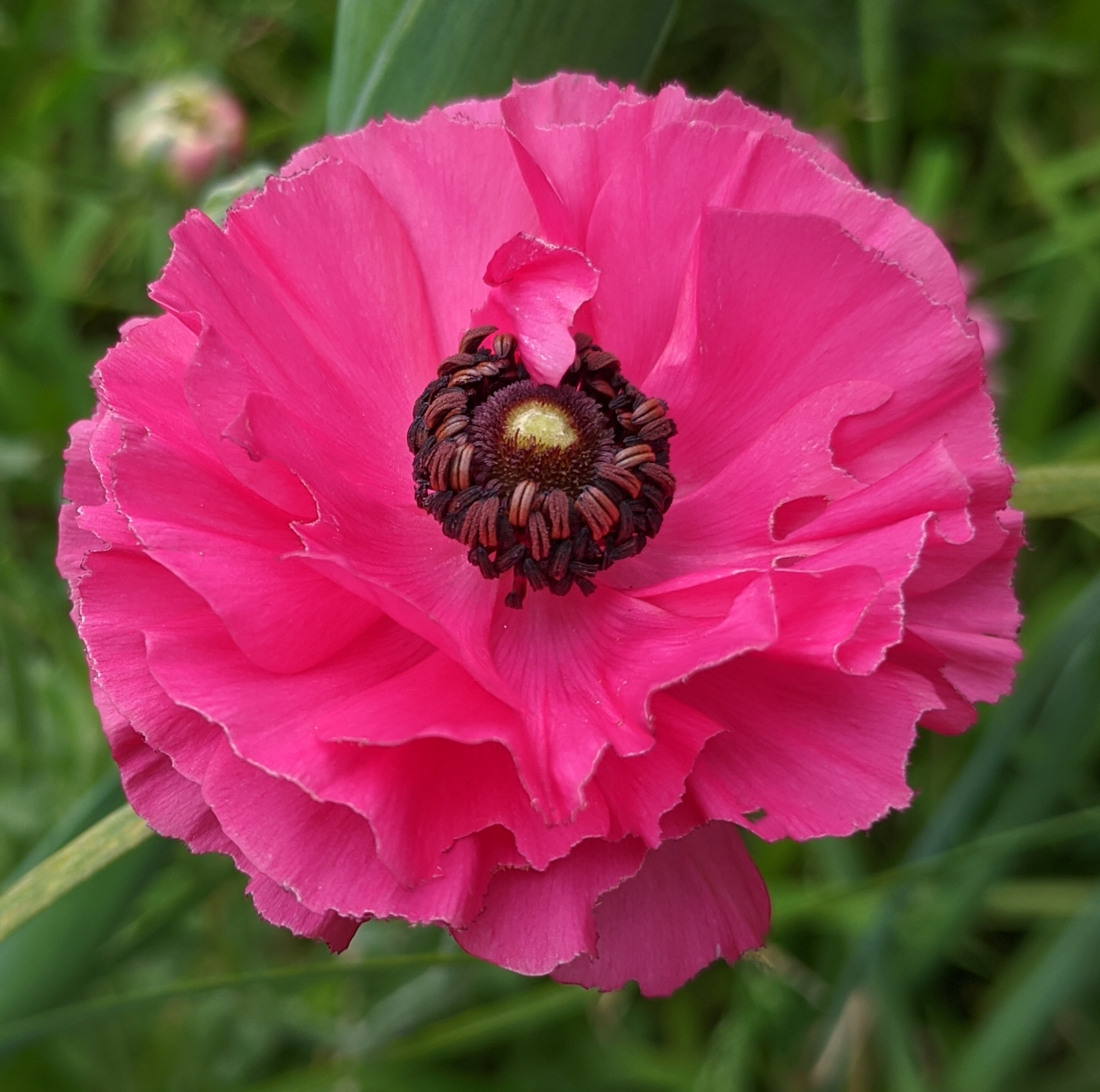
The flowers are 3–5 cm in diameter, in colors that range from creamy white and pale yellow to apricot, pink, orange, red and burgundy. One to several flowers can grow on each stem.
There is pocket shaped nectary on the inner side at the base of each petal. The stamens which produce the pollen grains and the male gametophytes are spirally arranged with elongated anthers. green or yellow carpels, which produce ovules containing female gametophytes are not fused and are also arranged in a spiral, mostly on a globe or dome-shaped receptacle.
Cultivation of Ranunculus asiaticus
Ranunculus is grown from claw like corms that swell under the surface as the plant grows and these structures make nutrients available to them.
Site:
Select a site that gets at least 6 hours of sunlight a day with rich soil that is moist but allows water to drain after watering and rainy periods. If growing on clay it might be best to grow ranunculus on raised beds to provide the drainage they need to protect the corms from rotting.
Ranunculus prefers a loose, well drained, slightly acidic to neutral soil with a pH of 6.0 – 7.0. Enrich the soil with organic matter by digging in aged animal manure or compost to a depth of 25 cm. Weed the area well and prepare the site a few weeks before planting the corms so that the nutrients are available to the plants as they grow. Keep the site weed free till it is time to plant.
Planting the Ranunculus Corms:
The corms are planted in autumn.
Soak the corms in water that is at room temperature for 1-3 hours before planting but not longer.
Ranunculus need good air flow to prevent disease so spacing the plants to give enough room for growth and air circulation is important.
Plant the corms 15cm apart. They should be planted at a depth that is twice their length from top if the corm too the tip of the claw 5 – 8 cm deep with the ‘claws’ facing downwards. Cover with soil and water in well. Keep soil moist but not wet until shoots emerge.
If growing in pots and other containers use a quality bulb potting mix with perlite mixed through to ensure good drainage and avoid leaving water in saucers under the pots preferring to set them on risers to allow water to drain away.
In optimal growing conditions, each ranunculus plant develops a large root ball. So when growing ranunculus in pots allow plenty of space for the roots. In this way the plants can reach their full potential.
Plant the corms 15 cm apart to avoid crowding (one plant for a 20 cm pot, two plants for a 30 cm pot and three plants for a 44 cm pot).
Water:
Ranunculus plants need watered when the soil 5cm below the surface is dry. Test and check periodically especially during dry weather. Water deeply at the base of plants. This avoids getting the leaves wet and prevents fungal diseases..
Watering is best done in the early morning or late afternoon to avoid evaporation.
Mulching around the plants also prevents evaporation and keeps the plants cool as during warm periods.
Do not overwater the ranunculus plants as this will put the corms at risk of rotting.
Flowering and Care:
Ranunculus plants should flower in approximately 90-120 days. Once flowering begins, you can expect flowering to continue for 4 to 6 weeks.
Remove spent ranunculus flowers regularly during the growing season. Using sharp secateurs cutting dead flowers off just above a set of leaves. Removing these spent flowers regularly encourages the plants to produce more flowers.
As the temperatures rise the ranunculus plants will slow and stop flowering. Leave the foliage in place so the tuberous roots can store energy for the following year. When the leaves yellow and die down, then cut them off at soil level.
Colours:
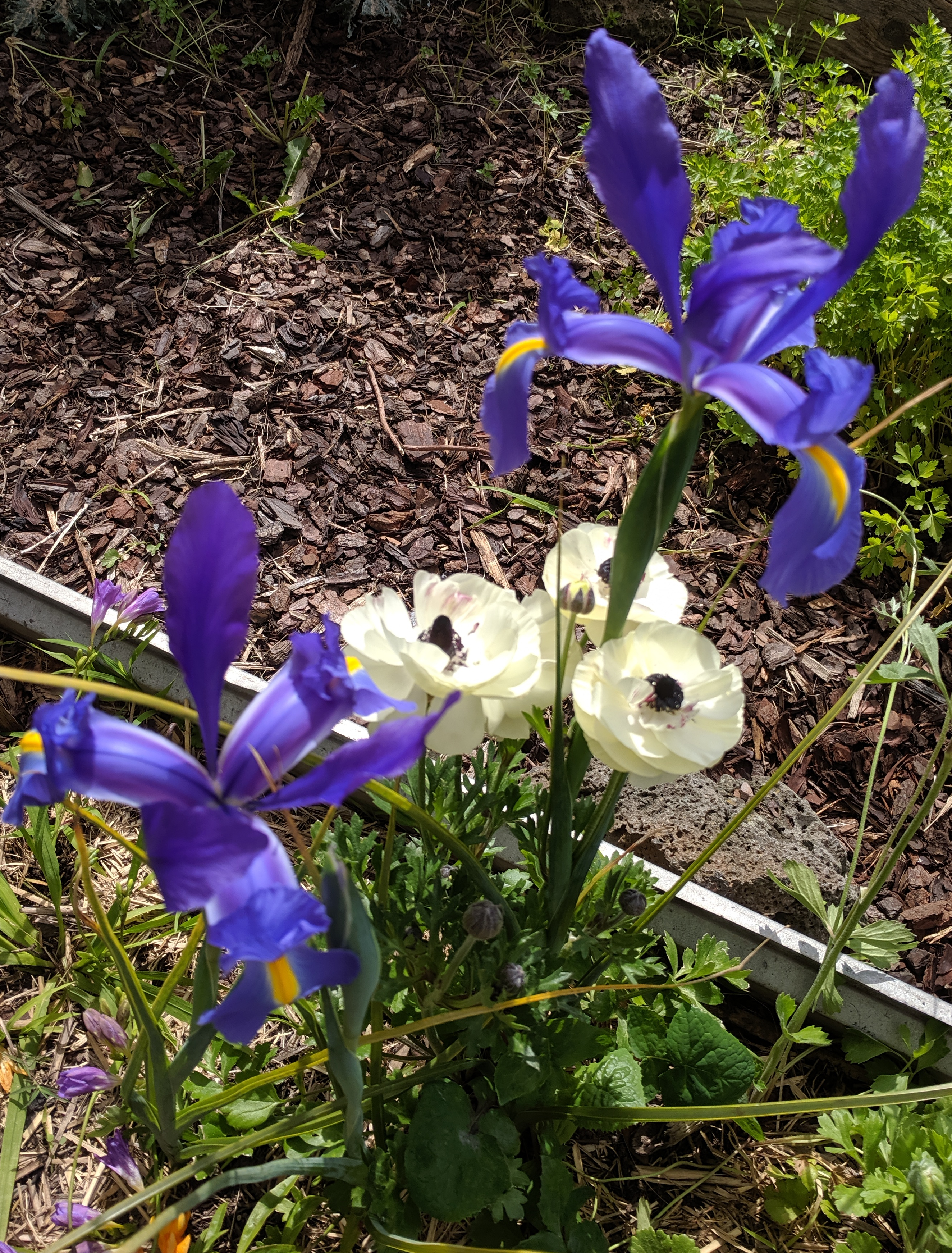
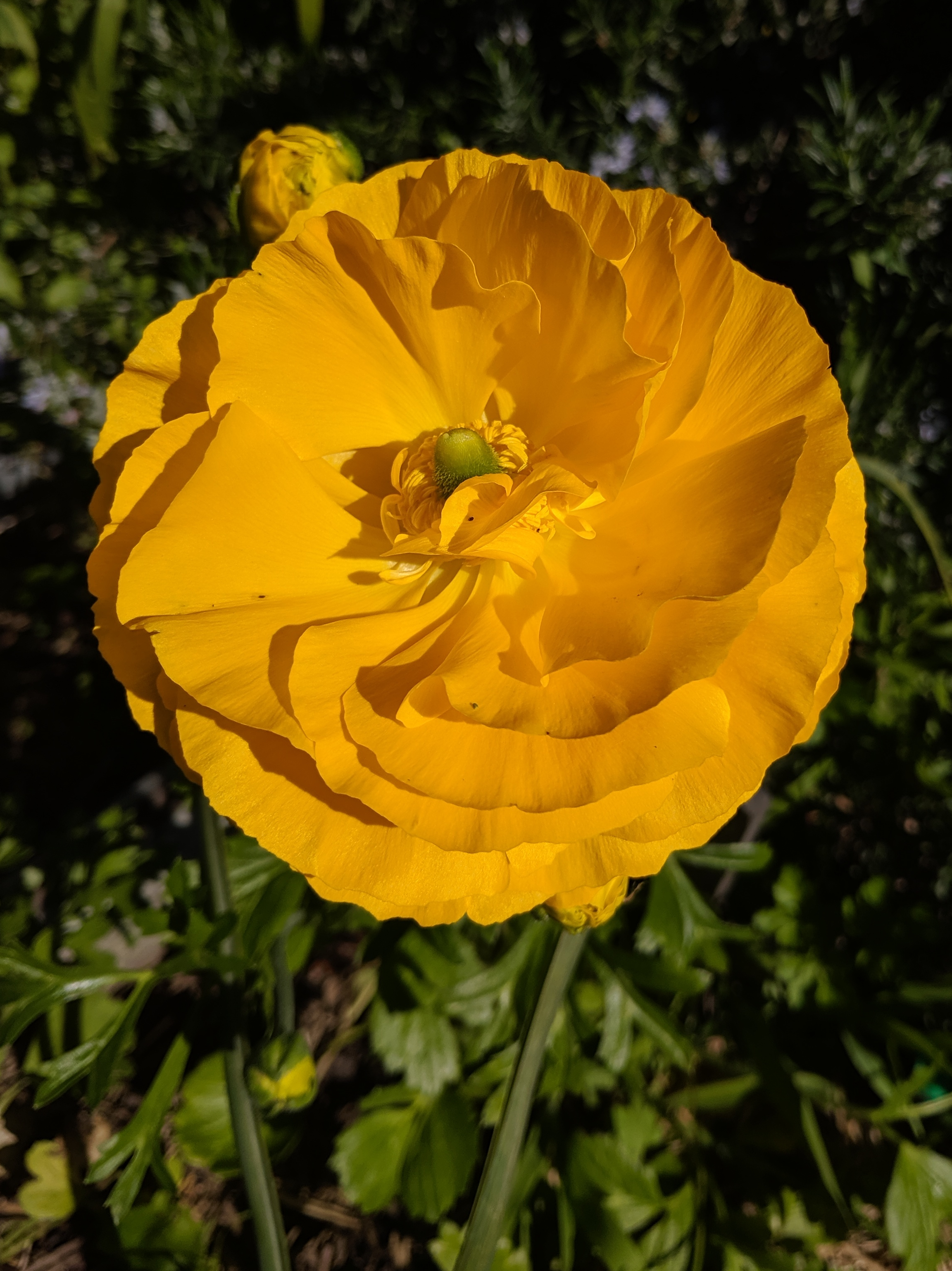
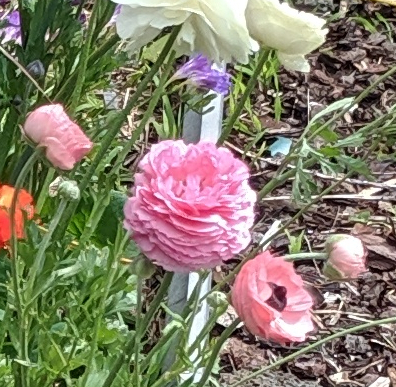
Below are some images of ranunculus plants growing amongst other spring flowering plants, showing their variety of colours and their beauty. Enjoy them in your garden or harvest the blooms for display in vases in your home. They are always stunning.
Cut ranunculus flowers when they’re still in bud or just starting to open as they will last longer in a vase (up to 10-12 days) compared to a week if cut when fully open.


 The Grantham Gardener