
The following is a list of vegetables and herbs you can plant in October in Sydney, a temperate zone. Just click on the name for the growing guide for each vegetable or herb:
- Amaranth
- Artichokes
- Asparagus
- Basil
- Beans – climbing and bush beans
- Beetroot
- Borage
- Broccoli
- Cabbage
- Cape Gooseberry
- Capsicum
- Carrot
- Celeriac
- Celery – in seed trays
- Chicory
- Chives
- Chillies
- Cucumber
- Daikon
- Dill
- Eggplant
- Jerusalem artichoke
- Leeks
- Lemon Balm
- Lettuce
- Luffa
- Marrow – in seed trays
- Mint
- Mustard Greens
- Okra – in seed trays
- Oregano
- Parsley
- Parsnip
- Peas
- Potato
- Pumpkin
- Radish
- Rhubarb
- Rocket
- Rockmelon– in seed trays
- Rosella – in seed trays in greenhouse
- Rosemary
- Sage
- Silverbeet
- Spring onions
- Sunflower
- Sweet corn
- Thyme
- Tomato
- Turnip
- Water melon
- Yacon
Plant of the Month: The stunning Sprekelia formosissima- (Aztec lily or Jacobean Lily)

(click on any image in this post to see greater detail of any of the Sprekelia stuctures)
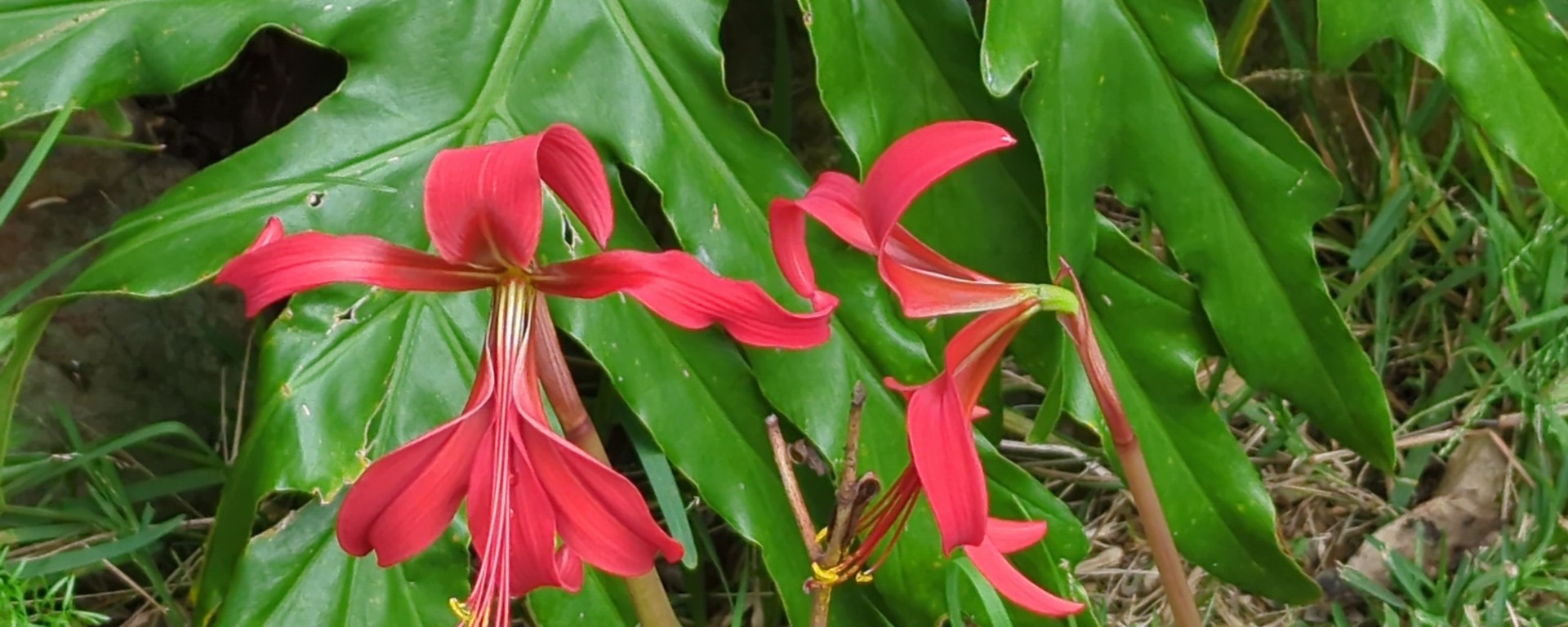
Many years ago a friend who loved the Sprekelia gave us some bulbs and we have loved its beautiful bright flowers and continued to plant them ever since. They may not always flower but when they do its always a lovely surprise.
Sprekelia formossisima is a herbaceous pernnial bulb in mild climates. It is one of three known species in the Amaryllis family and is also called Aztec lily or Jacobean lily, although it is not a true lily. The name formosissima means “most beautiful”, in reference to the unusual flowers of this species.
The Aztec lily, or Jacobean lily, has showy flowers and is a native to southern Mexico and Guatemala and is closely related to the Hippeastrum.
The flower emerges from the bulb on its long sturdy red -green coloured stalk. The bulbs may be up to 5 cm in diameter.

As the bud reaches maturity it begins to unfurl from its papery sepals.

The stunning, single red flowers are up to 15 cm across on the end of a leafless, hollow, red stalk of about 30 cm long.

The Sprekelia flowers in spring and summer and/or autumn. Sometimes a plant will have two blooms in a year; or may go for years without blooming. For the best chance of flowering make sure to plant or locate pots in a sunny spot and protect them from long periods of rain. By planting groups of bulbs you will be ensured that some will bloom amongst the group.
Each flower has six long tepals (petal like structures). At the centre top is a broad upright one. Below that are two narrow lateral tepals that are curved back at the tips. At the bottom there are three lower narrow tepals that are bent sharply downwards. These are partly fused together, rolled into a cylinder for part of their length, enclosing the 6 long filaments of the stamens and large anthers covered with yellow pollen.

The longer style has a three lobed stigma. In the image below, a drop of exudate from the stigma can be seen. Studies suggest that this secretion may modulate early pollen tube growth and contribute to the senescence (Plant senescence defines the last stage of a developmental program, which is a degenerative process)of stigma after pollination. This may indicate that the flower will soon fade and die.
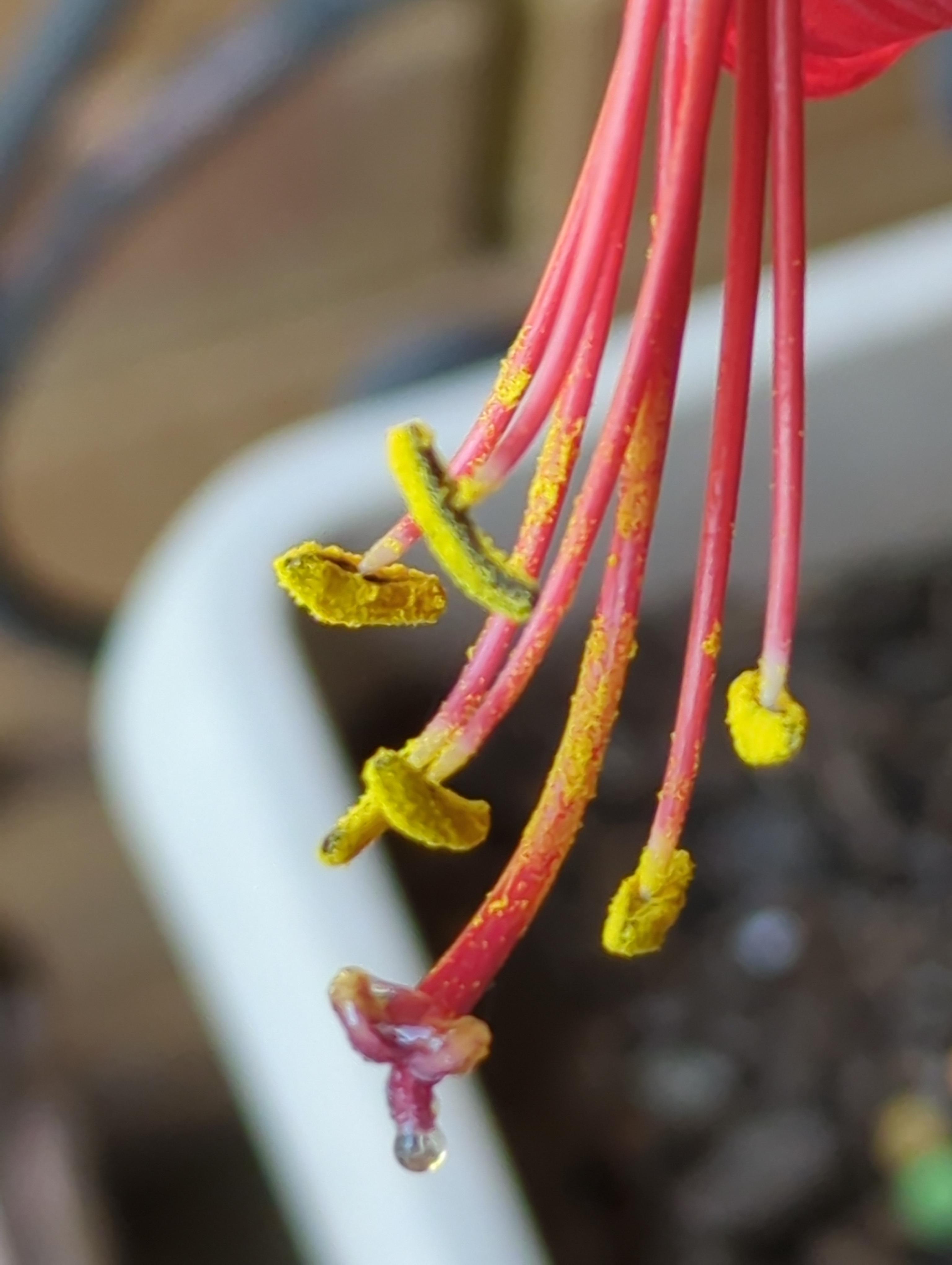
Below is an image with some more detail of the reproductive parts of the sprekelia flower

In the picture below we can see the papery sepals and the ovary at the base of the tepals. The rolled tepals enfold the filaments and the style.

The flower is a scarlet to deep crimson colour but only lasts for a few days. Grown in pots, the plants can be brought indoors to enjoy their spectacular beauty.
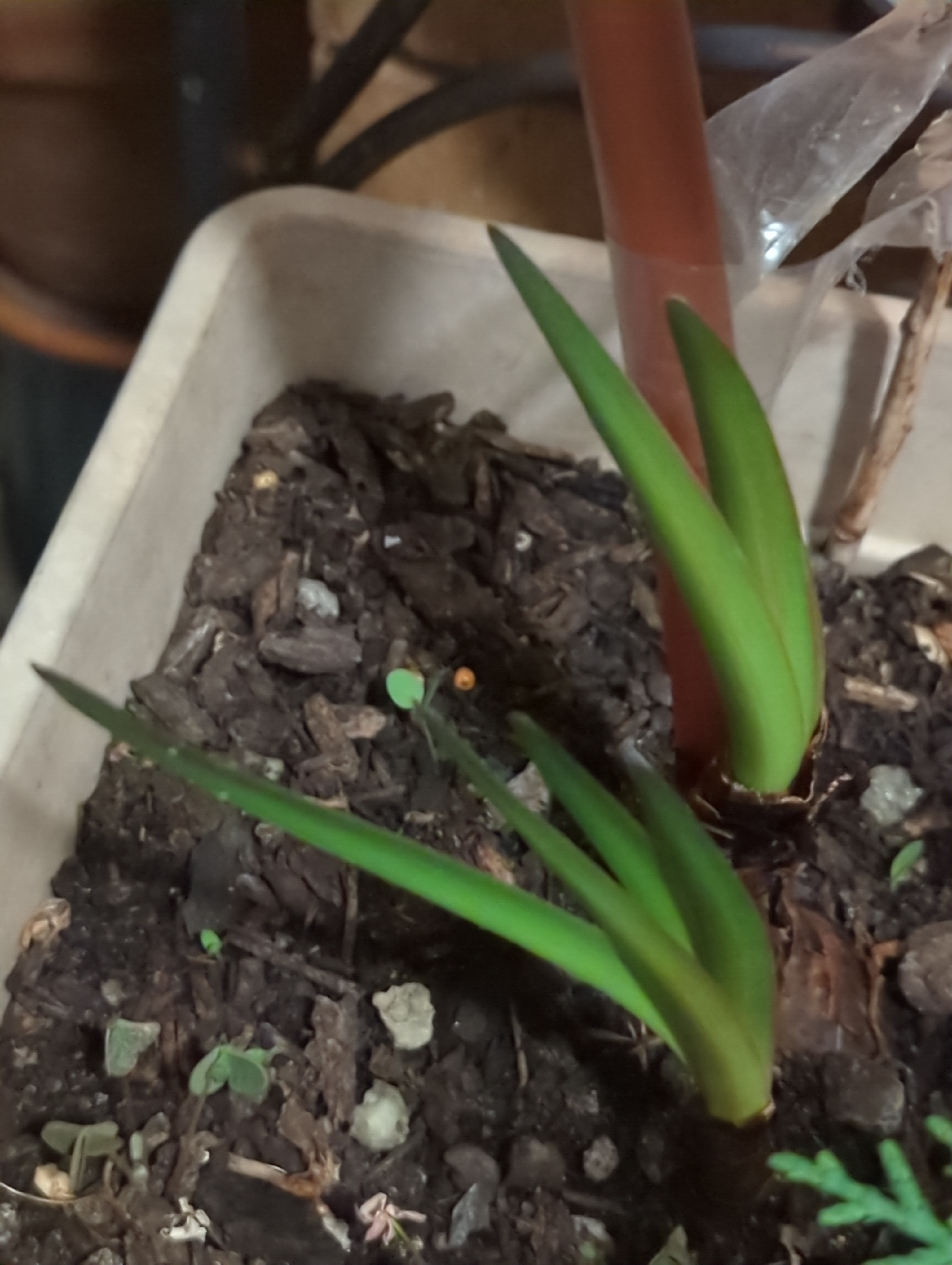
The long, dark-green, strap-like leaves emerge in spring sometimes about the same time as the flowers (as above) or sometimes before the flower emerges (as below).
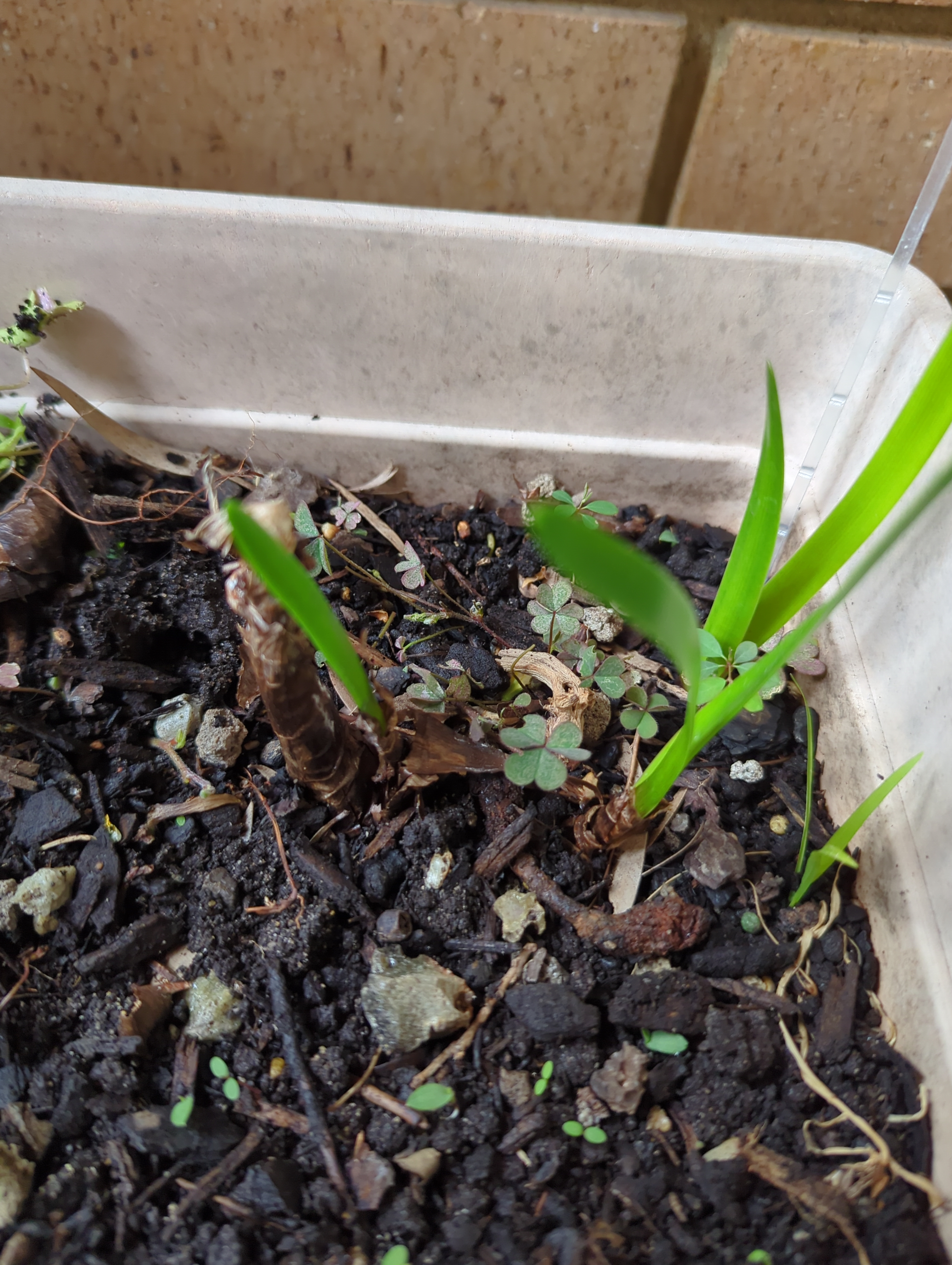
When fully grown they are dark green and contrast with the deep red flowers.

Several leaves are produced from each bulb, growing in an upright rosette at first, then bending as they grow longer.
The foliage should be left on the plants after flowering and for the whole of the growing season.
Plants will form small clumps from offsets and reach up to 30 cm wide.
Cultivation:
Sprekelia bulbs are easy sourced online or at garden centres in autumn/winter. Make sure that the bulbs are firm and look healthy.
They are most attractive when planted in a large group but a single potted specimen is also nice so that it can be brought indoors and its beauty enjoyed. Drought tolerant once established, Sprekelia are suitable for garden beds, borders, pots and containers.

Site and Soil Requirements:
Although Sprekelia will grow in part shade, they do best in full sun where they can get at least 6 hours of sunlight. In its natural state, the Sprekelia grows in rocky outcrops. It would be a perfect plant for rockeries that mimic these conditions.
Propagate through division of offsets or by seed. Does not tolerate disturbance well, so only divide and repot when absolutely necessary. Plants grown from seed may take 3-7 years to reach flowering maturity.
As Sprekelia does not like to be moved and may stop flowering when disturbed, select a site where they can grow and multiply happily into the future. In suitable pots, Sprekelia can continue undisturbed for 3-5 years before lifting is necessary.
Sprekelias like well drained, moderately fertile soil that are slightly alkaline. If your soil is heavy choose raised beds or rockeries for the planting site.
In preparation for growing in garden beds, dig in aged animal manure, and aged compost through the soil before planting.
If growing in pots select a good quality potting mix and use perlite to create a well draining mix.
Allow the potted Sprekelia to spend the duration of the growing season outdoors in full sun.
Growing Sprekelia in pots makes it easy to move the plants for protection from cold or too much rainfall.
Planting:
Wait until the soil has warmed in late winter or early spring after the last frost before planting out your bulbs.
In the ground, space the bulbs 20-30 cm apart and plant them 10cm deep, leaving the neck of the bulb just above the soil level.
In containers, use a 15 cm pot for each bulb, or several in larger containers, spacing them about 10 cm apart.
Watering:
Moderate watering is needed even though the Sprekelia is drought-tolerant it performs best with consistent moisture during its active growth period.Watering is needed during periods of low rainfall.
Once the leaves have died down and withered, stop watering the Sprekelia as they prefer to stay dry during the dormant period.
General Care:
The leaves of the Sprekelia die back in late autumn to early winter.
If a large clump has developed over time and dividing the clumps is needed, lift bulbs after the leaves have died down. Separate, clean and spread out the bulbs, so that they can dry properly Replant them in late Winter to early Spring.
In winter, top dress your established plants with well aged animal manure to help with growth and produce larger blooms. The bulbs will also benefit from regular fertilizer applications during the growing season.
Remove spent blooms and dead leaves throughout the growing season.
Propagate through division of offsets or by seed.
If flowers are pollinated and set seed, the capsule should be allowed to remain on the plant until the 3-valved pod splits open. Then the fresh seed can be sown in well-drained potting medium and keep moist until germination. Plants grown from seed may take 3-7 years to reach flowering maturity.

 The Grantham Gardener