
The following is a list of vegetables and herbs that you can plant in February in Sydney, a temperate zone. Just click on the name for the growing guide for each vegetable or herb:
- Amaranth
- Beans (dwarf)
- Beetroot
- Broccoli
- Brussel sprouts
- Carrot
- Cauliflower
- Chives
- Cucumber
- Endive
- Fennel
- Kohlrabi
- Leeks
- Lettuce
- Mustard greens
- Onion
- Parsley
- Radish
- Silverbeet
- Swedes
- Turnip
- Zucchini
Plant of the Month – The fragrant Murraya koenigii – ( Curry leaf tree)

The graceful Curry tree, Murraya koenigii, with its soft fern-like, highly aromatic leaves is an evergreen tree in the family Rutaceae, native to the tropical and sub-tropical, moist forests in India and Sri Lanka. It also grows well in temperate climates and it can be an attractive indoor plant in cooler climates. It is grown both for its ornamental beauty and the aroma and flavour of its leaves when used in foods and for medicinal purposes. in India, this fresh herb is used for cooking and health purposes, but in South East Asia, they are predominantly used in culinary applications
Murraya koenigii are grown as the cultivated crop in India, Sri Lanka, Southeast Asia, Australia, Pacific Islands and Africa.
The leaves contain antioxidants, beta carotene, and vitamins C, A, B, and E. They also have iron, fiber, calcium, phosphorus, and amino acids. Studies indicate they have antimicrobial and anti-oxidative properties.Curry tree leaves have been used in Ayurvedic medicine for thousands of years to treat stomach problems and diarrhea among other uses.
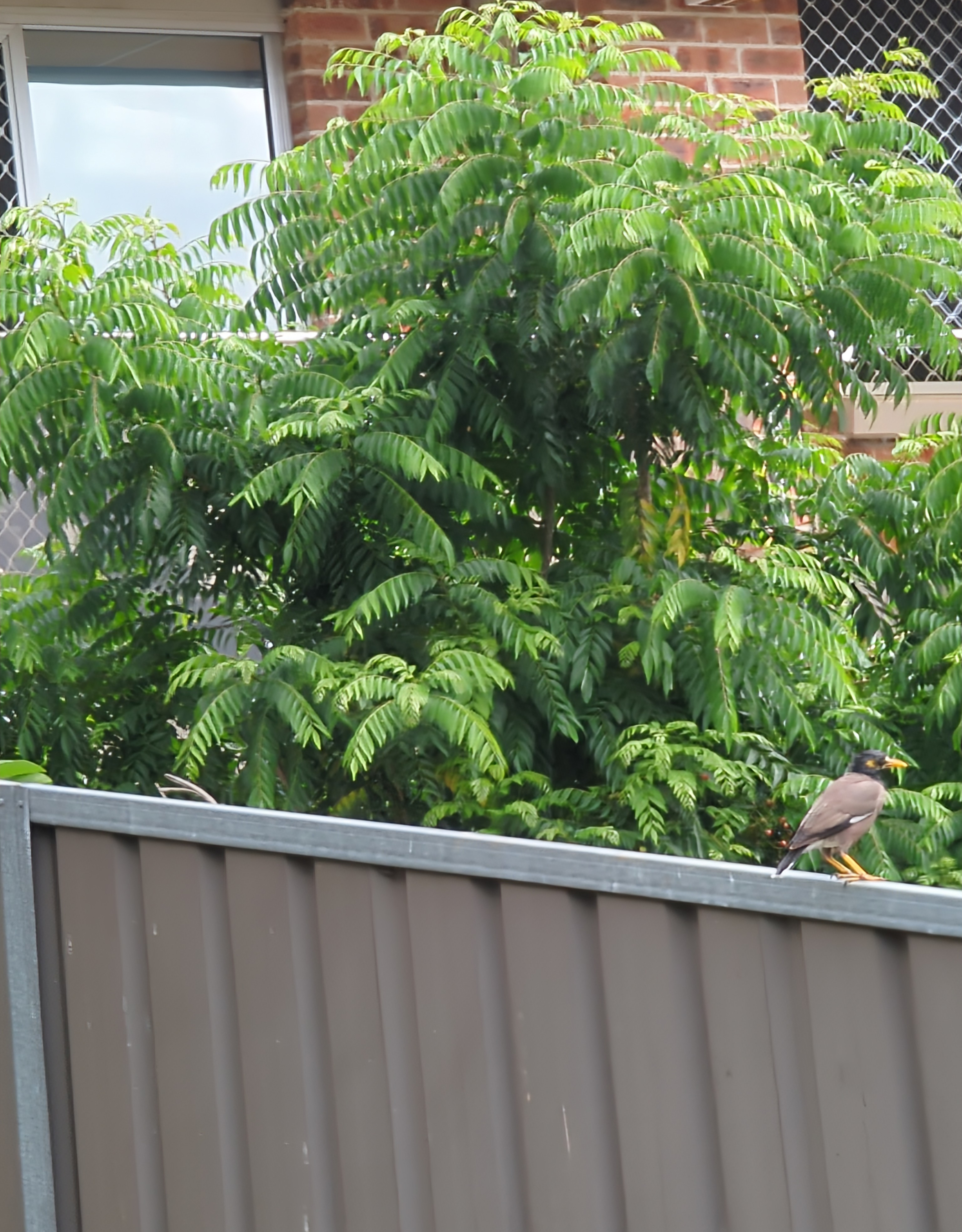
The Curry tree can be a small bush or a tree, growing 4–6 m tall, with a trunk 15 to 40 cm in diameter. The canopy can have a width between 1.4 – 2.4 m.
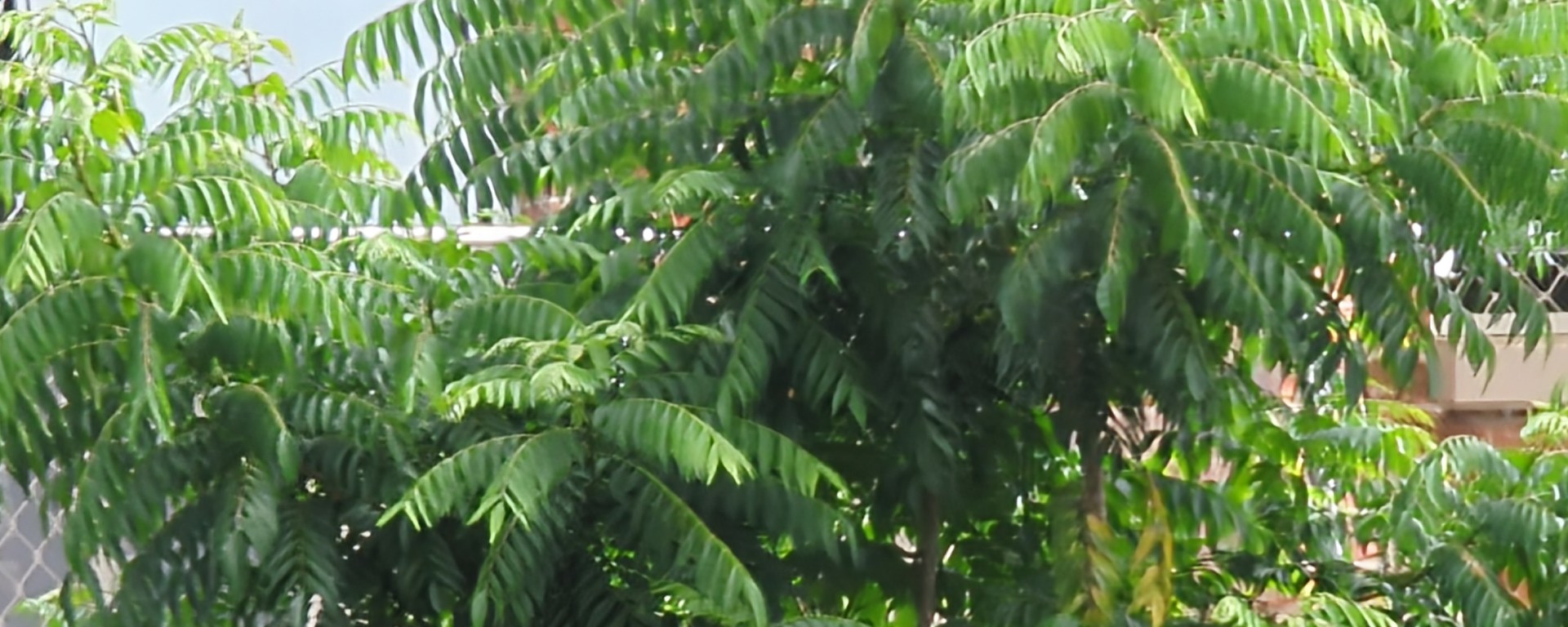
The mature tree in the image below is 2.4 m tall with a broad multi-branch dense canopy. So if you are intending to plant a curry tree in the garden make sure that you have enugh space or plan for seasonal pruning. This being said, it is a slow growing tree especially outside tropical and sub-tropical areas.
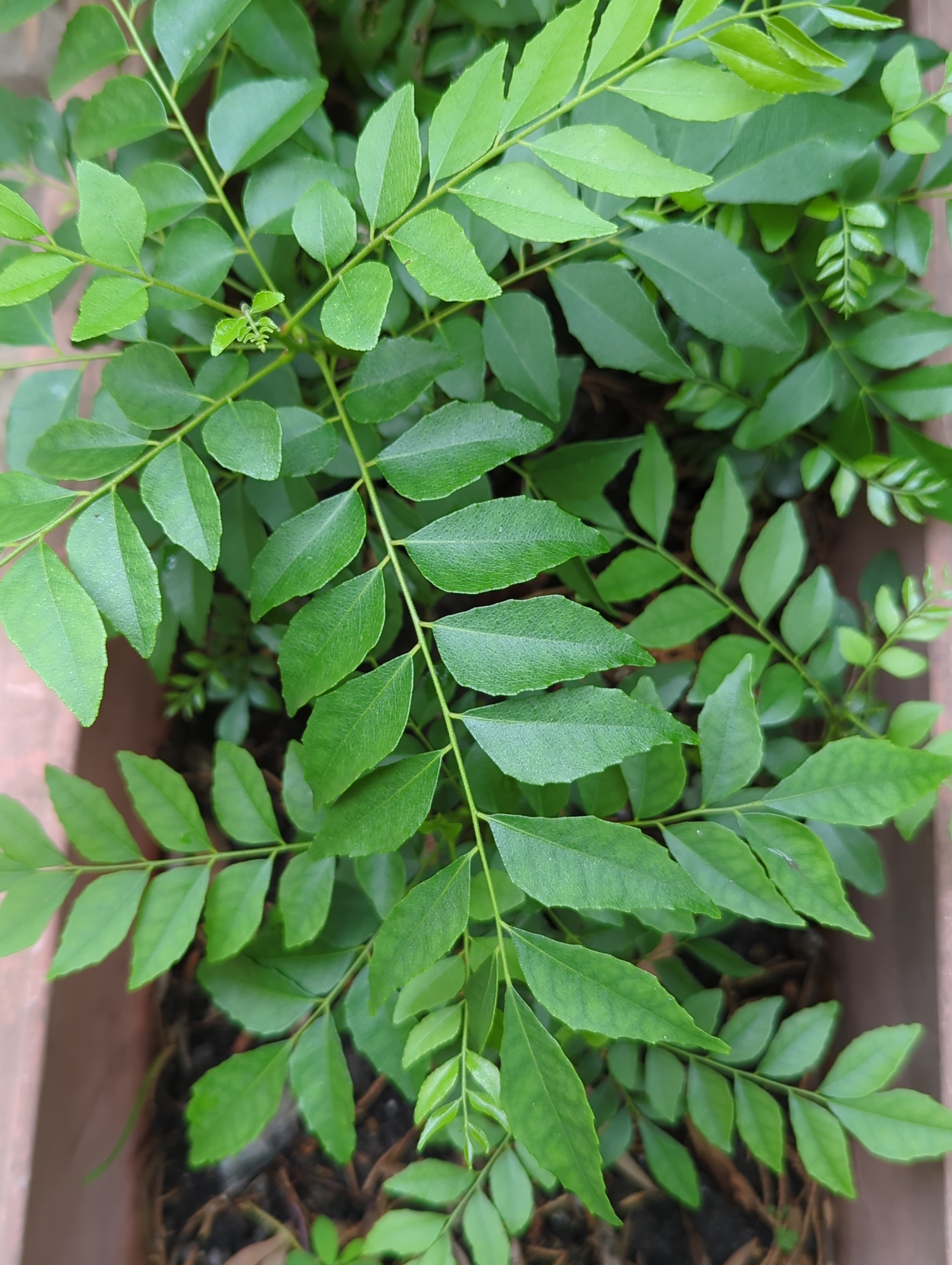
The aromatic leaves of the Curry tree have a bi-pinnate leaf structure where the leaflets radiate from a common rachis or main axis or shaft. Additionally the leaflets are compound leaves, hence its designation as having a bi-pinnate arrangement.
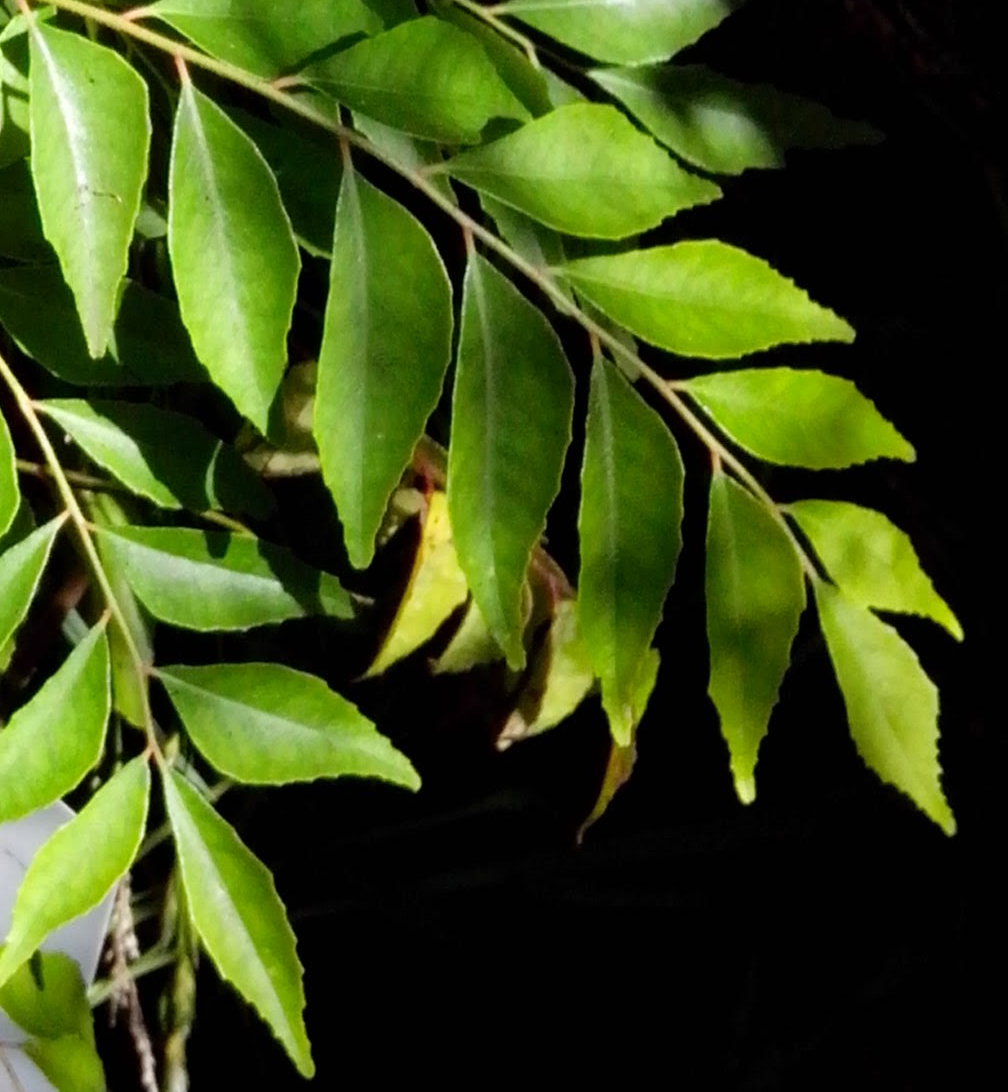
Each red – brown coloured rachis is made up of 11-21 leaflets that are 2.5 – 5.0 cm long and 1-2 cm wide, each on a short stalk of about 0.5 cm long and are arranged alternately. The leaf margins are irregularly serrated. Curry leaves are shiny and smooth, ovate, and lance shaped with paler undersides and a have reticulate venation.

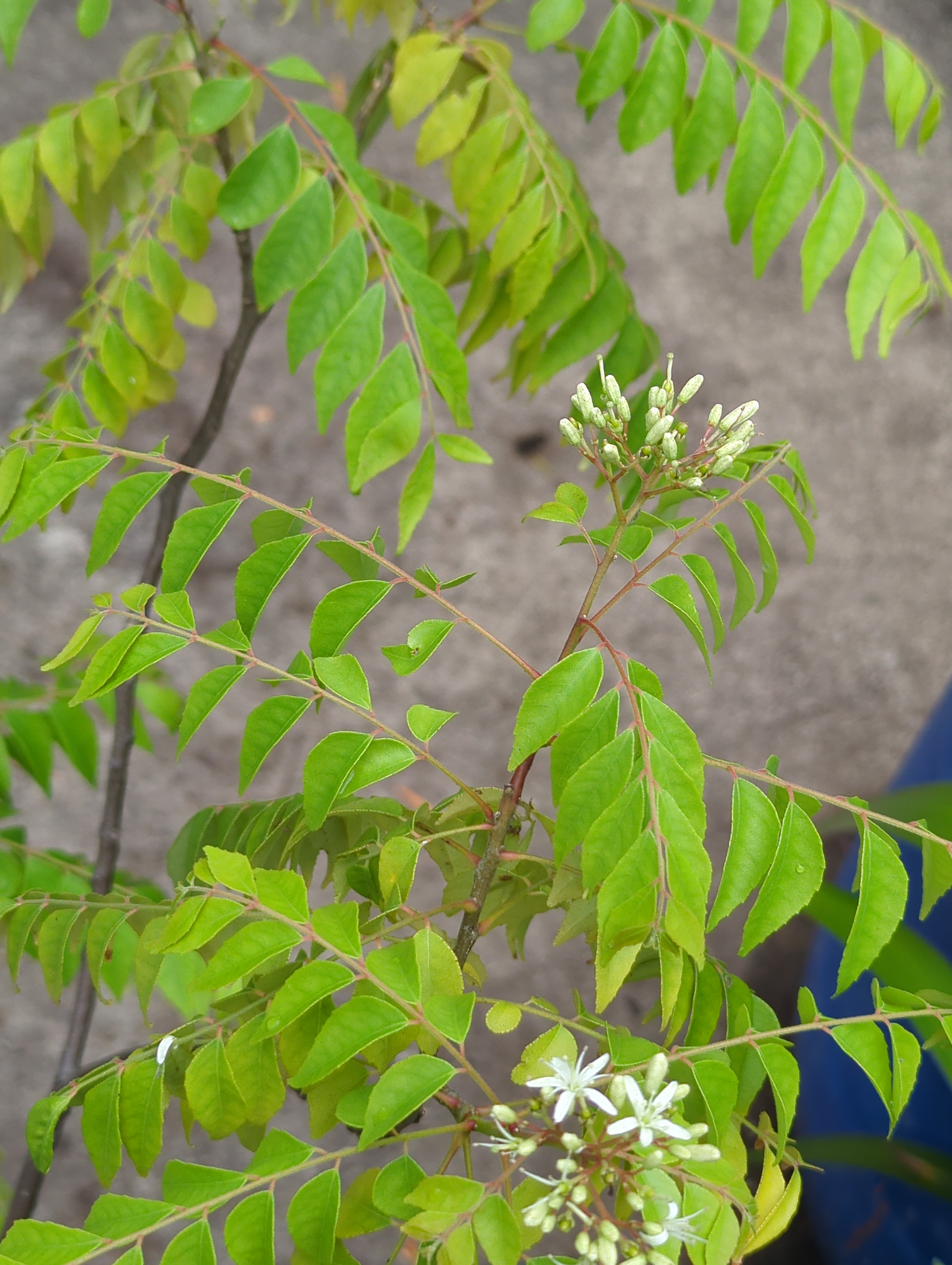
when the tree has matured inflorescences of fragrant white flowers on terminal cymes bloom irregularly throughout spring and summer. Each cluster bears approximately 60 to 90 flowers at a time after flowering at once,
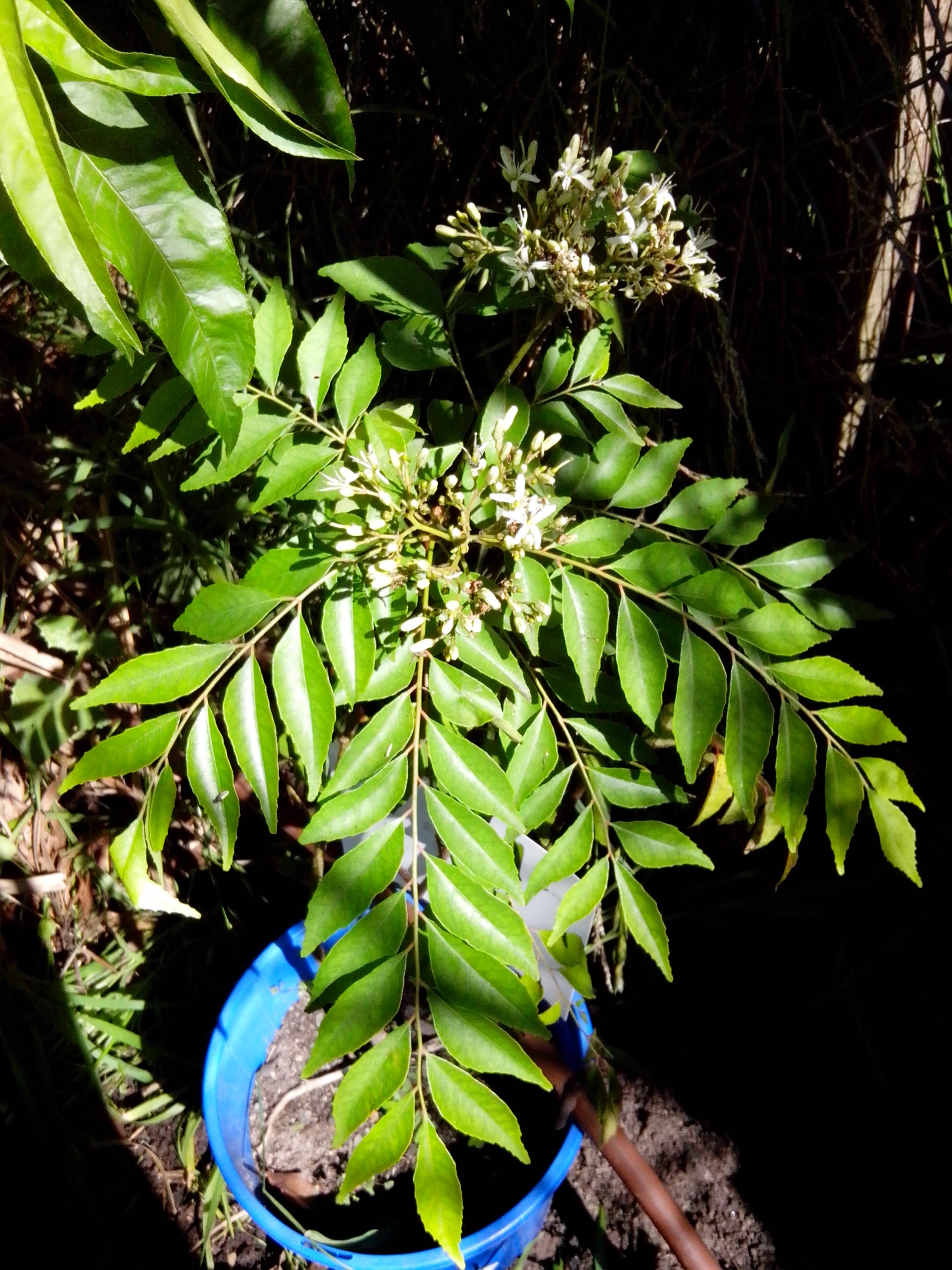
Fully opened, these star- shaped flowers are 1.2 cm in diameter.

Each floral whorl consist of five (or a multiple of five) parts. It has a 5-lobed calyx, with 5 petals that are 5 mm long.

Each flower has 10 small dorsiflexed stamens about 4 mm long topped with the pollen bearing anthers It has a long style 5 to 6mm long. The stigma at the top of the style is bright green and sticky. The ovary at the bottom of the style is superior, that is is attached to the receptacle above the attachment of other floral parts. The sepals, petals, and stamens arise from beneath or around the ovary without fusing with it. Superior ovaries are found in flowers that develop into fleshy fruits like those of the Curry tree..

Curry tree flowers have a sweet and spicy fragrance to attract pollinators like bees and other insects and are self pollinating. In the image above note the spider on the lowest petal.

After pollination small shiny fruits, called drupes, develop that contain a single large seed. The drupes are 1 to 1.2cm in the diameter with length 1.4 to 1.6cm. They mature from green to red to finally a shiny urple black when fully ripe. Drupes do not split open to release the seed, i.e., they are indehiscent. These fruits usually develop from a single carpel, and mostly from flowers with superior ovaries.
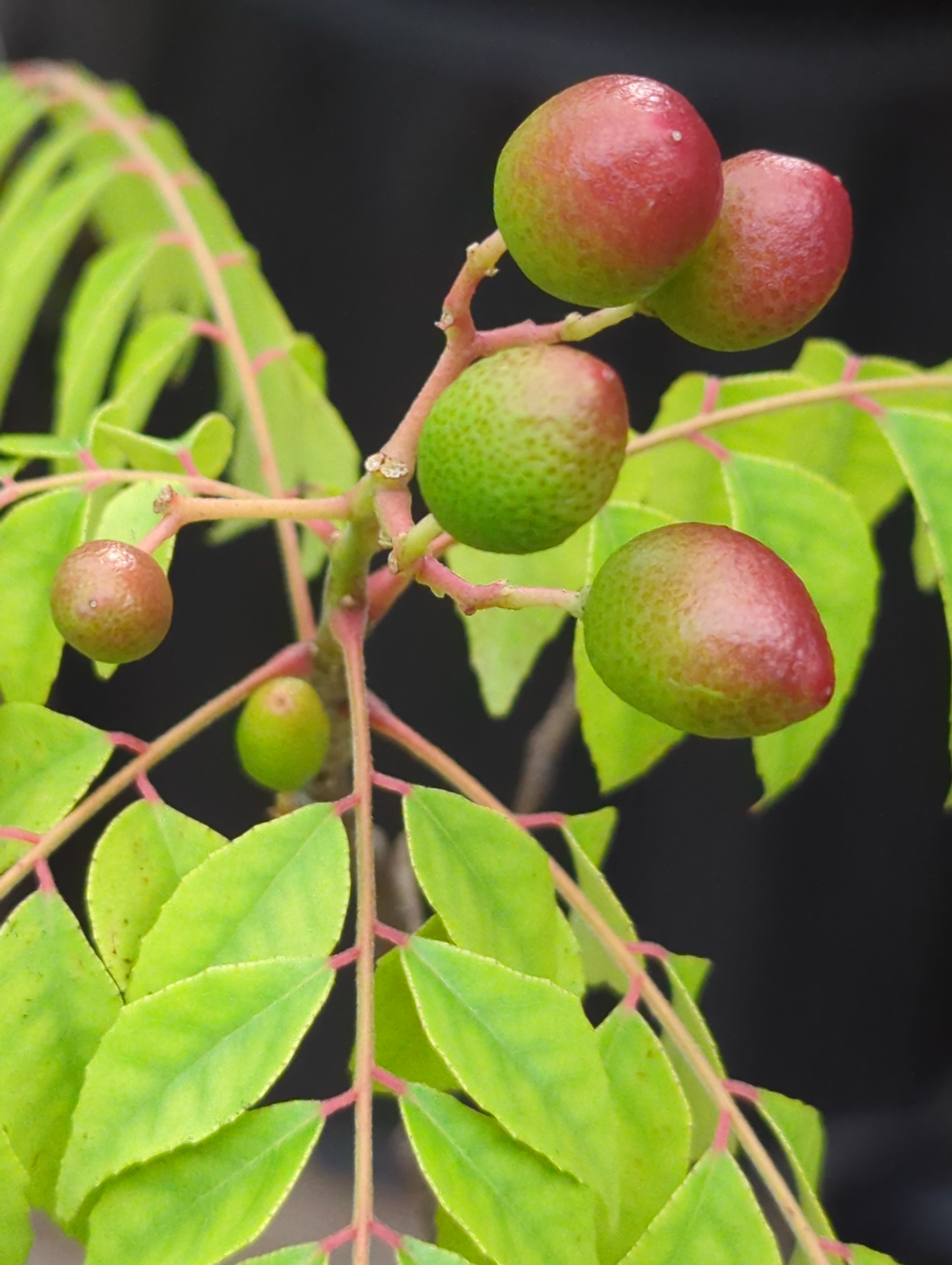
Birds love the drupes and have been a source of spreading the trees into native bushland. To avoid this, gardeners can remove the drupes near their maturity. If developing flowers are pruned a chemical message is sent to the plant to flower again.

The flesh of the mature black drupe has a peppery flavour and can be eaten but the hard seed is toxic and must not be ingested. As the flesh adheres to the seed this makes harder and more care is needed. For safety’s sake you may choose not to consume the flesh. Why not try to use them to propagate new plants for potting up to have more leaves or to give to friends instead.

The Curry tree below is in need of re-potting. You can see that the leaves a yellowing and the plant in need of extra nutrients. This was late spring. The leaves also turn yellow and can fall in the winter time when the tree goes dormant.
Healthy Curry tree leaves should look like the ones below. They have a good green colour and shine.
Site:
When selecting a site for the Curry tree, locate a sunny, protected, frost-free spot in full sun or part shade. Allow sufficient space for future growth all around the planting site.
For optimal growth, whether planted in the ground or in a pot, the Curry tree will need six to eight hours of direct sun each day for at least six to eight months. Only in extreme conditions will this need to be modified.
In cold climates the tree may its leaves and becomes dormant until spring. Under these conditions it may be better to grow the Curry tree in a pot that can be relocated as needed.
The ideal temperature for Curry tree growth is 18-35 C .For trees that have been planted in the ground use shade cloth to give protection against extreme and intense heat. Similarly covering the plant in winter when temperatures drop to 8-10 C helps protect it.
Potted Curry trees can be moved to suit the climatic conditions. Moving the pot under eaves or the the shade of a tree canopy can help in hot summer conditions. Placing a pot under eaves during prolonged wet periods and against brick walls that may radiate warmth will help in winter and autumn.
Soil:
The soil should be well draining, fertile and be slightly acidic with a pH between 5.5 and 6.5 so check it and amend it accordingly.. Dig over the planting site to a depth of 30 cm and enrich with well aged compost and aged cow manure. You can choose to plant the Curry tree in a raised bed to ensure that the tree will have adequate drainage. Prepare the site a month before planting so that nutrients are available to the tree.
For growing in pots a good soil mix for curry leaf plants can be made by combining 2 parts good quality cactus and succulent potting mix and 1 part perlite, 1 part coarse sand and some aged organic compost.
Make sure the pot has adequate draining holes and place a layer of stones over the base to allow free draining. If using a terracotta pot place it on risers to allow the water to drain away when watering.
Only repot your plant in the evening and keep it shaded for 3 to 4 days afterward as it may experience stress. This will help the plant adjust to its new environment more easily.
Watering:
The Curry tree does not like wet feet. The soil should be moist but not overly wet so check the soil before watering only as needed. This should also consider periods of rainfall.
For Curry leaf plants grown in the ground, adding a layer of mulch over the soil can help to retain moisture while preventing the growth of weeds.
Propagation from seed:
If sown while still fresh, the drupes contain seeds that you can use to create new curry leaf trees. Germination takes some time and patience is required but it can be a successful project.
Harvest Curry tree drupes directly from the tree when they are ripe and have turned a glossy, bluish-black tint.
Carefully take away the flesh from the drupe and remove the single pale green seed inside. Use some kitchen paper to dry it well.
Sow the seeds in pots filled with seed-starting compost as soon immediately. Sow it at a depth of 1.5 cm, cover the berry seed with soil and firm it down. Spray the top of the soil to moisten it then place the pot in a warm, shaded place. Cover the pot with clear plastic or a dome to keep the Curry seeds warm and moist.
Check the soil moisture regularly and water gently with a spray bottle as needed to keep the soil evenly moist but not wet. I removed the plastic when there was a sign of germination.
I have found that it took about 8-10 weeks to germinate the seeds and some even many months. Patience is required and not all seeds planted germinated but I added more seeds as the tree flowered and developed new drupes. The image below is of a new plantlet that has just emerged after many months.

This picture below shows the seedlings taken in November 2024

The pictures below were taken yesterday. The tallest seedlings are now 23 cm tall with a span of 28-30cm. They are 2 years old. The smaller ones are 1 year old. The smallest have just germinated after being in the soil for 1 year.
The seedlings have had a growth spurt since summer began. Sydney had its extreme weather with 42 C and mid to high 30C with abundant rain across the two months. February is the hottest summer month in Sydney and we will be moving into another heat wave next week and I will again be moving the young seedlings into more dappled shade under a tree canopy. All this demonstrates that the Curry tree needs hot weather between 18- 35 C to grow well with environmental moisture throughout to provide humidity.
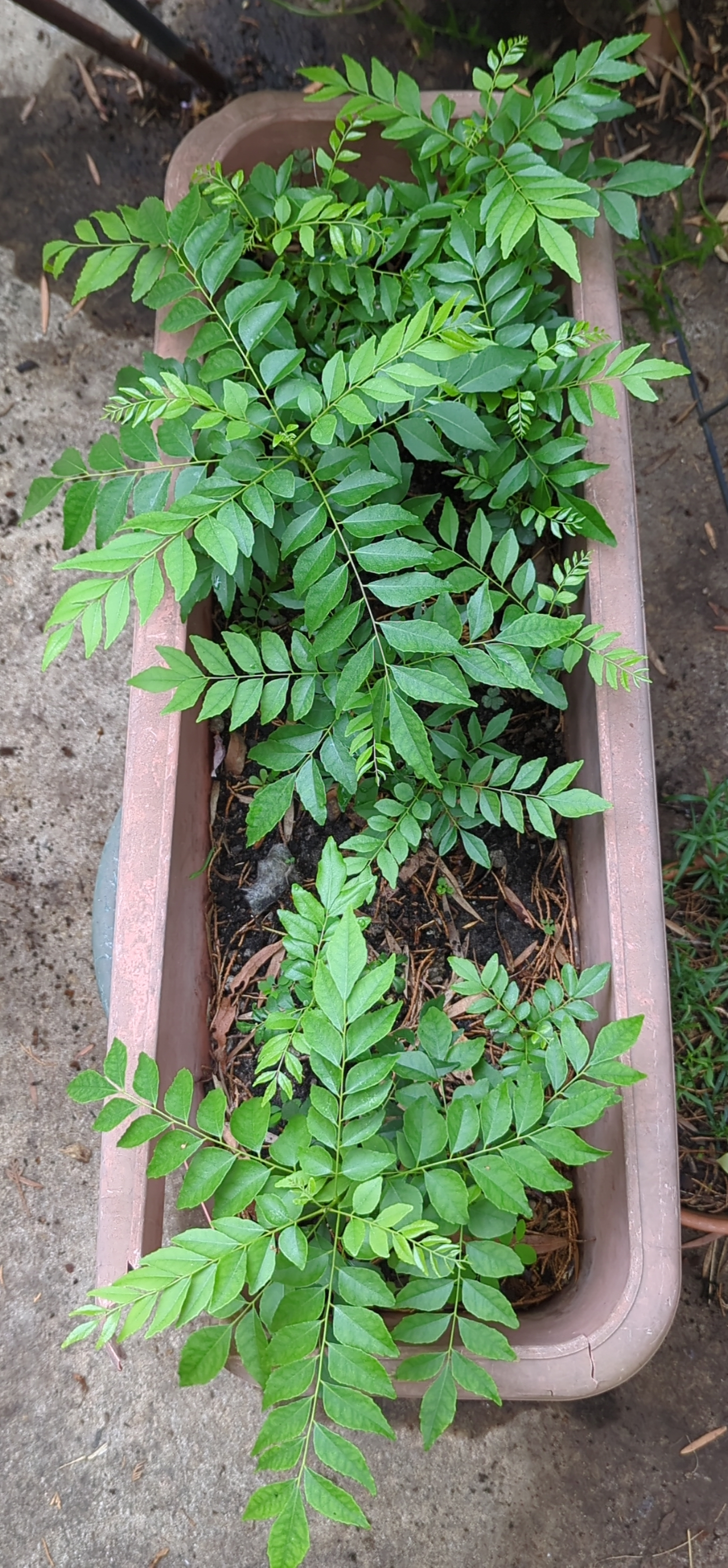
New seedlings are still emerging a year later.

It is most enjoyable to plant the seeds and patience is required along with regular checking of soil moisture. In the right conditions these new seedlings flourish and will be re=potted up to provide some new Curry trees so that enough leaves will be available for harvesting to cook with.
Only repot your plant in the evening and keep it shaded for 3 to 4 days afterward as it may experience stress. This will help the plant adjust to its new environment more easily.
My Curry tree was given to me by a gardening friend and a decade later it is still giving me much pleasure through its delicate beauty and flavourful leaves.
f you like cooking Indian foods do obtain a plant for your garden or terrace or balcony and enjoy this wonderful tree.
 The Grantham Gardener