

The following is a list of vegetables that you can plant in April in Sydney, a temperate zone (just click on the link for the growing guide for each vegetable):
- Amaranth
- Beans – broad beans, fava beans
- Beetroot
- Broccoli
- Brussels sprouts
- Cabbage
- Carrot
- Cauliflower
- Daikon
- Endive
- Garlic
- Kale
- Kohlrabi
- Leek seedlings
- Lettuce
- Mizuna
- Mustard greens
- Parsley
- Peas
- Radish
- Rocket
- Shallots
- Silverbeet
- Snowpeas
- Spinach
- Turnip
Plant of the Month – The Spectacular Hibiscus rosa-sinensis – ( Lava glow )
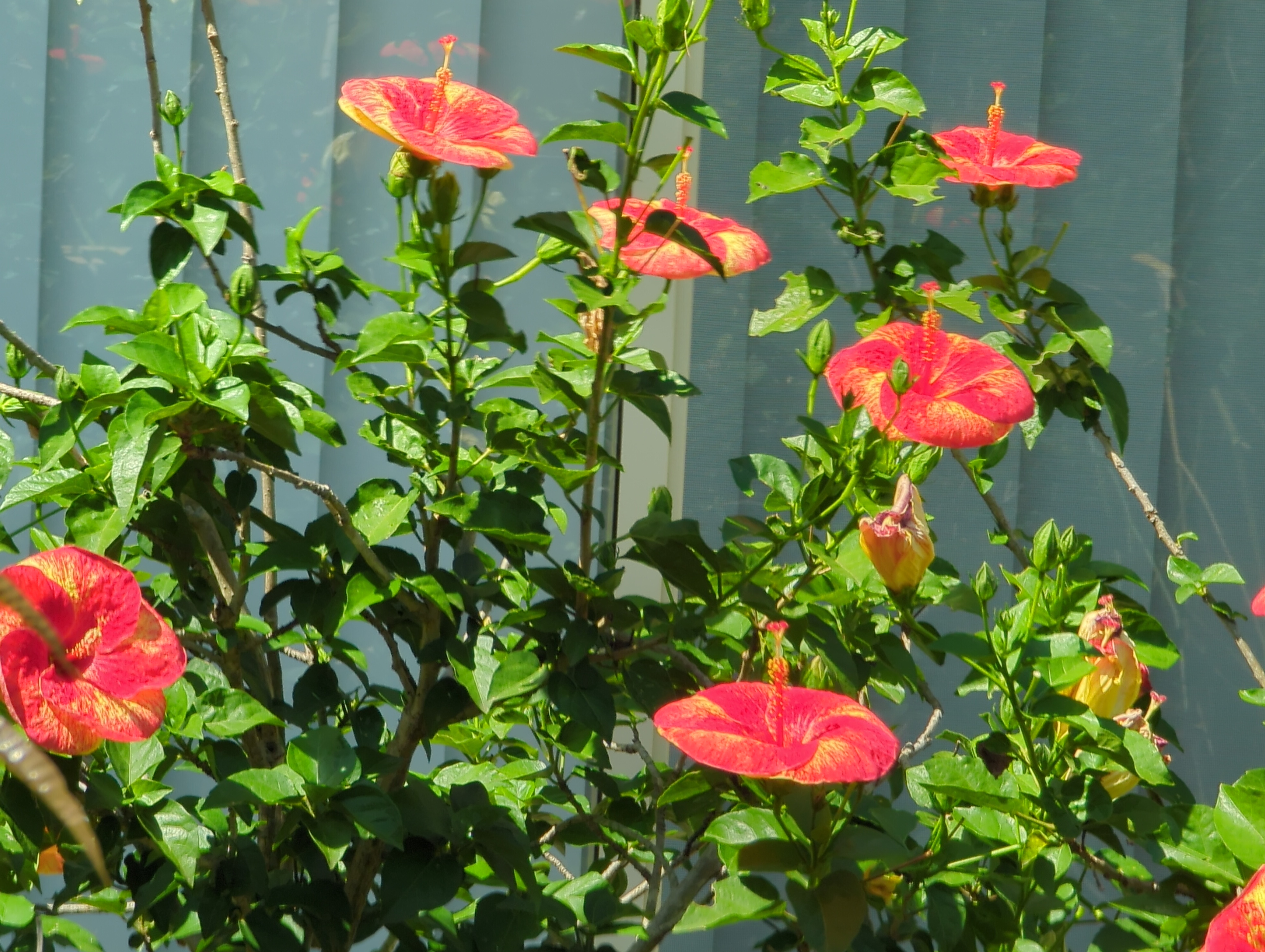
The Hibiscus genus that belongs to the Malvaceae family has many hundreds of species but this month we will concentrate on Hibiscus rosa-sinensis.
It is also known as tropical hibiscus, Chinese hibiscus, and Hawaiian hibiscus.
Hibiscus × rosa-sinensis is an artificial hybrid created in cultivation in pre-European times by Polynesians in the west Pacific and is a pre-historic hybrid between H. kaute and H. cooperi; two species whose natural ranges are separated by more than 4,000 km of Pacific Ocean.
Hibiscus rosa-sinensis, are known for their beautiful flowers and the vigour of the trees growth. Flowers come in a great diversity of colours and shades as single or double flowers. It is native to Southeast Asia, though not originating in China as its name suggests and is the national flower of Malaysia.
The beautiful cultivar that I wanted to share with you this month has graced my garden for many years and is named Hibiscus x rosa-sinensis- Lava glow.
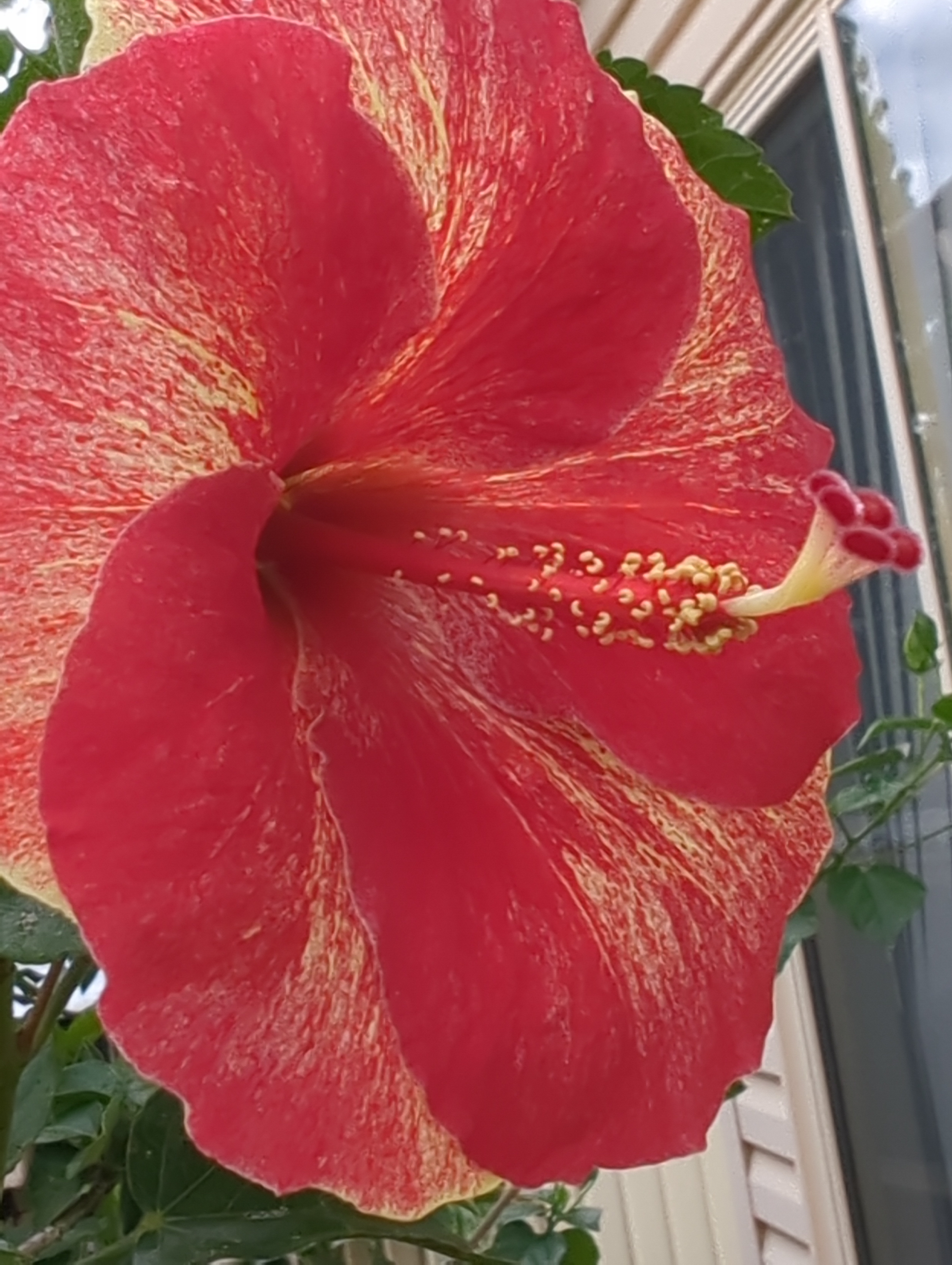
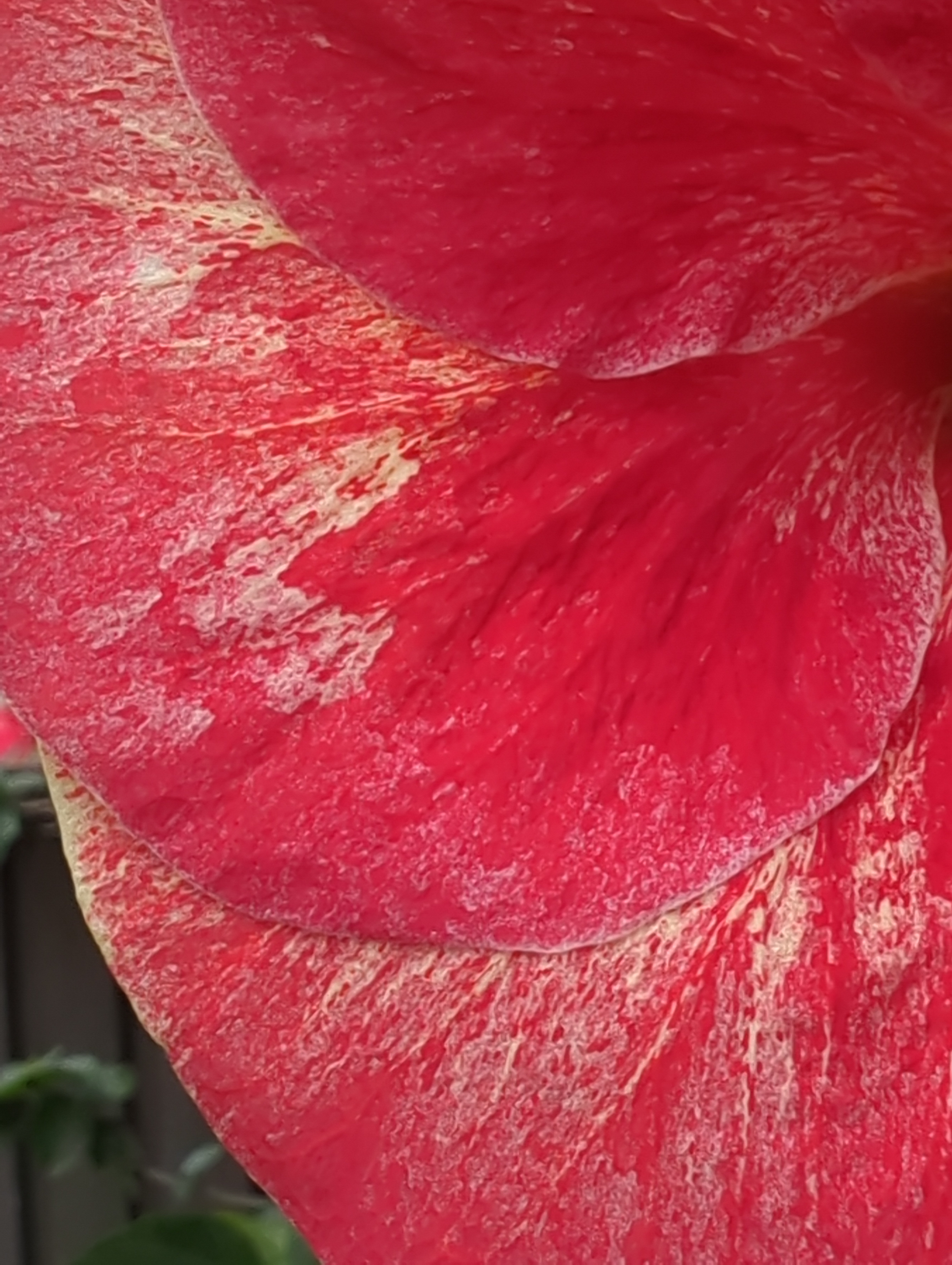
Its large red flowers streaked with golden yellow at the edges stand out against the deep green foliage. This hibiscus flowers over the whole year with stunning blooms that become more beautiful as they unfurl.

The flowers, like those of many other plants, last only a day but the magnificent beauty of the flowers and the vigour and many buds that grow to replace it makes up for this.
Hibiscus × rosa-sinensis is a bushy, evergreen shrub or small tree growing 2.5–5 m tall and 1.5–3 m wide.
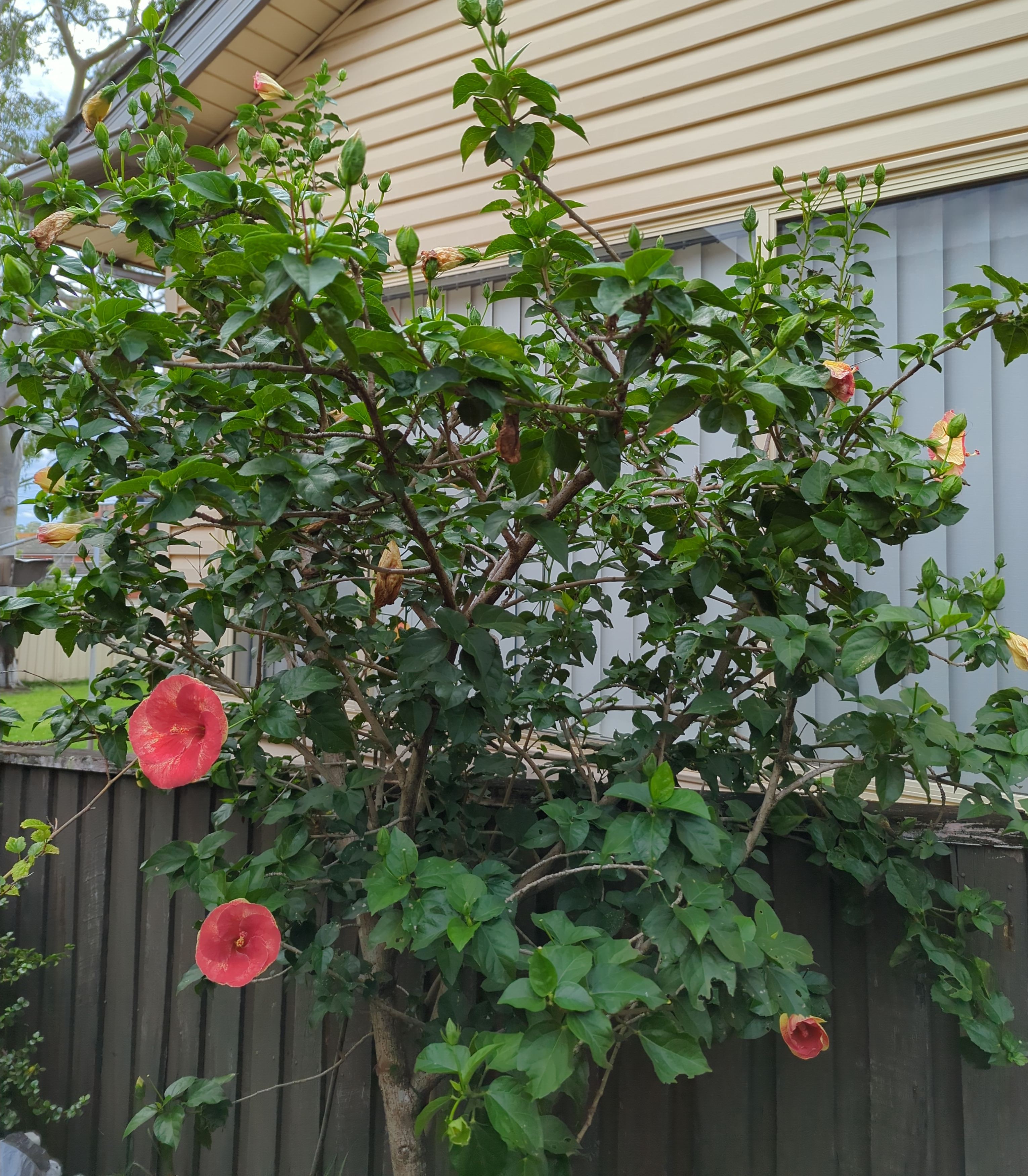
Hibiscus sinensis-rosa leaves are ovate, simple and 8 to 10.5 cm long. They are spirally arranged around a long stalk. The tips are acute and the venation prominent and reticular.
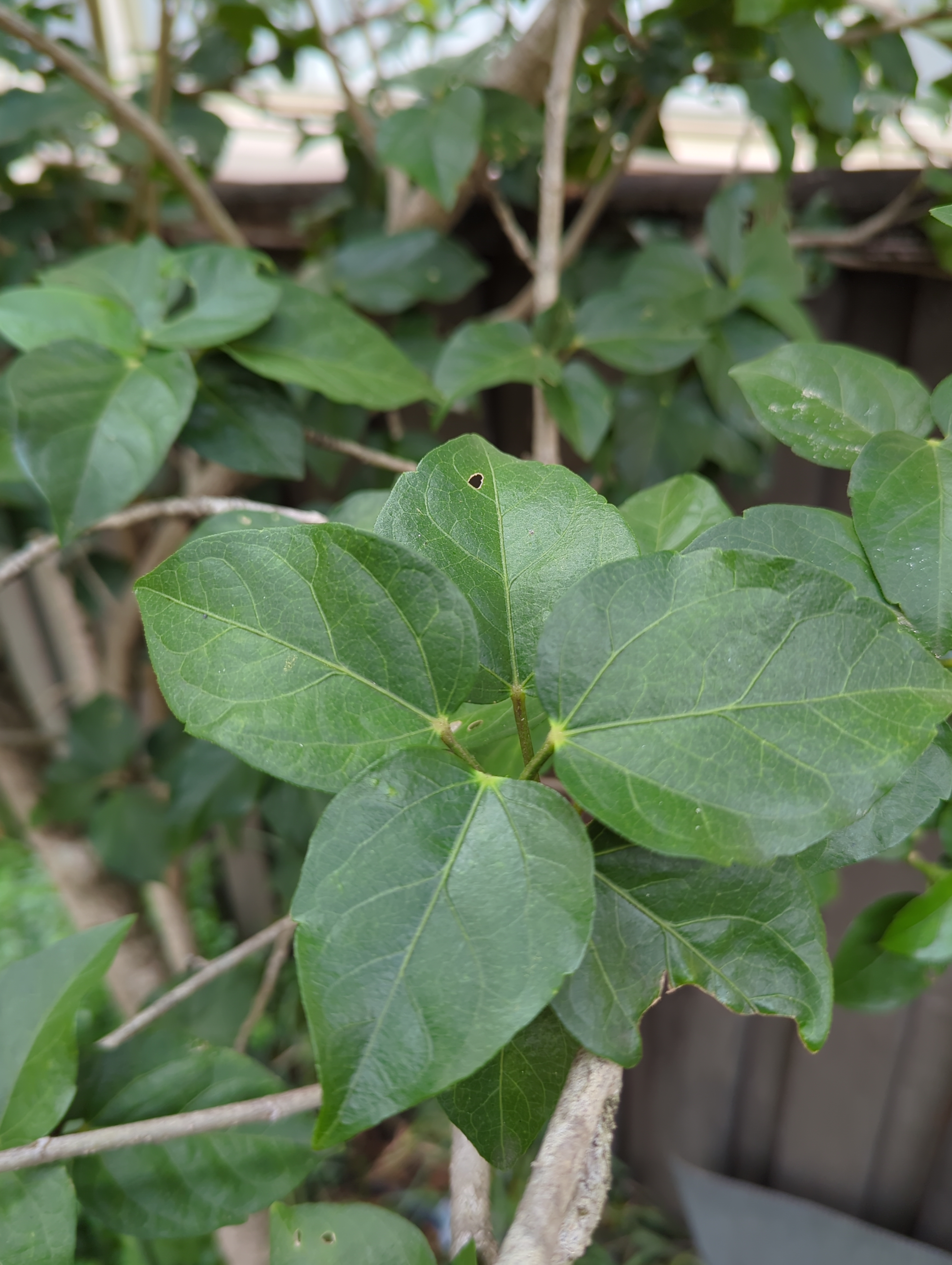
The flowers are large growing up to 10 cm wide borne on a stalk and arise singly from the upper leaf axils.
The five overlapping petals are fused at the base may be white, yellow or red colour. The cultivar lava glow is red with yellow at the margins.
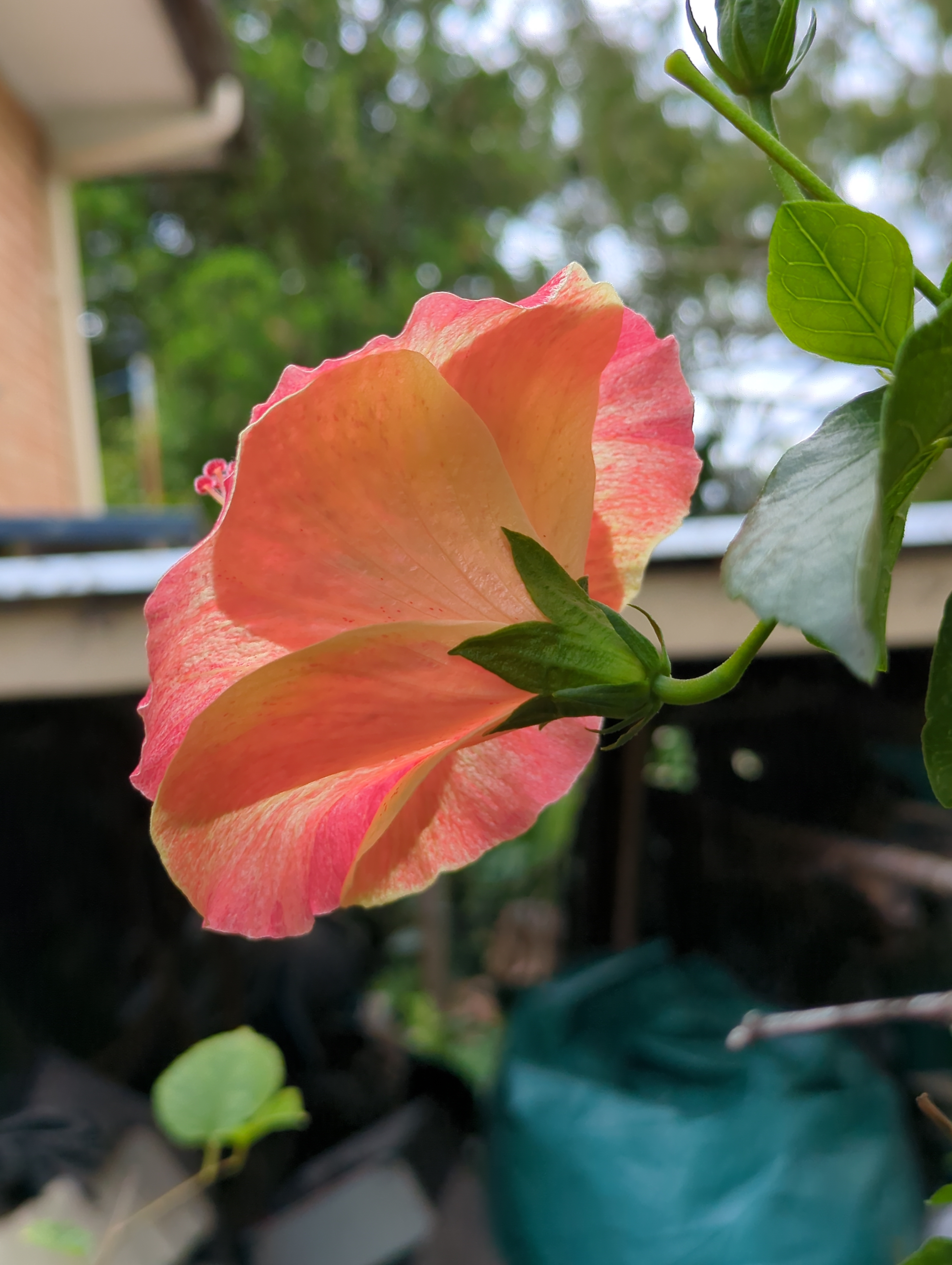
Sepals are joined in a five-lobed cup with an epicalyx of five to seven lobes.

Sepals are joined in a five-lobed cup with an epicalyx of five to seven lobes.

In Sydney the flowers bloom all year round with a greater number of blooms from summer through to autumn.
The image below shows a new bloom opening its overlapping petals to reveal its colourful trumpet like form.
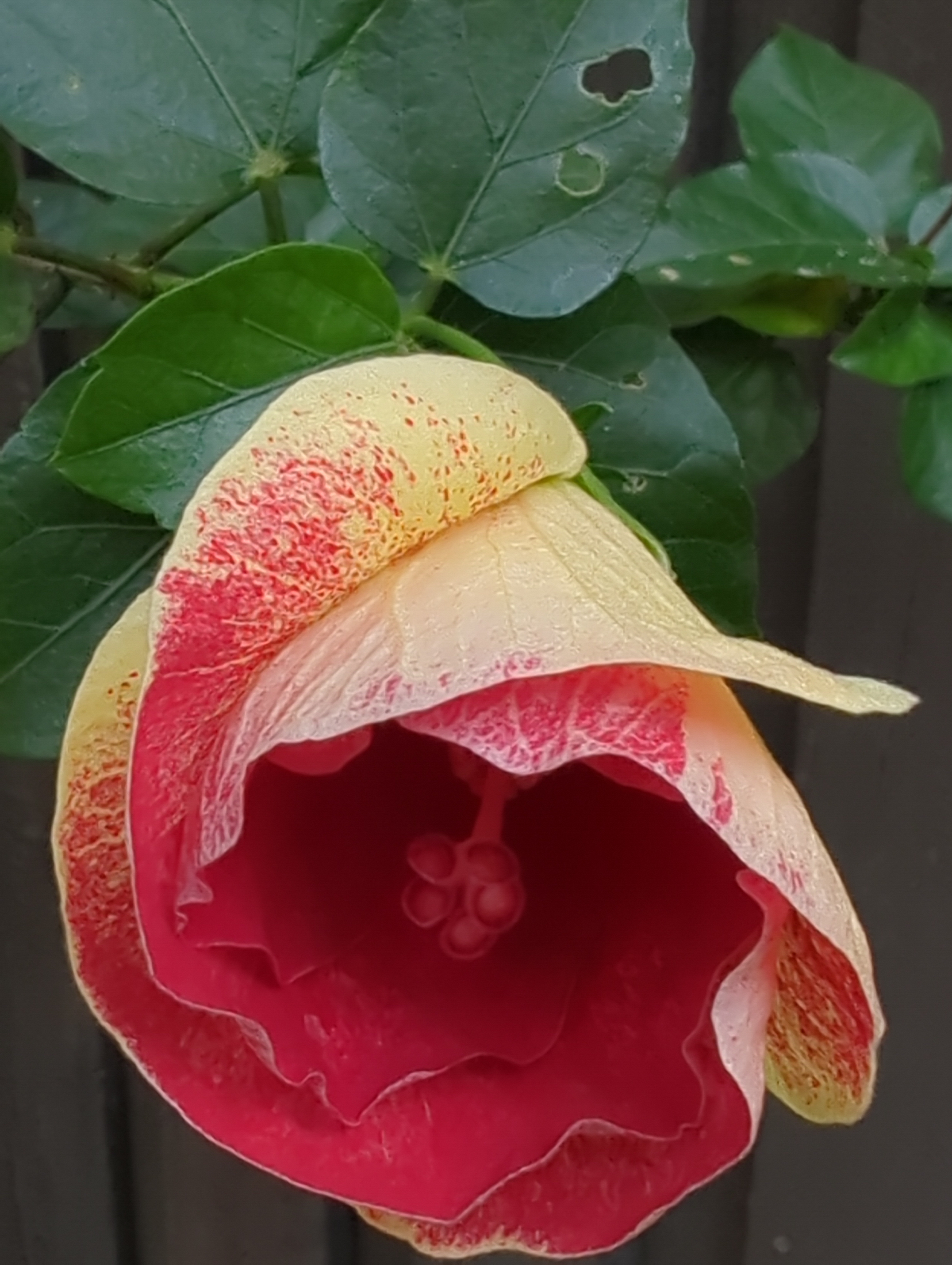
When fully open they are borne like plates on their long stalks.

The picture below shows the sepals supporting the petals and the epicalix lobes at the base of the flower.
The flower of the Hibiscus sinensis-rosa has both male and female parts. Numerous stamens are fused to form a long red staminal tube around the style. The style arises from the female part, the superior ovary. The yellow pollen grains are spiny in nature. At the top of the style are the five red stigma.
Below is a close up of the texture and colouring of the petals of the Lava flow cultivar.
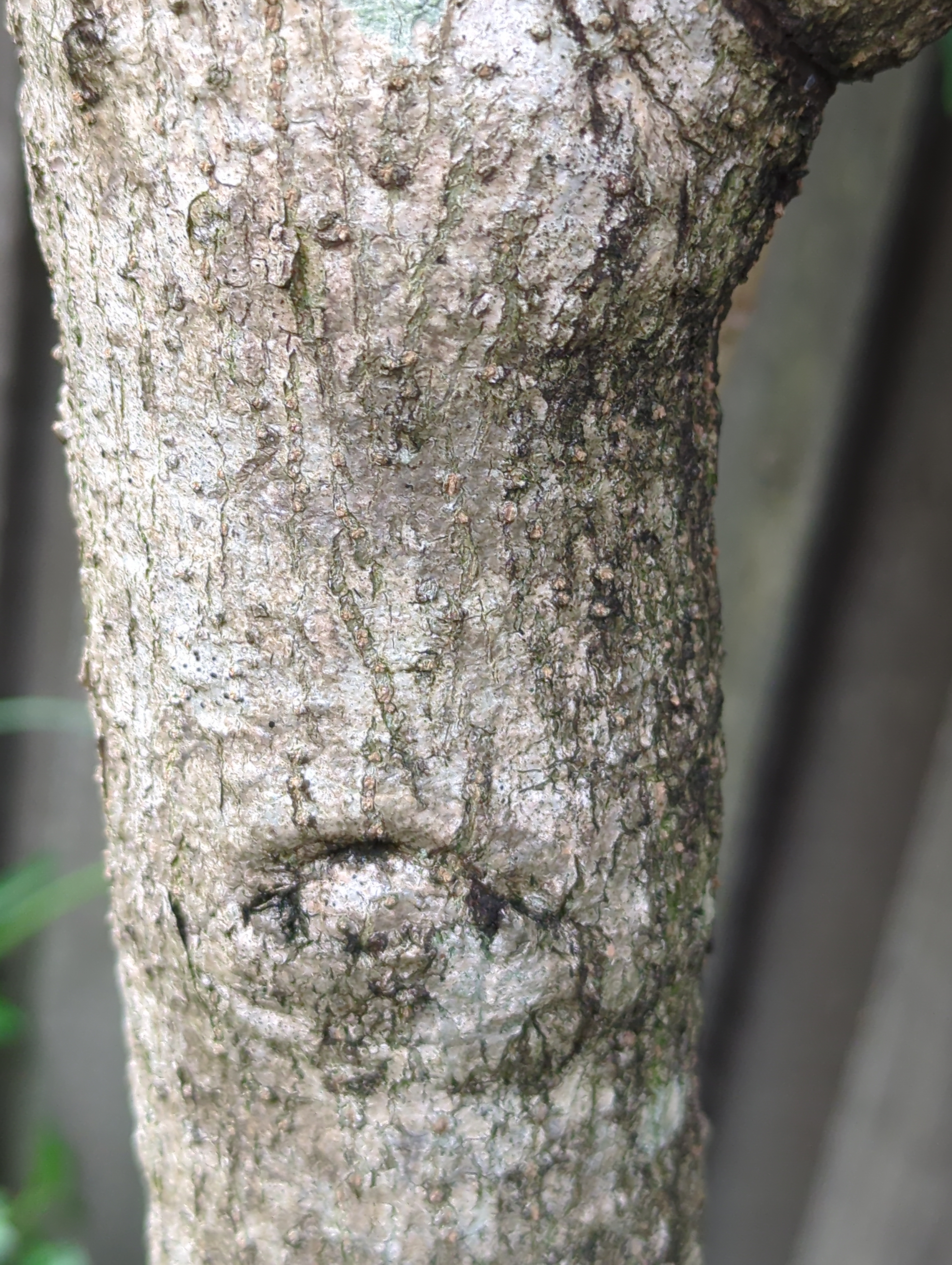
The bark of the Hibiscus x rosa-sinensis- Lava glow trunk is also an attractive textured grey that also stands out among the deep green of the leaves and bright red and yellow of the flowers.
Cultivation:
Planting Site and Soil:
Select a site sheltered from winds with rich, well-draining soil that gets at least 6 hours of direct sunlight. If your climate is subject to extreme heat select a site with afternoon shade. Too much shade however lead leggy growth and fewer flowers.
The Hibiscus rosa-sinensis will grow best in rich, well-drained soil with a neutral to slightly acidic pH between 6.0 and 7.0. For containers, use a high-quality, all-purpose potting mix with perlite added to improve drainage.
Loosen the soil in the planting area and dig in aged compost. Make the planting hole twice as wide and the same depth as the root ball. Place the plant into the hole so the top of the root ball is level with the surrounding soil. Fill in the hole with soil, press down gently to remove air pockets, and water thoroughly.
Mulch around the base to suppress weeds and prevent evaporation and retain moisture, keeping the mulch away from the trunk and stems.
Watering:
Hibiscus are moisture loving plants from tropical zones with high humidity. Always keep the soil evenly moist and water according to environmental conditions to achieve this. Never allow the soil to dry out especially during extended hot weather. This is particularly important for potted specimens. Always check the soil in the pot and water well placing the pot on risers to allow the water to drain out rather than standing the pot in a saucer.
Pruning:
In the spring prune back all the stems by a third to encourage new growth. Hibiscus in general flower on new growth so a good pruning all over will stimulate both new growth and flowers.
Pests:
Hibiscus are prone to mealy bugs, scale and white fly. Keep a check on the plant to catch an infestation early when a good hosing off will eradicate a light infestation. Doing this may avoid the damage to the emerging buds and a greater effort required with organic based pesticides.
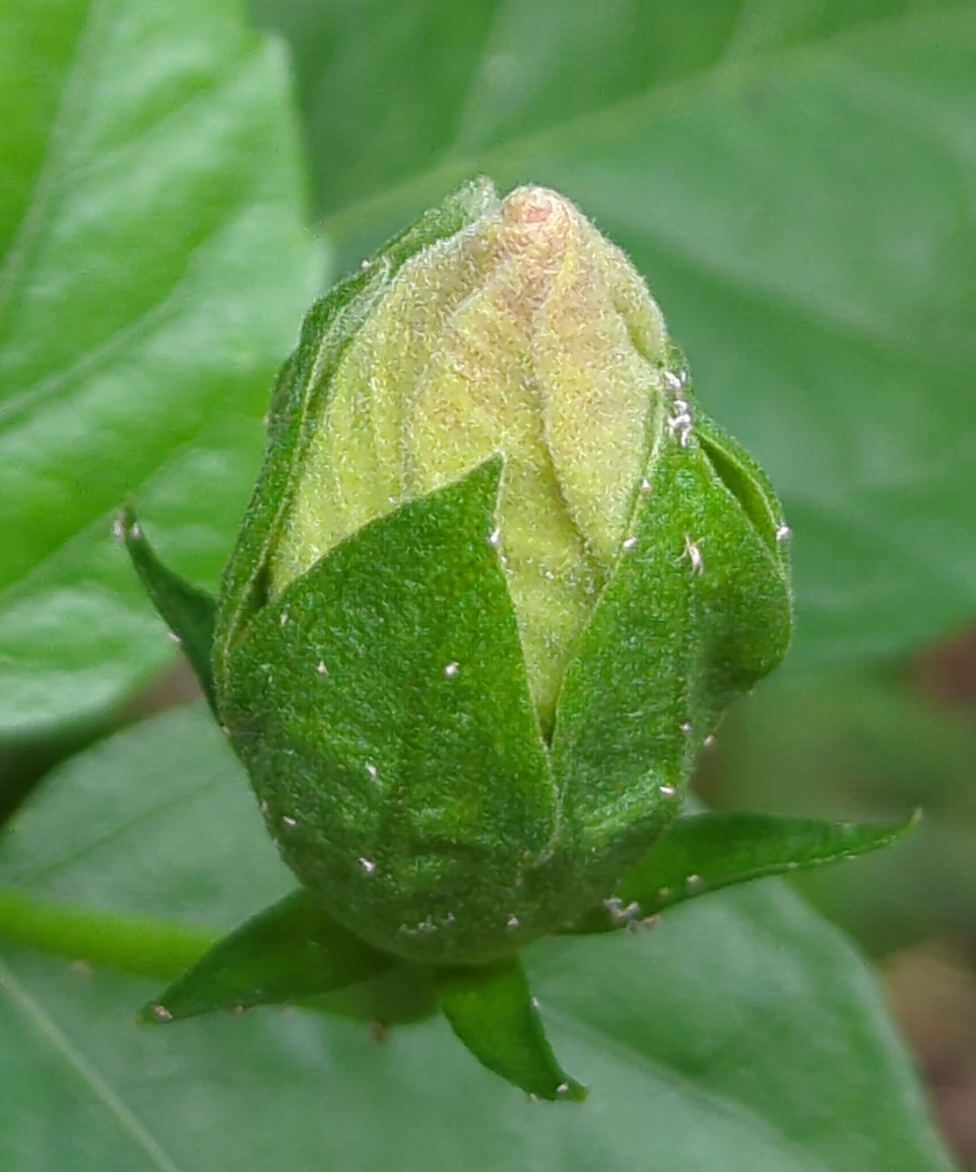
A beautiful Hibiscus rosa-sinensis will add so much beauty to your garden and draw attention to their spectacular bright flowers. If you live in a climate that is suitable do choose one of the many cultivars available.
My Hibiscus rosa-sinensis-Lava glow always gives such joy with its exquisite beauty. Writing this post has made me look at the plant in great detail and admire it even more.

 The Grantham Gardener