

This is the first day of winter and this is the first planting guide of the season. The following is a list of vegetables that you can plant in June in Sydney, a temperate zone (just click on the link for the growing guide for each vegetable).
This is the first day of winter and this is the first planting guide of the season. The following is a list of vegetables that you can plant in June in Sydney, a temperate zone (just click on the link for the growing guide for each vegetable).
- Beans
- Cabbage seedlings
- Garlic
- Kale seedlings
- Lettuce
- Mustard greens
- Onion
- Peas
- Radish
- Snow Peas
- Strawberry plants
Plant of the Month – Wallisia cyanea-(Pink quill)
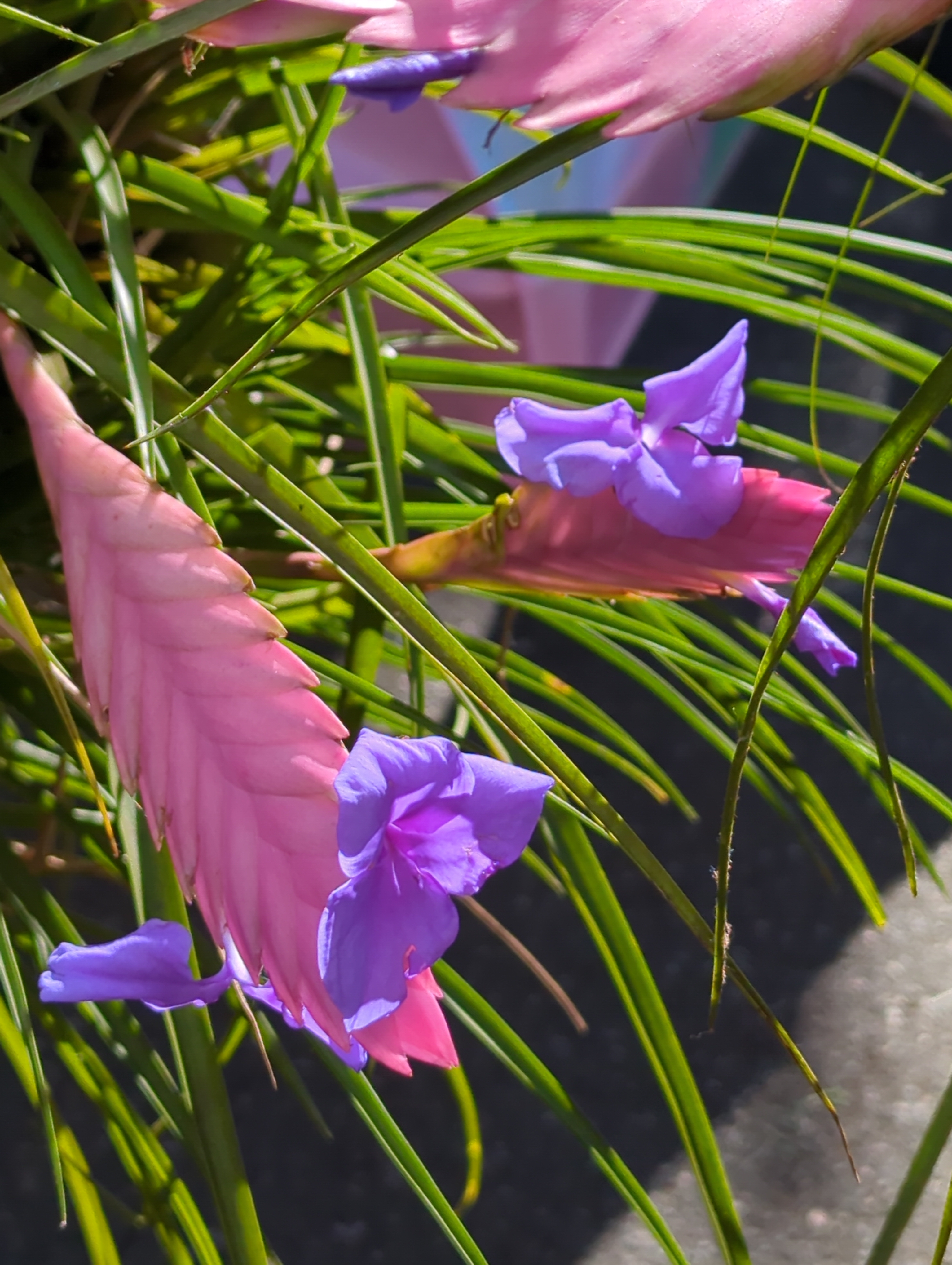
The beautiful Wallisia cyanea, is a species of plant in the bromeliad family and is commonly called Pink quill. It was formerly placed in the genus Tillandsia, but following DNA analysis, was reassigned to the genus Wallisia.
It is an epiphytic perennial native to the rainforests of Ecuador. As an epiphyte it grows on the surface of another plant and gets its moisture and nutrients from the air, rain, or from debris accumulating around it.
The Latin name cyanea means “blue”, referring to the stunning purple-violet of its inflorescences that emerge from spikes of pink bracts. It has been said that it is called Pink quill because the pink inflorescence looks like a feather quill emerging from the “inkwell” of the rosette of leaves.

Pink quill grows to 50 cm high by 50 cm wide. It has stemless rosettes of thin, recurved mid green leaves and paddle shaped spikes of 20 pink bracts with violet inflorescences, in spring and autumn.

The striking violet inflorescence that emerge sequentially over several weeks.emerging from between the bracts. They are 2.5 cm to 5 cm wide and as Pink quill is a monocotyledon plant, the flowers are formed with three overlapping retroflexed, oval and tipped petals.
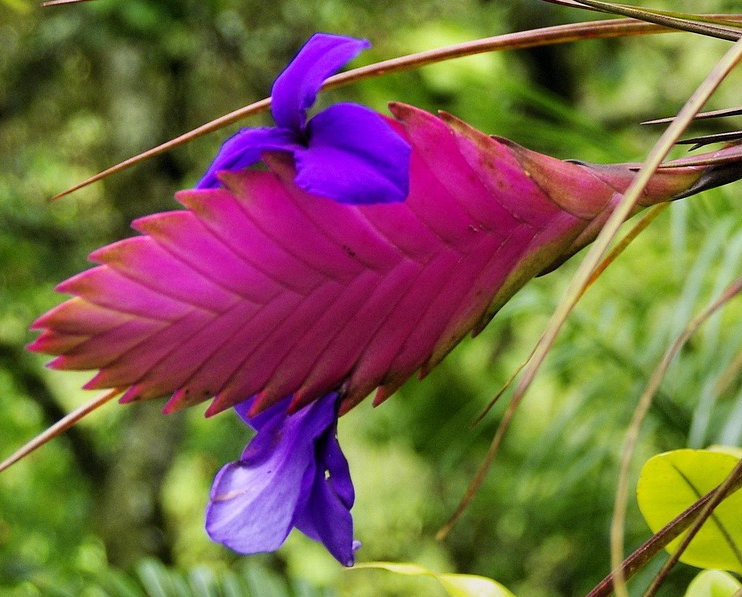
The brightly coloured bracts and inflorescensces contrast beautifully against the green of the foliage and make a stunning display when the plant is in flower.
Cultivation:
Location and Growing Medium:
The ideal temperature for growing Pink quill is from 20 – 30 C with a minimum of 7C that makes it suitable for temperate regions outdoors and easily grown indoors with some care.
Pink quill will thrive outside in bright, indirect sunlight under a tree or verandah that has protection from frosts. It is important that the position offers good air flow so that the plant dry out between watering. Direct sunlight on the leaves will make brown burn marks.
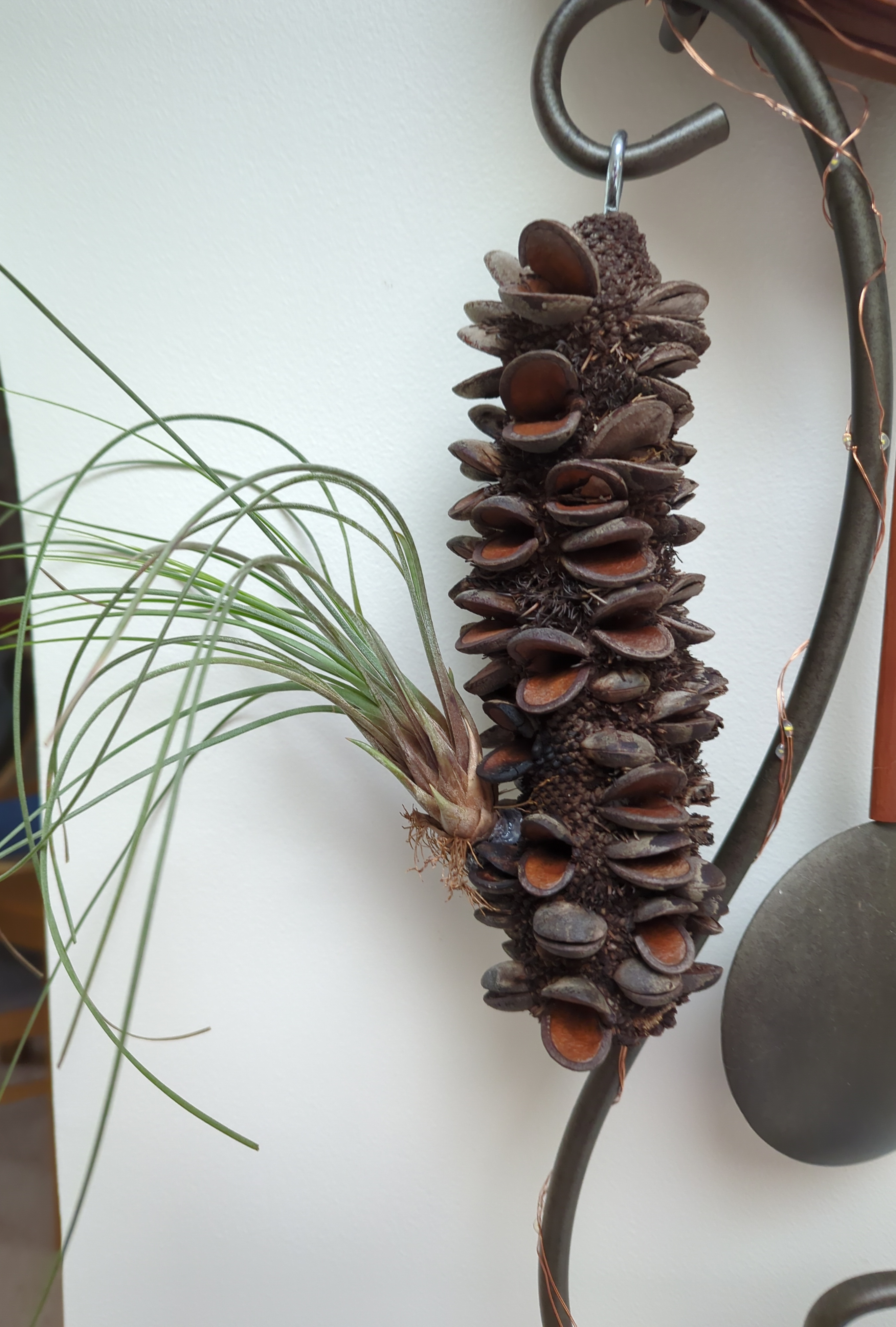
In the forests of Ecuador Pink quill grows epiphytically on trees and smaller plants and rocks. In the home garden the plant does when best suspended or mounted on trees and other surfaces as long as the base does not retain water. Use coated wire or other adhesives for mounting the plant. In the wild, it is often found growing from the axil or branches of trees.
Alternatively, Pink quill can do well in small pots with adequate drainagee holes. Use a quality specialised bromeliad or orchid bark mix with Perlite added to ensure excellent drainage. Never keep the plant soggy or let it sit directly in water, as this leads to root rot. To ensure that water drains away set the pots on risers and never place them in saucers.
Growing Pink quill indoors is possible by making sure the plant is located next to a window with bright light, and in a place with good air flow around it. The plant can be mounted in any creative manner where it can be misted regularly or even fully emersed for a few minutes once a month and then allowed to dry.
Watering:
As Pink quill is chlorine sensitive, consider using rain water that you have collected or at least allowing town water to sit in a tub a few days before using it so that the chlorine can evaporate.
Originating from rainforests, Pink quill needs humidity and consistent moisture. While it tolerates brief droughts it prefers regular watering. As an epiphyte that is often grown indoors, misting Pink quill can mimic tropical conditions in this setting if also given the correct lighting,
The roots of the Pink quill anchors the plant whilst it gets moisture and nutrients through its leaves, so spray or mist every 2-3 days allowing the plant dry out between watering. Take into account local weather conditions such as during autumn and winter as the plant may need less watering during these times.
If the Pink quill is potted the growing medium may only need a deep watering once a month allowing the water to drain away whilst misting the leaves every few days as the plant needs.
Propagation:
Like many bromeliads Pink quill sets side pups that will replace the mother plant after flowering. It is usual that the plants flower once and then clump by way of offsets that then replace the original plant and will flower on maturity.
Pups can be left to clump or removed and re-stablished in another location or pot.

Wallisia cyanea, Pink quill is an attractive and hardy plant for any garden in temperate regions that will give a spectacular colourful bloom when it matures.
 The Grantham Gardener