

The following is a list of vegetables you can plant in August in Sydney, a temperate zone. Just click on the link for the growing guide for each vegetable:
The following is a list of vegetables you can plant in August in Sydney, a temperate zone. Just click on the link for the growing guide for each vegetable:
- Amaranth
- Artichokes in pots
- Beetroot
- Cabbage in seed trays
- Cape Gooseberry
- Capsicum in pots
- Chilli in pots
- Eggplant in seed trays
- Kohlrabi
- Leeks in seed trays
- Mustard Greens
- Onion
- Parsnip
- Peas
- Potato
- Radish
- Rocket
- Snow Peas
- Sunflower
- Tomato in pots
- Watermelon in pots
Plant of the Month – the beautiful Epidendrums: ibuaguense and radicans – ( crucifix orchids)
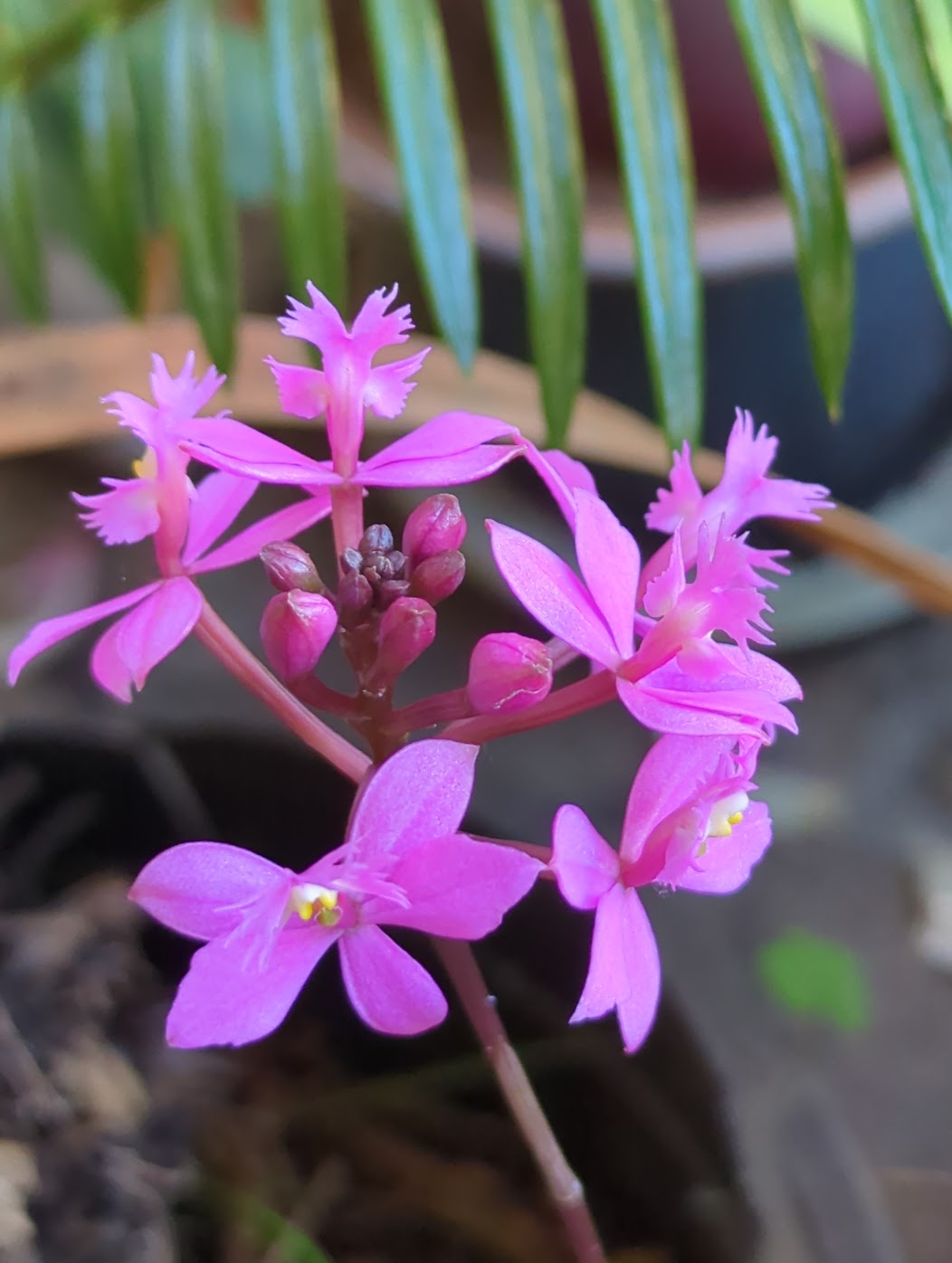
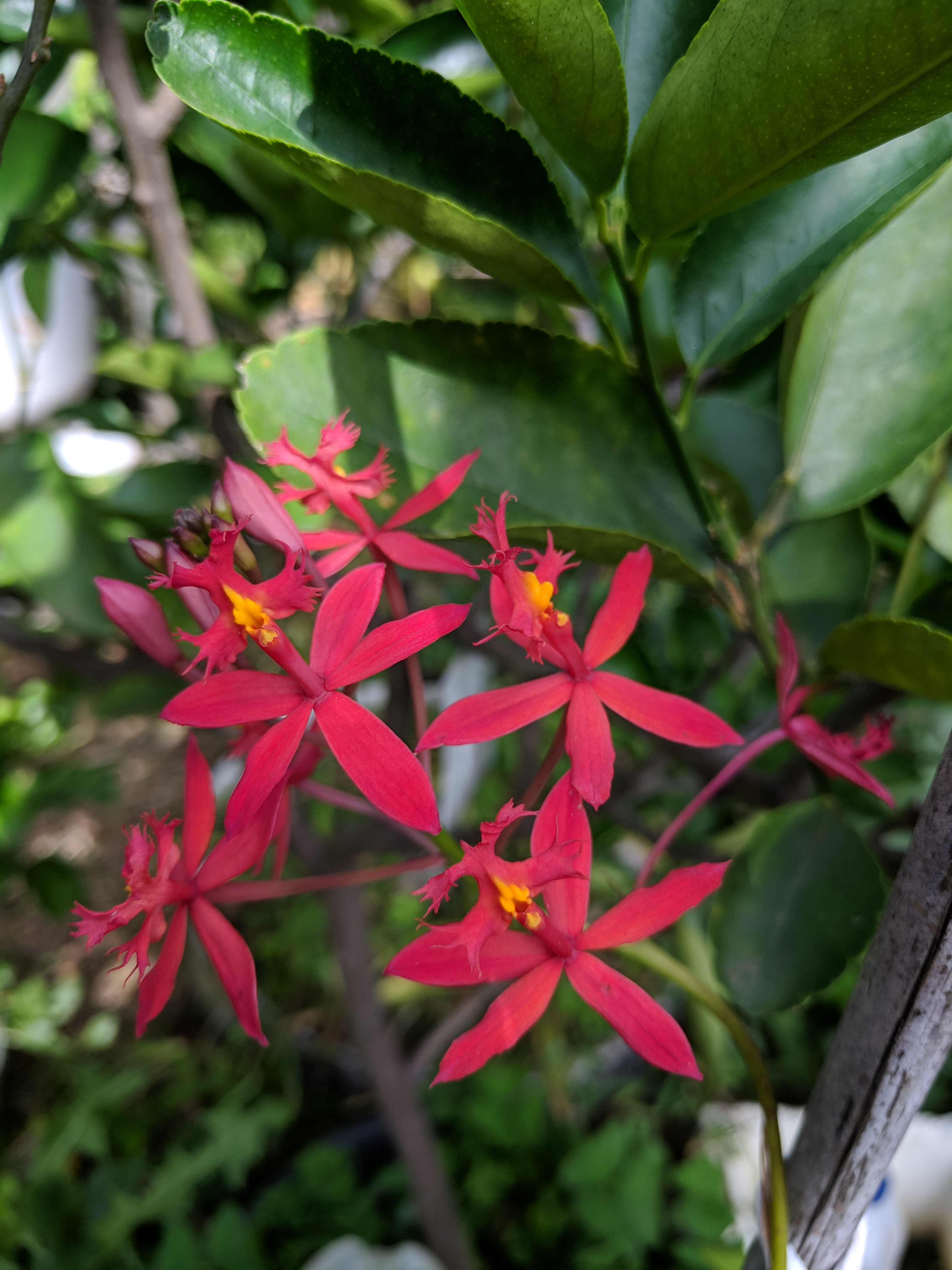
Recently, at a small market, I bought a new Epidendrum ibuaguense in the lovely shade of deep lavender/pink to add to the other specimens that grace my garden: the fiery red, the brilliant orange tinged with bright yellow and the delicate pure white epidendrum.
Crucifix orchid is the common name given to this group of plants within the genus Epidendrum. The distinguishing feature from which they are named is their labellum, or flower lip, which is raised and shaped like a cross.

The genus Epidendrun has more than 1500 known species that are native to the tropical Americas and the Caribbean, growing in habitats including humid jungles, dry tropical forests, grassy slopes, cool cloud forests, and sandy barrier islands.
The two species in my garden are quite easily sourced. They are Epidendrum ibaguense, white, red and pink and Epidendrum radicans in orange and red. I will describe each in turn.
Epidendrun ibaguense (E. ibaguense):
Epidendrun ibaguense is native to Trinidad, French Guiana, Venezuela, Colombia and Northern Brazil.
E. ibaguense differs from E. radicans by producing most of its roots from near the bottom of the stem.
Epidendrum ibaguense, as do other members of this group, have monopodial growth habit. That is, they grow upward from a single point. producing a vertical stem with fleshy leaves that alternate up the stem. The peduncle of the inflorescence is tightly covered for most of its length by thin, overlapping sheaths.
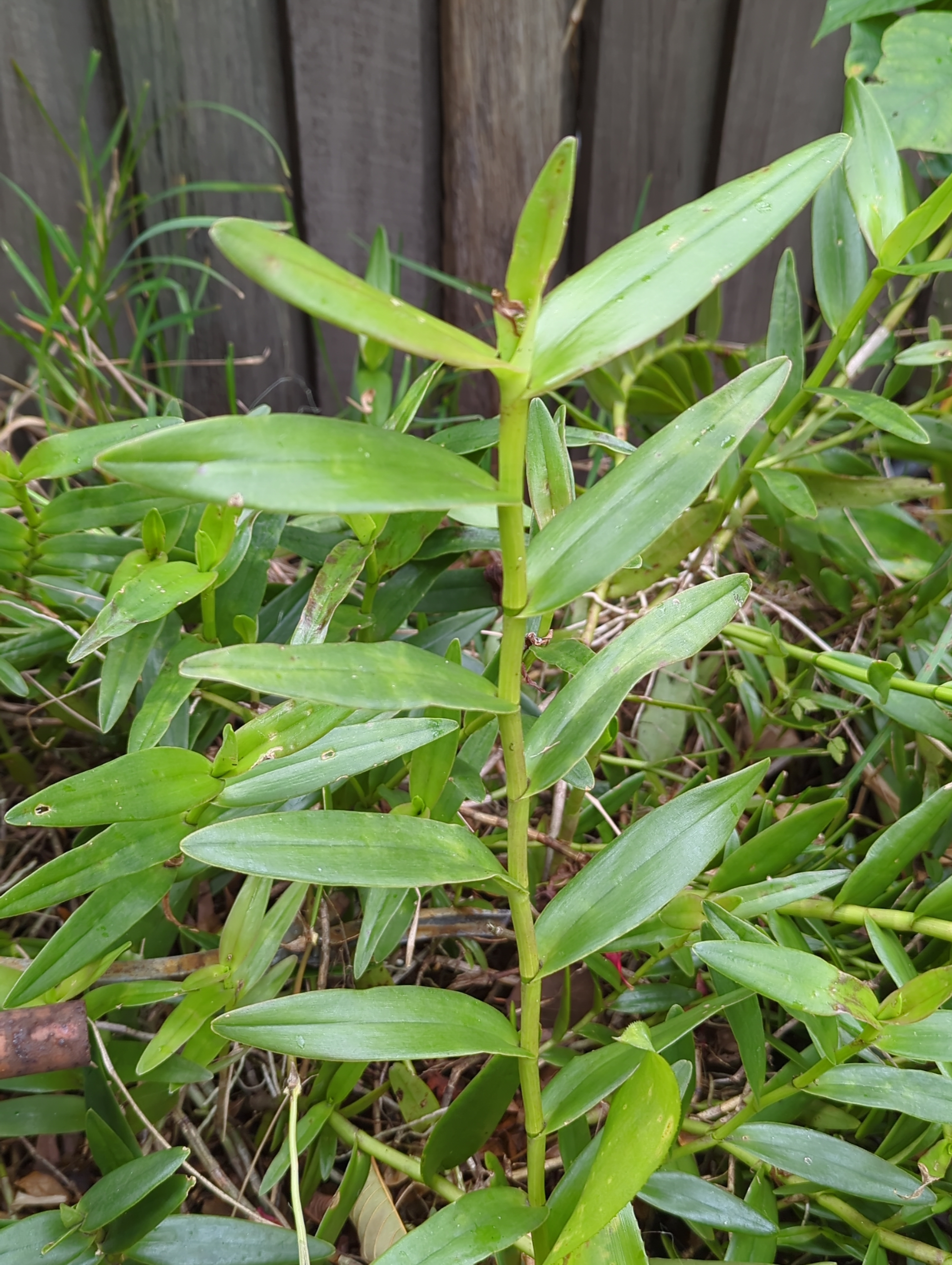
A new growth is then produced from near the base of the old one
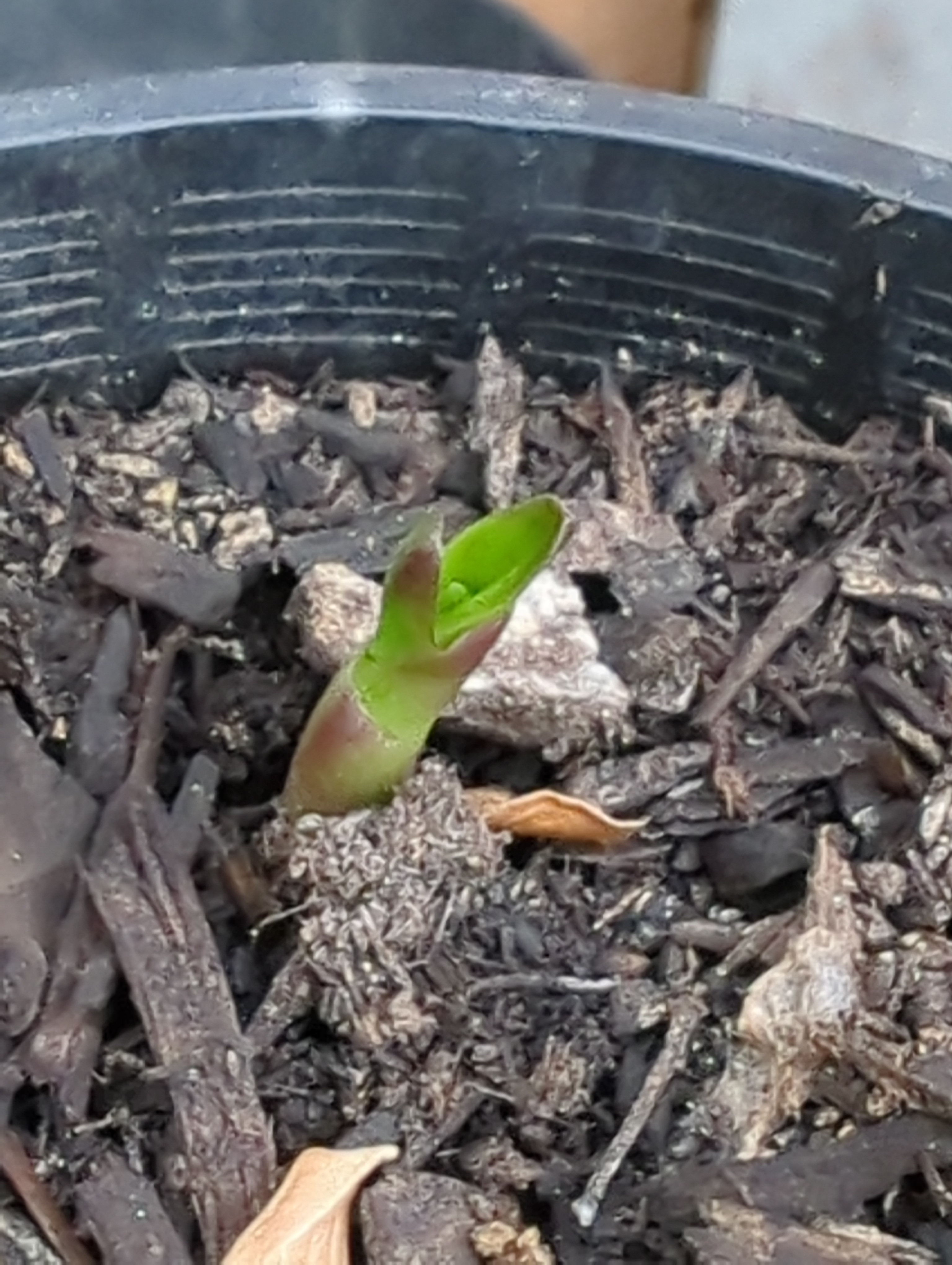
Frequently, from an old infloresence, E. ibaguense will frequently produce a keiki (Hawaiian word for baby). This is a new plant produced asexually from an old inflorescence. The baby plant is an exact clone of the mother plant.
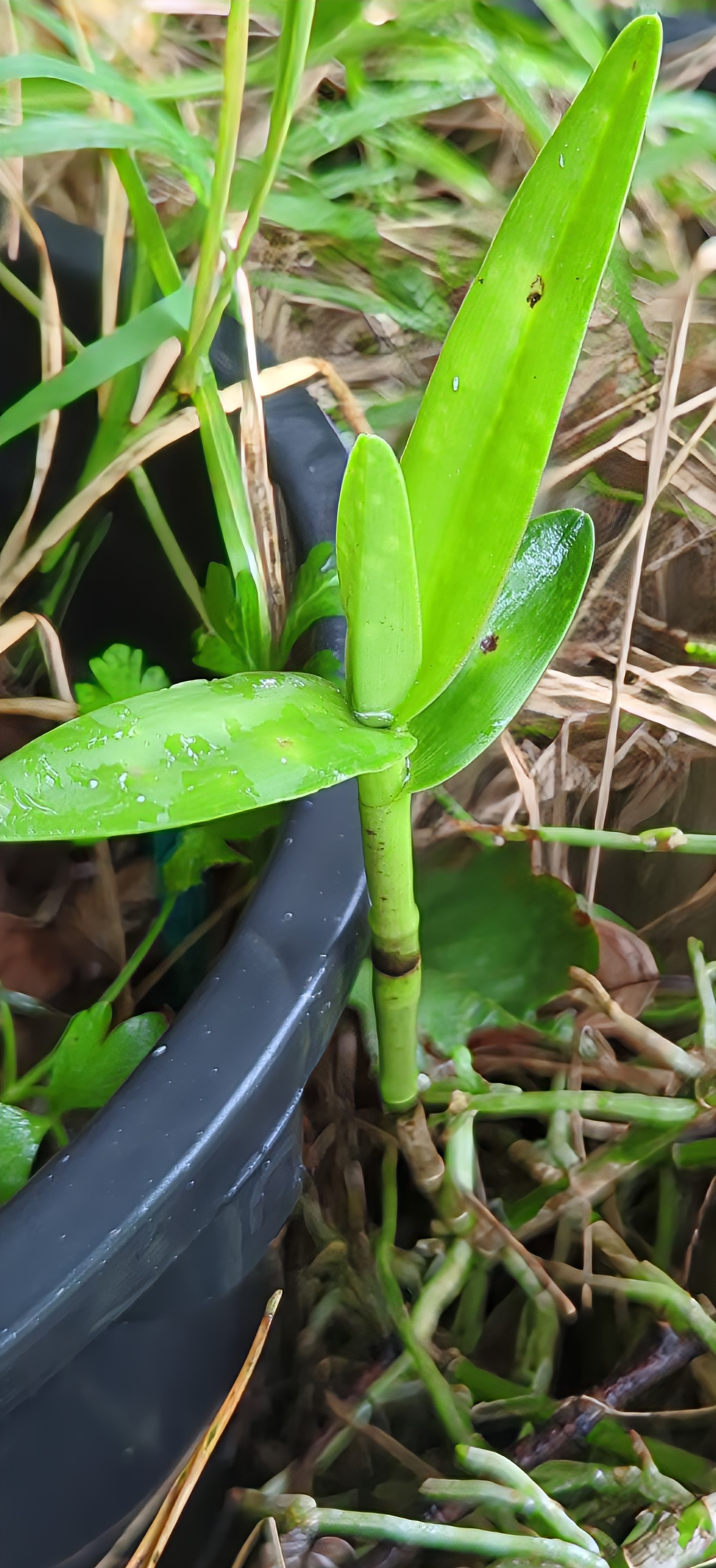
Epidendrun. ibaguense flowers are borne on a flowering raceme at the end of a long peduncle. They can have quite dense racemes of long-lasting flowers and reed-like stems up to 90 cm in height. This plant does not become dormant and can bloom multiple times a year under optimal conditions.
The flowers of Epidendrum ibaguense are small, measuring 2.5 to 4 cm in diameter, with five waxy petals. The inside of the lip which serves as a landing place for pollinators, is yellow.
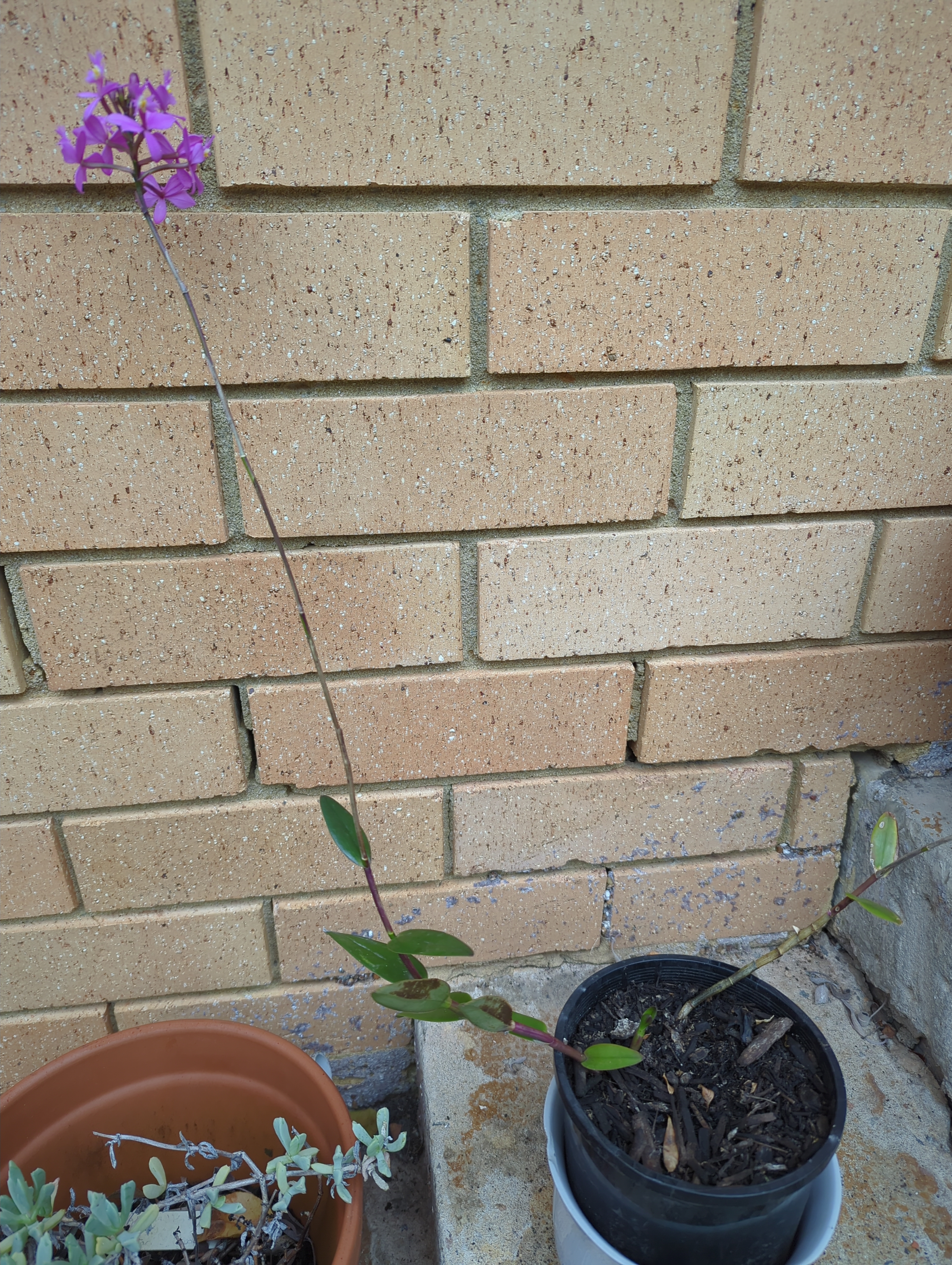
Another way E. ibaguense differs from E. radicans is that it produces stems that stand quite upright.
E. ibaguense can produce flowers that are lavender, red, orange, yellow and white.
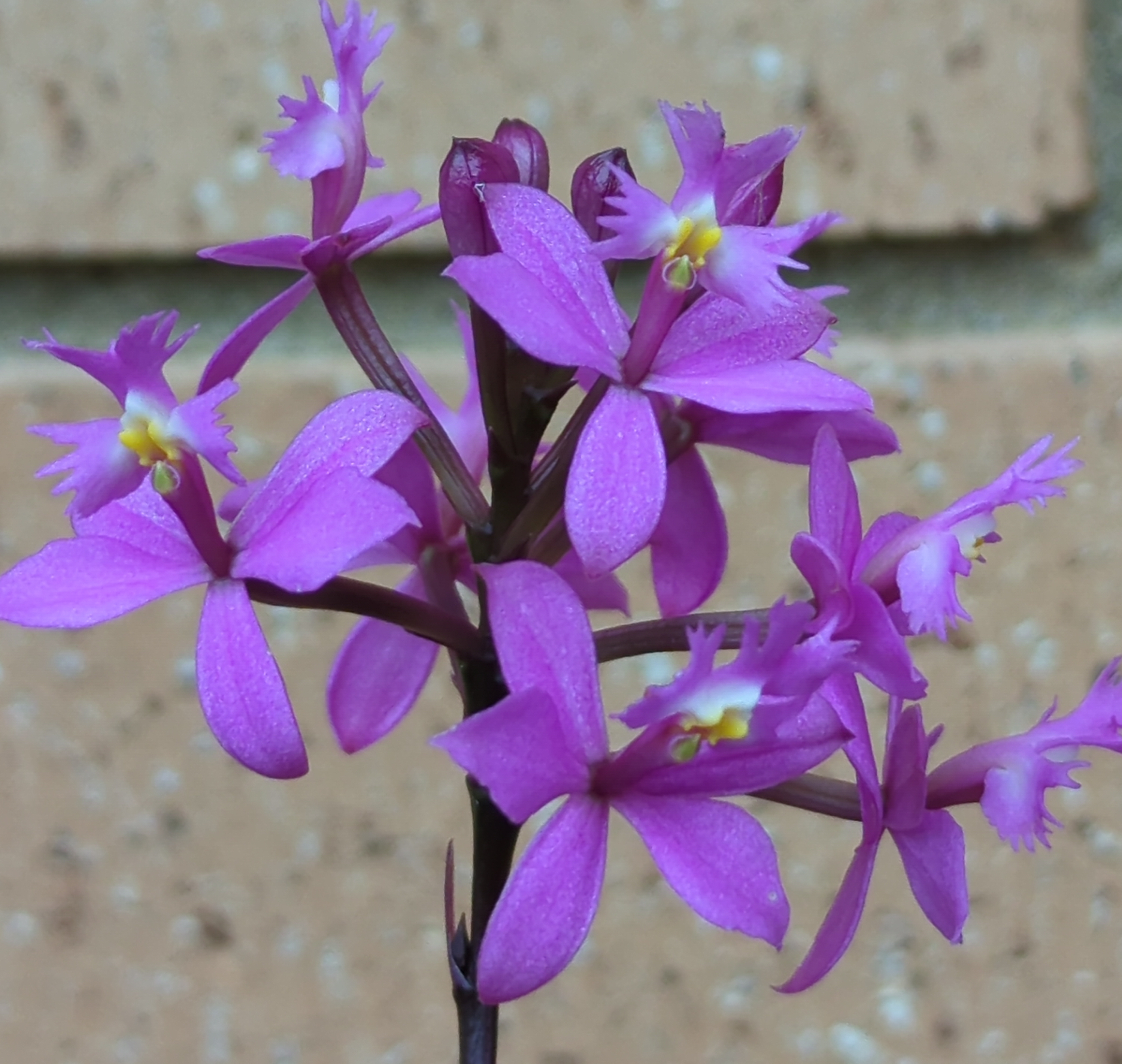
The flowers open successively up the raceme from the bottom to the apex over a long period of time.

The three lobes of the E. ibaguense lip are deeply fringed or lacerate and the flowers respinate or bending to face upwards from the stem.

Epidendrun ibaguense showing the older flowers at the base of the raceme and the newer buds at the top yet to open. Some are larger and ready to open and those above still immature.

The individual flowers are on individual stalks called pedicels as shown on the image below.

Epidendrum radicans (E.radicans):
Epidendrum radicans is a species of crucifix orchid native to central America and northern areas of South America.
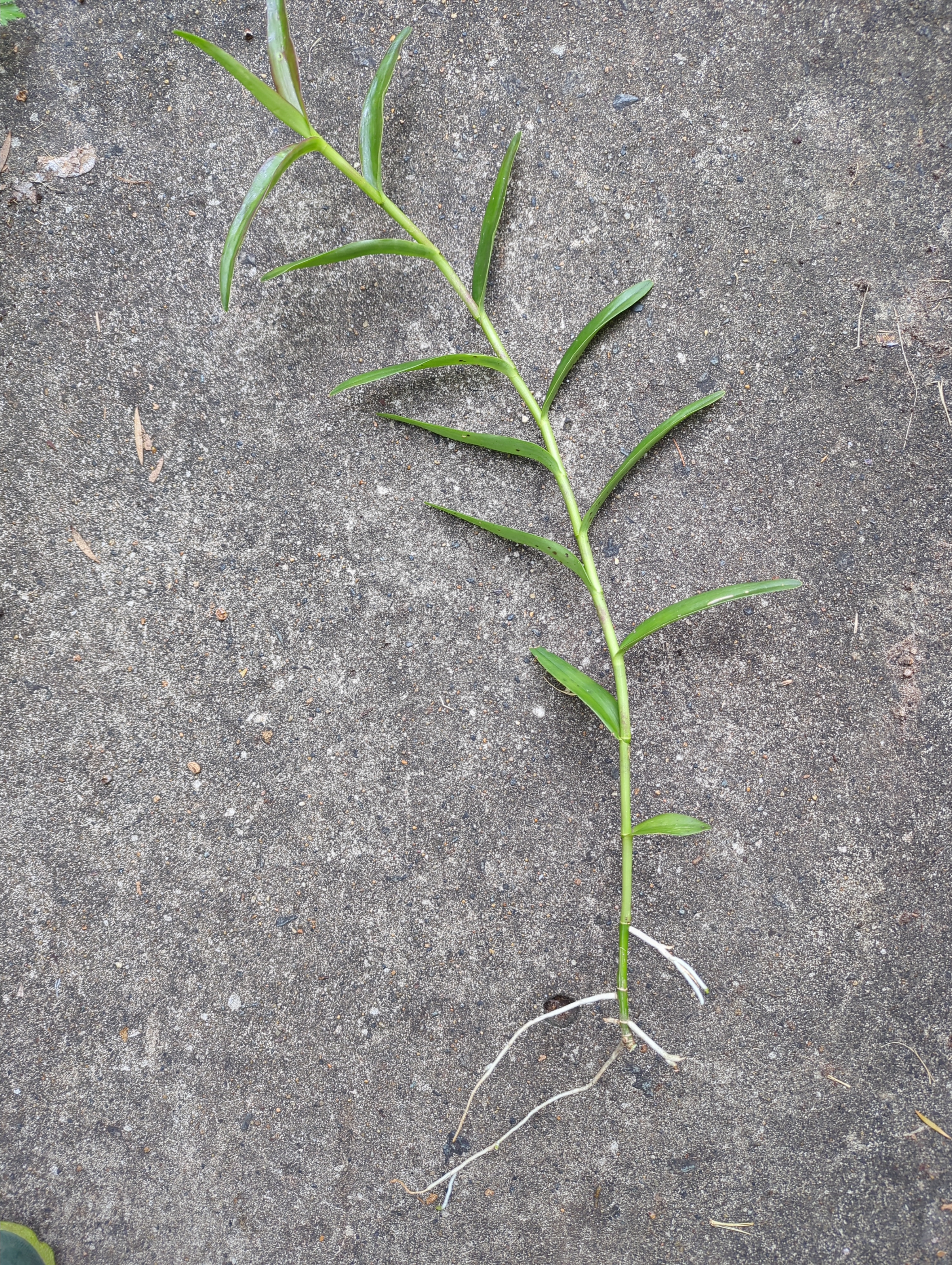
It is characteristic of E. radicans That it has a tendency to sprout adventitious roots all along the length of the stem; (other crucifix orchids only produce roots near the base.) The white, fleshy, aerial roots emerging from the leaf axils of new growth are very conspicuous and help the plant to support it self to surrounding vegetation.

The growth habit of the E. radicans is more sprawling growing in the ground and on rocks with masses of cylindrical, reed like straight stems 19-125 cm long and 3.5 -8 mm in diameter with leaves alternating along their length. Over time they do develop into large clumps.
As a herbaceous plant, E. radicans is perfect for growing in rockeries that provide it with the good drainage it needs. It reaches a size of up to 1.5 m long.
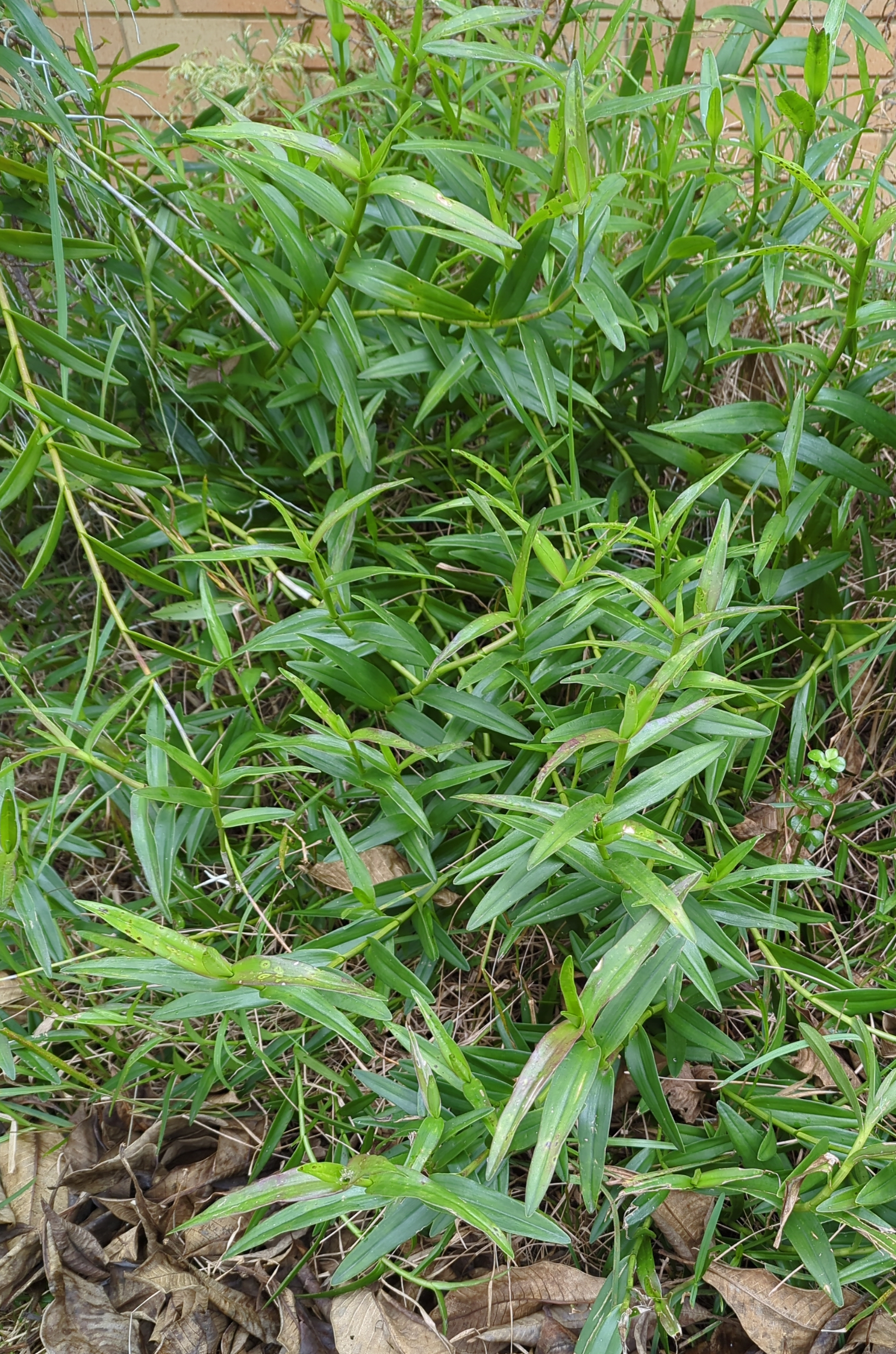
The thick leathery leaves are alternate, ovate-elliptic in shape, 2 – 9 cm long and 1.2 – 2.5 cm long.

The flowers are born on the top of the long stems up to 100 cm long. Like other members of the group they have racemes of up to 20-50 flowers in dense masses.

Like other members of the group they have racemes of up to 20-50 flowers in dense masses.
The flowers are red-orange with yellow on the lip. The flowers can vary in colour, including shades of orange, red, yellow, pink, or white.

The lip of the flower is fused to the length of the column and the free portion is tri-lobed with a fringed margin that is in the form a crucifix.

Cultivation:
Crucifix orchids are tough and easy to grow.
They can be grown in pots in a quality free-draining orchid mix, amongst rocks in the garden, or in soil. A light loamy mixture with sand that drains easily in raised beds ensures that the plants don’t get water logged.
Mine do well amongst rocks in our rockeries under trees that offer both shading from the extremes of summer and leaf litter for nutrients.
It is important that the crucifix orchids get bright indirect sunlight, morning sun and afternoon shade in extreme summer conditions. Direct afternoon sun will burn the delicate leaves. Locate your plants with a mind to your local conditions and if needed provide shade cloth to protect them from heat and from cold.
While Crucifix orchids grow best in temperatures between 10 and 27 C with protection from frosts and winds, they survive our long periods of mid to high 30 C days in summer with attention to keeping them well hydrated. Water in the morning and make sure that they never become water logged.
Propagate new plant to grow in other places in your garden or to share with your friends by taking stem cuttings with some roots attached or cutting of keiki pups that have developed roots.
Left to their own devices they still reward us with lots of long lasting blooms that attract bees and butterflies and give the garden pops of colour.
I encourage you to make some space in your home or garden for these truly beautiful and hardy plants.

 The Grantham Gardener