

Today is the first day of spring and this is the first planting guide of the season. The following is a list of vegetables you can plant in September in Sydney, a temperate zone. Just click on the link for the growing guide for each vegetable or herb:
- Amaranth
- Artichokes
- Asparagus
- Basil
- Beans – climbing and bush
- Beetroot
- Broccoli
- Cabbage
- Cape Gooseberry
- Capsicum
- Carrot
- Celery
- Chicory
- Chillies
- Cucumber
- Eggplant
- Jerusalem Artichoke
- Leeks
- Lettuce
- Luffa
- Marrow
- Mustard Greens
- Parsnip
- Peas
- Potato
- Pumpkin
- Radish
- Rhubarb
- Rocket
- Rockmelon in seed trays
- Silverbeet
- Snow Peas
- Sunflower
- Sweet corn
- Tomato
- Turnip
- Zucchini
Plant of the Month – Prunus x blireiana – ( double flowering plum)

Its spring and the beautiful ornamental Prunus x blireiana is now in full bloom and its branches are smothered in lovely double pink blooms that have a light sweet smell. Every year I look forward to this time to enjoy its stunning beauty against the green of the trees around it.

This tree is my absolute favourite and the earliest to flower amongst the other deciduous fruit trees in my garden.
Prunus × blireiana, commonly known as the purple-leafed plum or double-flowering plum, is an ornamental flowering plant that was named for the town of Bléré, near Tours, France, and raised by the Lemoine nursery c. 1905 before it was released commercially.
It is a hybrid between the Chinese flowering plum (Prunus mume) and the purple-leaved plum cultivar Prunus cerasifera ‘Pissardii’.
The growth habit of the double flowering plum is an attractive vase shape with long slender purple bronze coloured branches. At maturity it will grow to 4 m tall and 3-4 m wide.
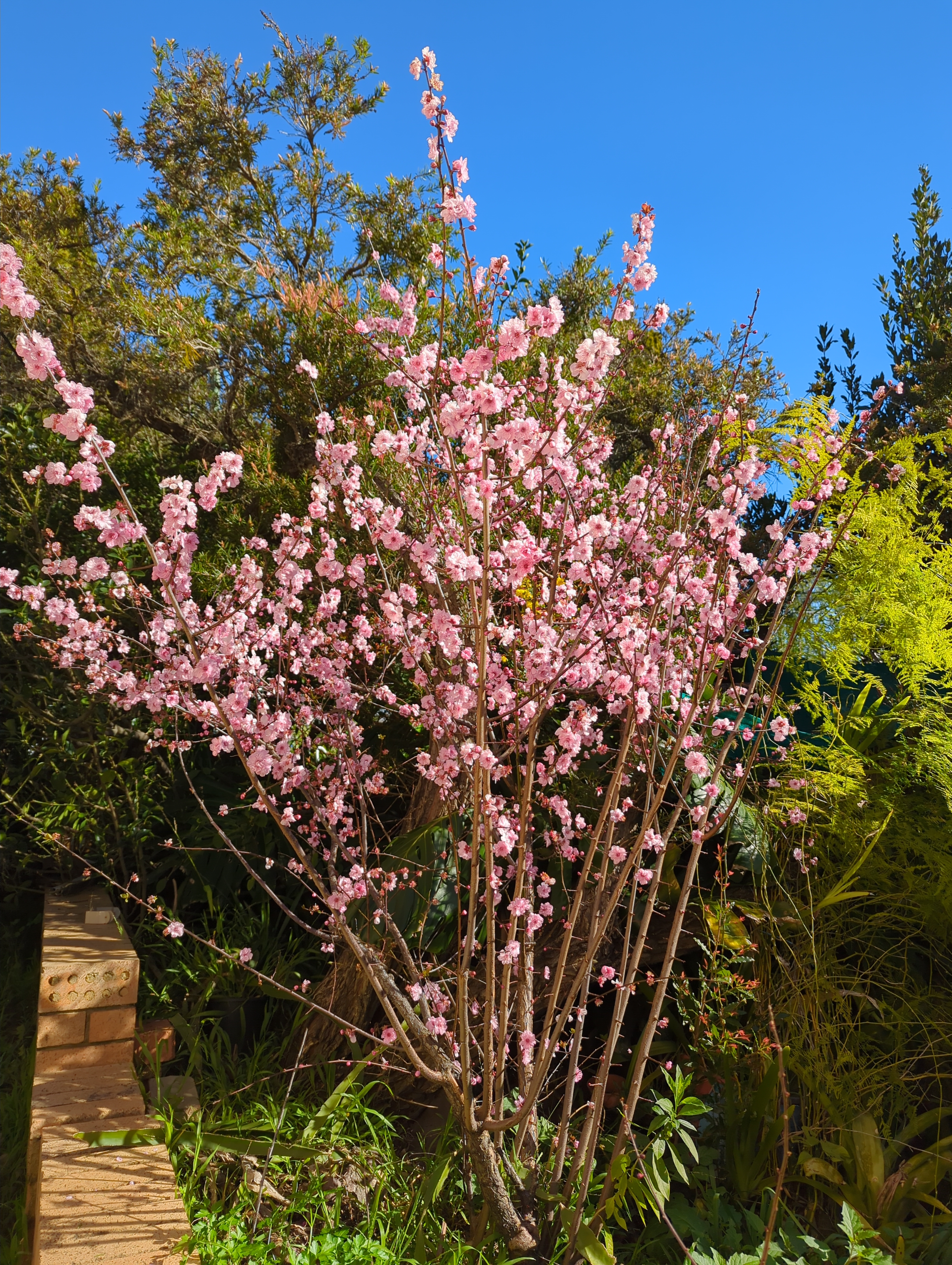
In late winter, or late August in Sydney, the buds appear along all the branches that are 1-3 years old as in the image below. Note the attractive colour and texture of the branches. The tree looks beautiful even when the all the leaves have fallen
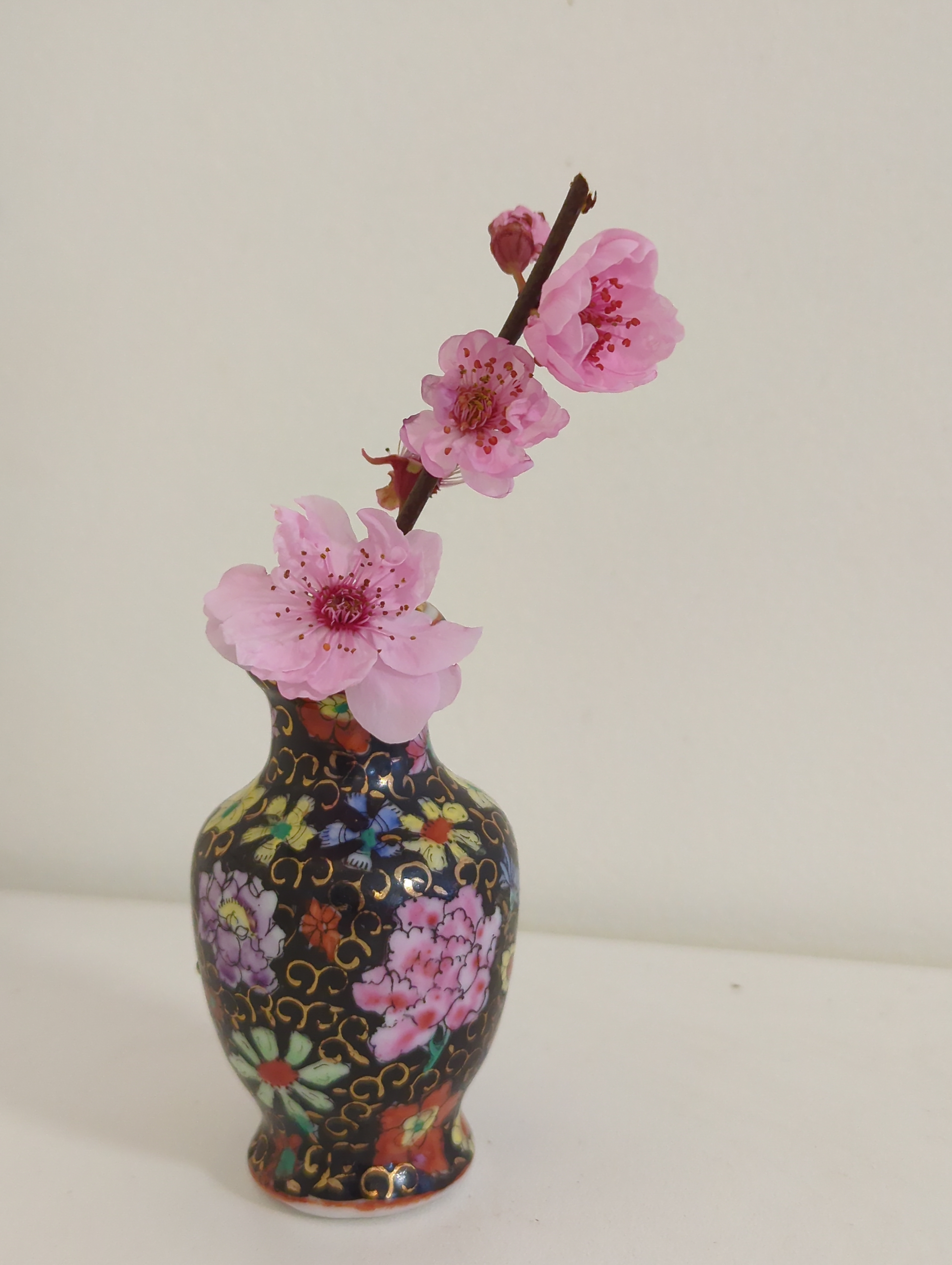
In the image below you can see the whorls of rose like pink petals in the double, cup shaped flowers of the Prunus x blireiana. At the centre of the blossom are the many stamens with their long filaments supporting the pollen bearing anthers. At the very centre the long style and the stigma at the top that receives the pollen. Each flower is about 3 cm across.

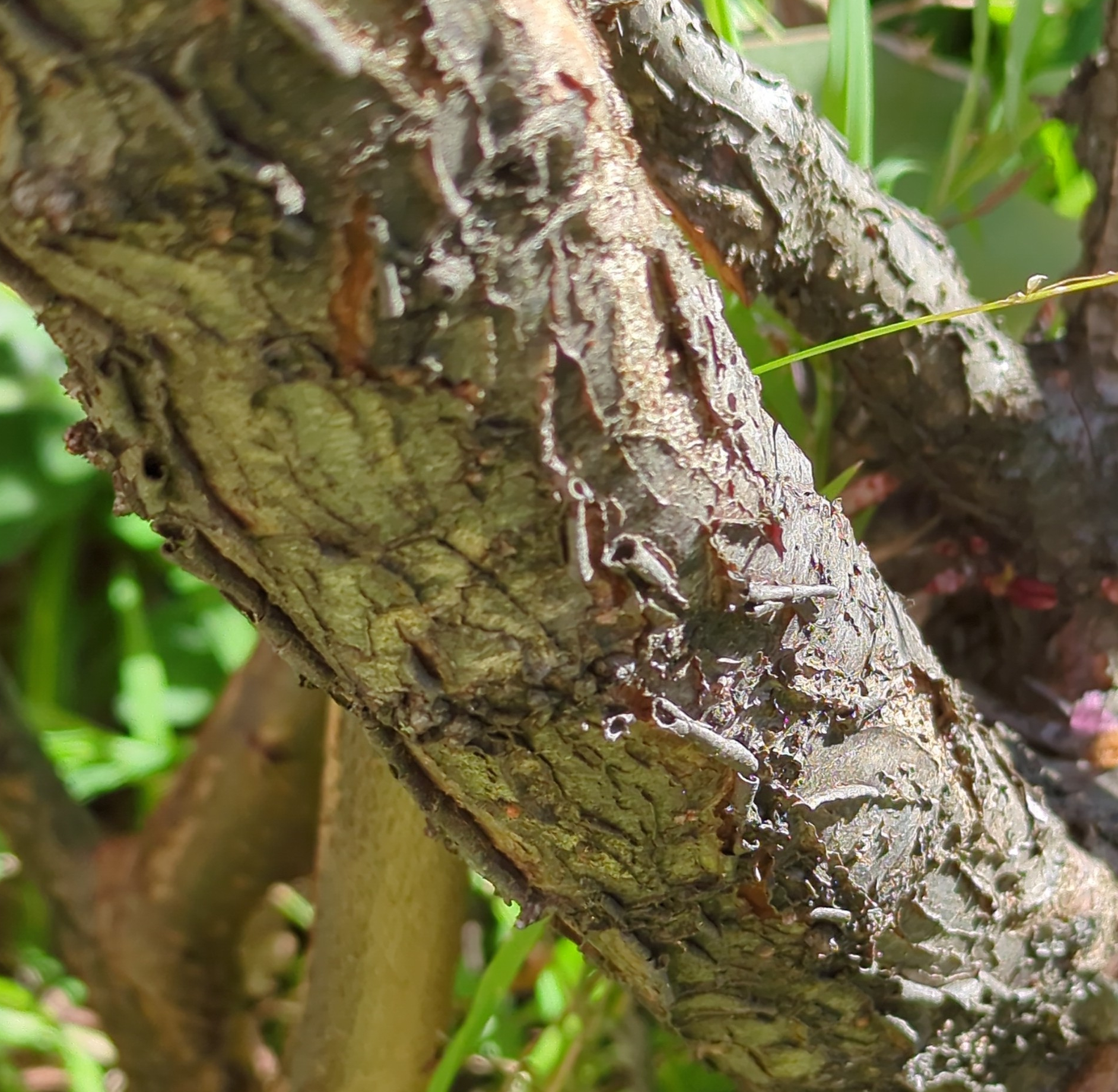
In the image above also note the bumps on the bark of the branches that are typical of Prunus plants. The trunk is rough and develops fissures as it matures.
As the petals drop away the dark purple leaf like sepals that have protected the bud are left and new dark bronze / purple leaves develop. The 3-6cm ovate shaped , slightly serrated leaves are simple and alternate along the branches. At the beginning of the season they are a glossy purple but fade to green/red/bronze in autumn.
Cultivation:
Site and Soil:
Prunus x blireiana It is a most adaptable, medium-sized flowering trees for the lawn, patio, terrace or street tree usage and can also be grown in planters and large tubs.
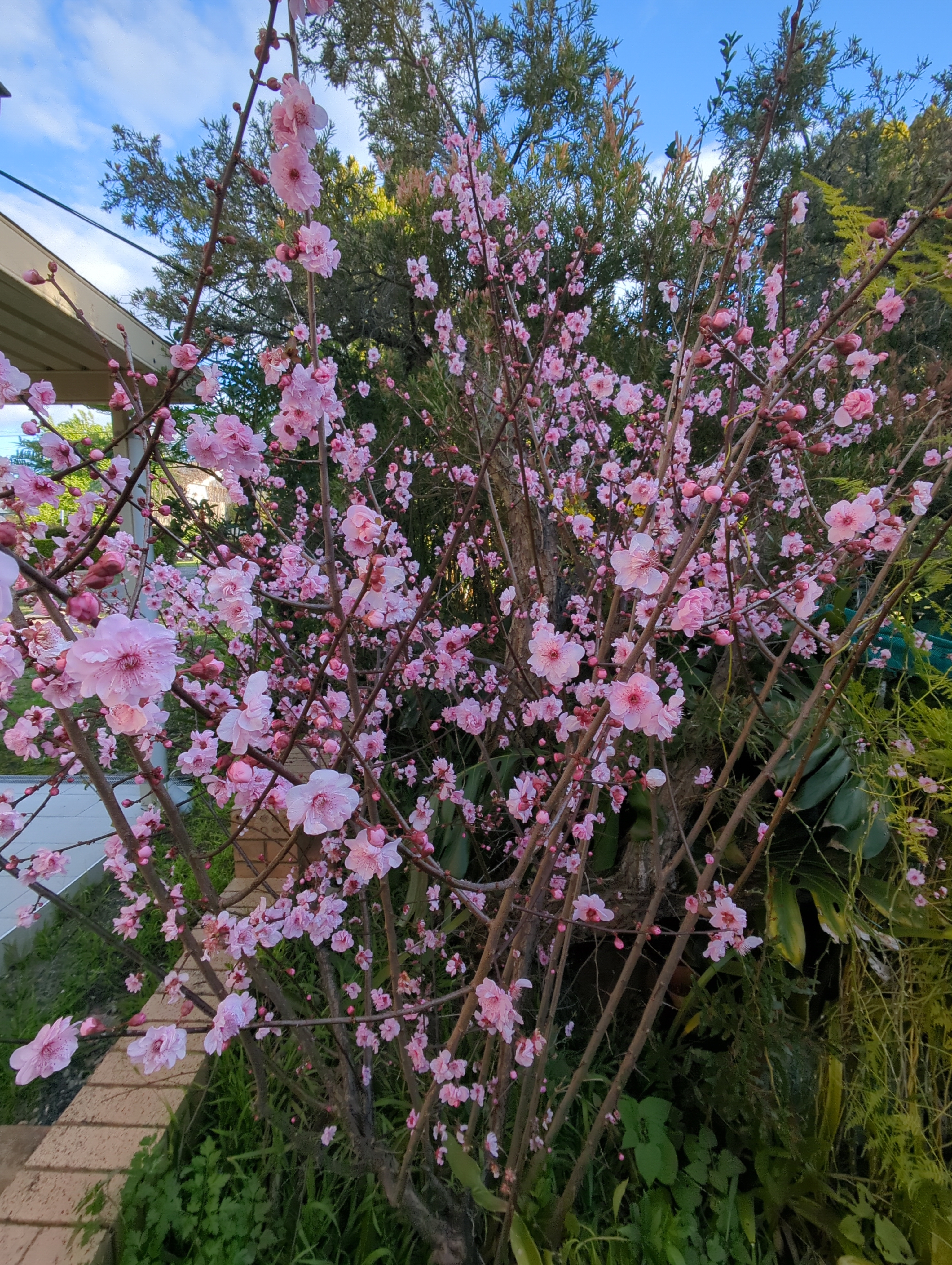
It should only be grown in full sunlight. For best flowering the site should be protected from strong winds so that the blossoms will hold during flowering.
is a drought and mildly frost tolerant and prefers well-draining soil with a pH ranging from 5.5-7.5. It also tolerates alkaline and clay soils. Improve soil be blending compost into a wide planting area. This allows the water to sink in rather than run off especially if the Prunus blireiana is grown on a slope.
Prunus x blireiana needs good soil drainage and will not tolerate the soil becoming water-logged as the roots will rot. Consider this when selecting a suitable site. It does best in average to evenly moist conditions, but will not tolerate standing water.
Planting:
When planting, dig a hole twice the width of the root ball and deep enough to hold it.
Put the tree in the hole with the root collar level with the soil surface and backfill with a mixture of soil and organic matter. Firm gently around the roots.
Water thoroughly and apply a layer of around the base to hold moisture and suppress weeds, keeping the mulch a few centimetres away from the trunk to prevent rot.
Watering:
Water your Prunus tree deeply after planting and consistently during its first growing season to help establish strong roots.
Once established, the tree requires less frequent watering but should be watered during prolonged dry spells, especially in the summer Prunus blireiana needs good soil drainage If soil becomes water-logged, roots will rot. It does best in average to evenly moist conditions, but will not tolerate standing water.
This tree should only be grown in full sunlight. It does best in average to evenly moist conditions, but will not tolerate standing water.months.
Take care not to overwater, as Prunus trees dislike waterlogged conditions. Water early in the morning or late in the evening to minimise evaporation and ensure the roots can absorb the moisture effectively.
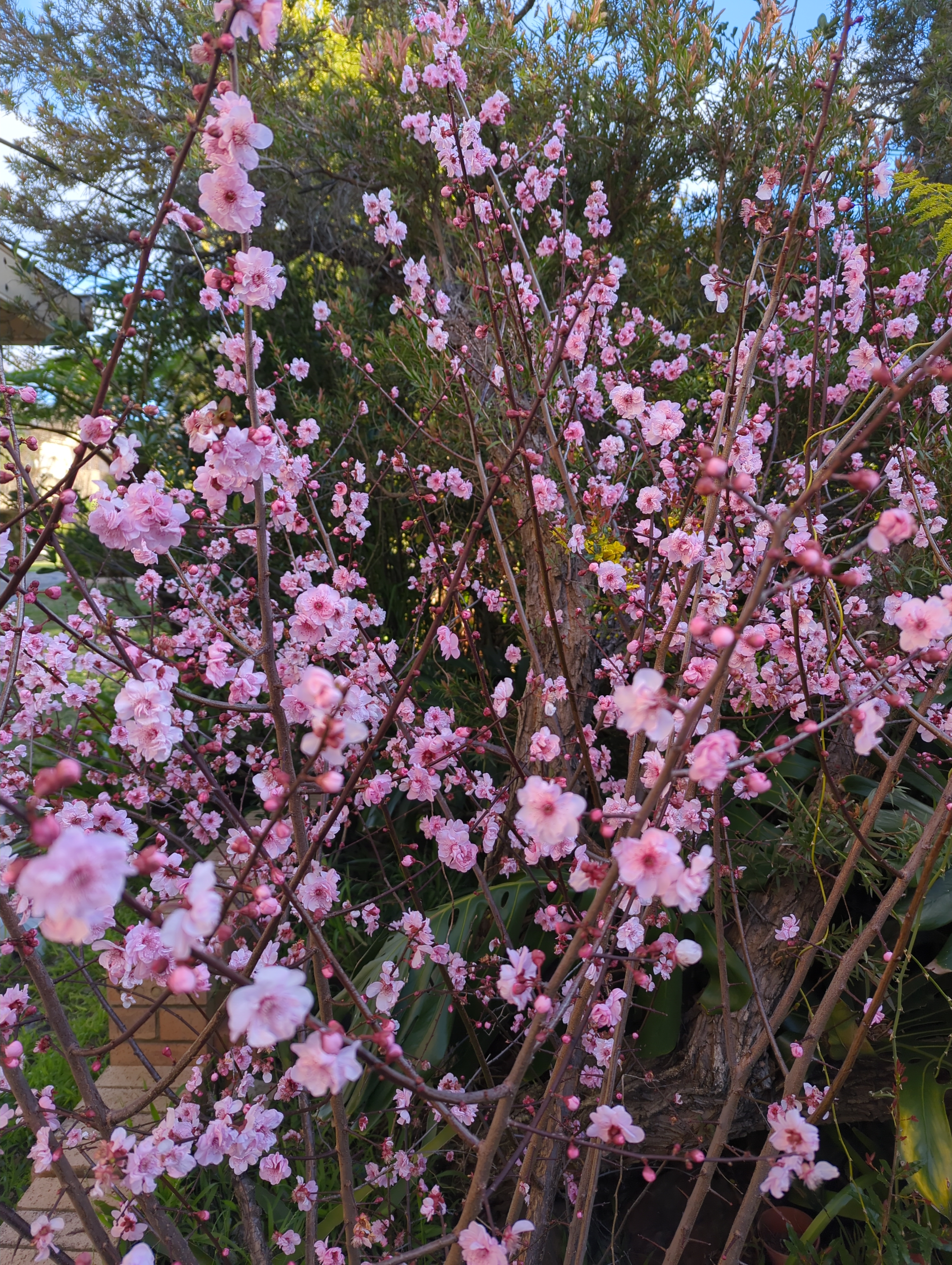
This beautiful tree will delight you with its double pink flowers and even if you don’t have enough room for the full grown tree Prunus x blireiana can be grown in a large tub. A small cutting for your window sill is so pretty.
 The Grantham Gardener