

The following is a list of vegetables and herbs you can plant in October in Sydney, a temperate zone. Just click on the name for the growing guide for each vegetable or herb:
- Amaranth
- Asparagus
- Basil
- Beans – climbing and bush beans
- Beetroot
- Borage
- Broccoli
- Cabbage
- Cape Gooseberry
- Capsicum
- Carrot
- Celeriac
- Celery – in seed trays
- Chicory
- Chives
- Chillies
- Cucumber
- Daikon
- Dill
- Eggplant
- Jerusalem artichoke
- Leeks
- Lemon Balm
- Lettuce
- Luffa
- Marrow – in seed trays
- Mint
- Mustard Greens
- Okra – in seed trays
- Oregano
- Parsley
- Parsnip
- Peas
- Potato
- Pumpkin
- Radish
- Rhubarb
- Rocket
- Rockmelon– in seed trays
- Rosella – in seed trays in greenhouse
- Rosemary
- Sage
- Silverbeet
- Spring onions
- Sunflower
- Sweet corn
- Thyme
- Tomato
- Turnip
- Water melon
- Yacon
Plant of the Month – Aloe maculata – (soap or zebra aloe)

Aloe maculata is a stunning member of the Aloe family native to Southern Africa.
With its vibrant inflorescences borne on upright branched stems this plant really makes a statement when grown in rockeries or as a potted specimen for the patio.
It is also commonly known as the ‘zebra aloe’ due to the markings on its leaves. Another common name is the ‘soap aloe’ because of the thick, gel-like sap in its leaves that have been traditionally used as a natural soap substitute.
The accepted botanical name, according to the South African National Biodiversity Institute (SANBI), is Aloe maculata (meaning marked).
The Aloe maculata is adaptable and is found in a wide range of habitats across Southern Africa. It is native to southern and eastern South Africa, south-eastern Botswana and Zimbabwe.
Now it is a popular landscape and ornamental plant in warm desert regions and many places around the world.
Aloe maculata can reach grow up to 60 cm and wide though the size can vary depending on the growing conditions.
The plants below are the stars of a rockery, planted facing east and shaded from the afternoon western sun by a building that offers shade in the afternoons.

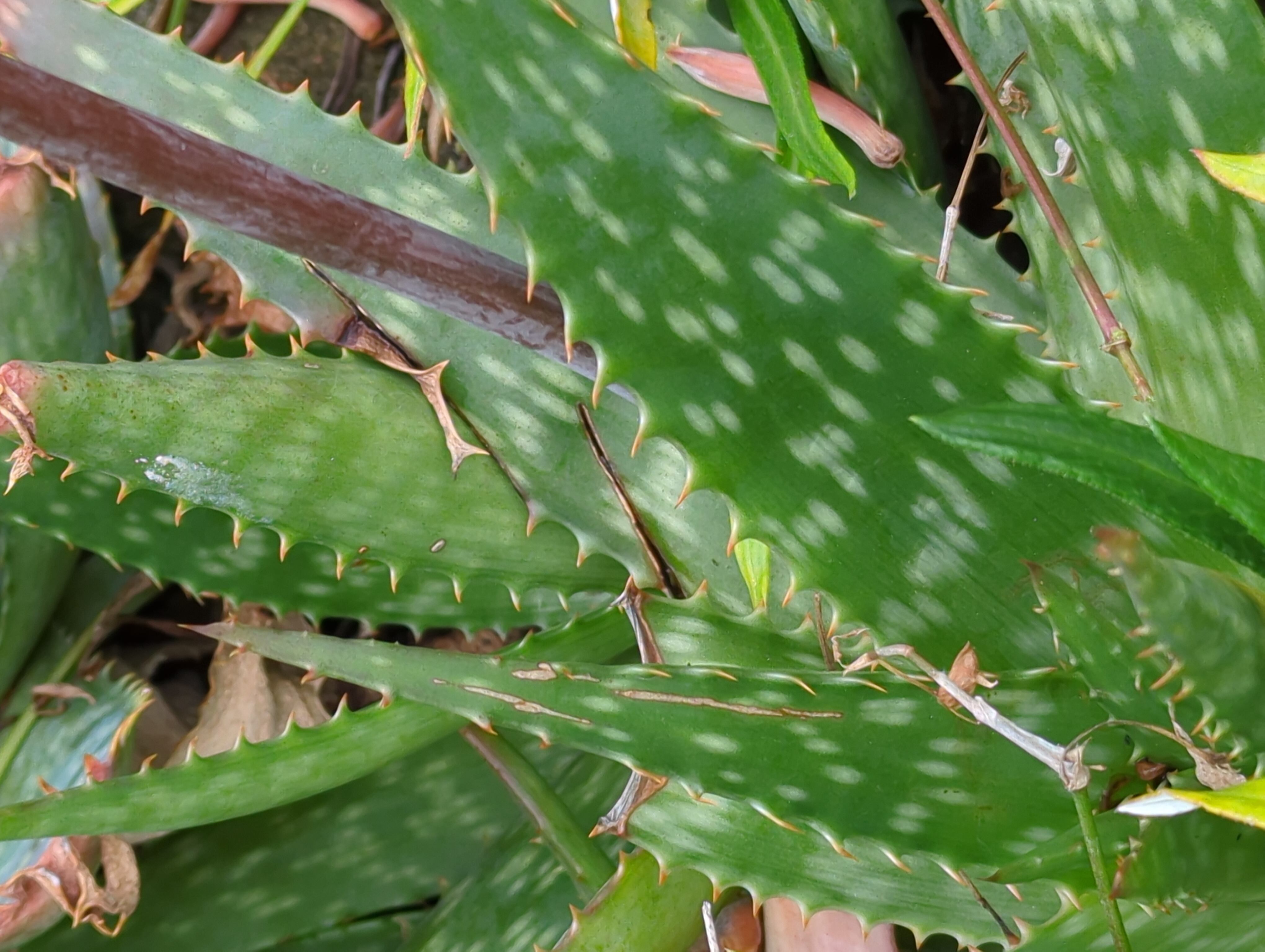
Aloe maculata has rosettes of thick, lance shaped, recurved fleshy leaves that grow in a spiral pattern. The leaves are green with light markings and they can develop attractive reddish tips as the plant matures. They have a flat to slightly channelled upper surface and a convex lower surface with fewer or no spots.

The recurved leaves have toothed margins with small spines along the edges that deter animals and measure up to 50 cm long and 12 cm wide.
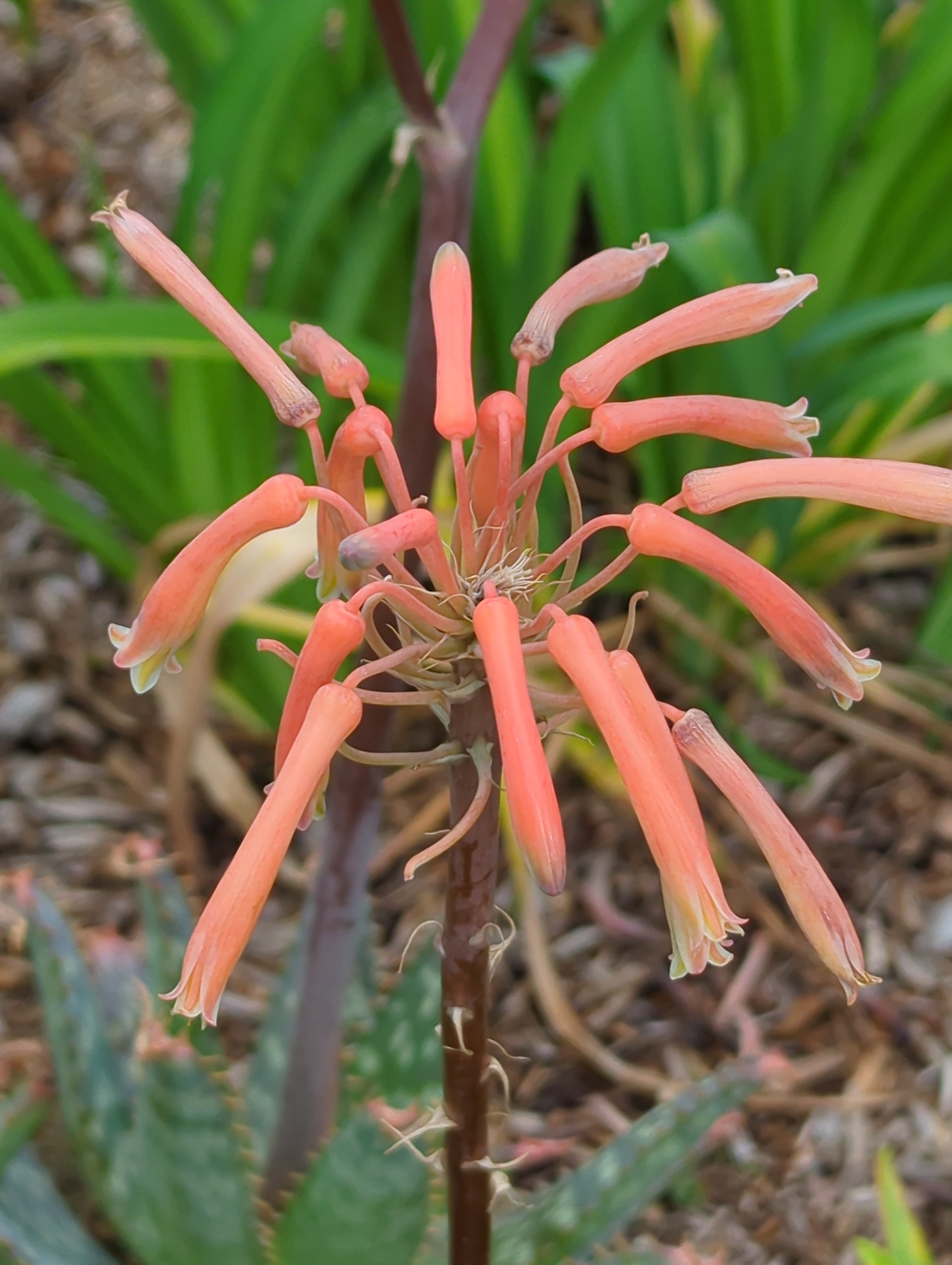
The inflorescences, or groups of flowers are typically orange or red in color, and attract pollinators such as bees and butterflies. The blooming period usually occurs during the spring or summer months, adding a vibrant touch to your garden or indoor space.
The distinctive flat-topped racemes of flowers of Aloe maculata are one way of identifying this plant from other species of Aloe.
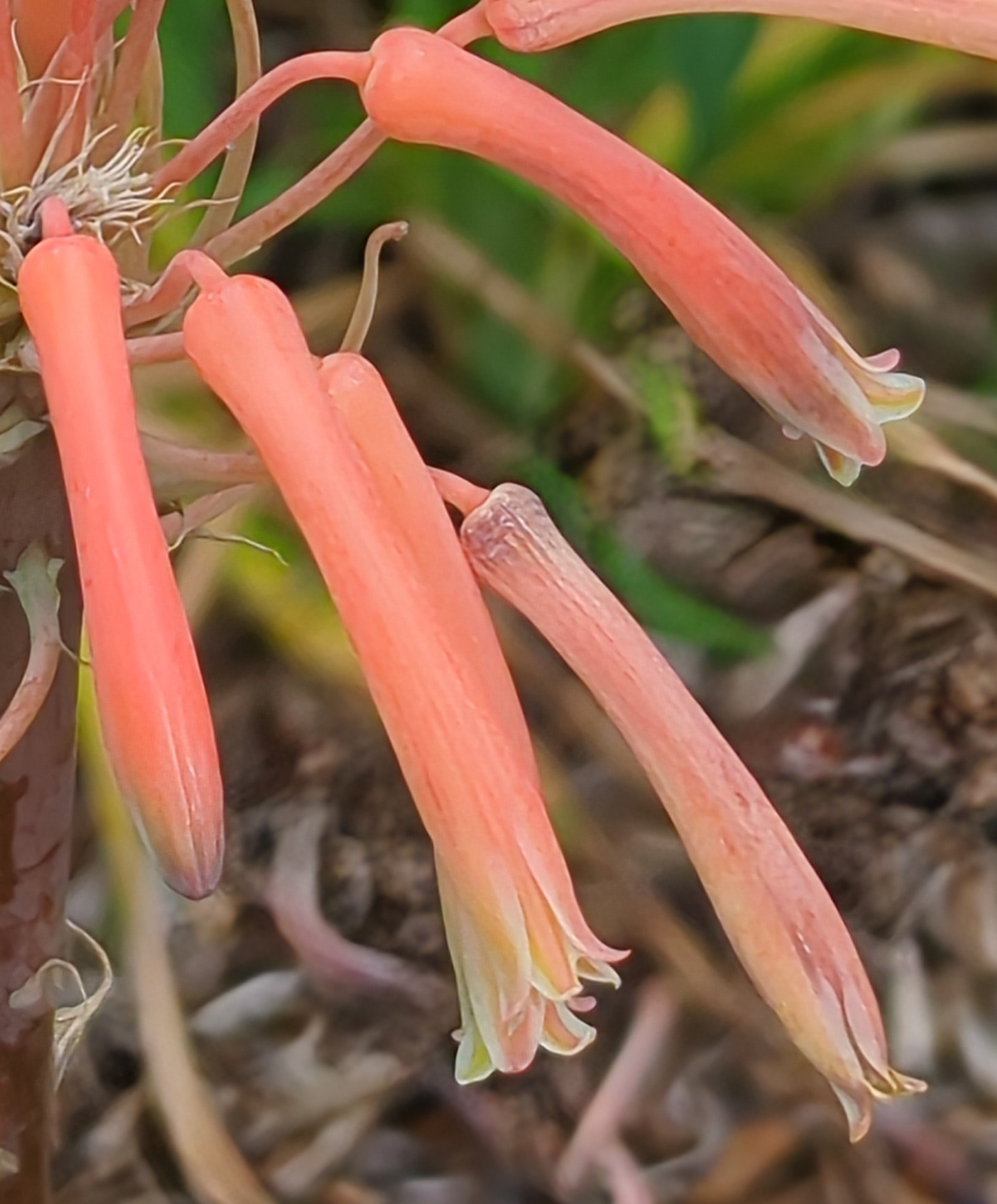
Each flower is made up of six overlapping but fused petals forming a long tube that recurve at the tips and have a cream edge. Below is a close up of a few flowers in different stages: an unopened bud, an open flower and one that is spent. Flowers develop in the raceme over several weeks in spring and summer.
The inflorescences typically have 4 to 12 branches. The racemes look like bursts of fireworks with many tubular shaped flowers. They can range in colour from red through orange to yellow. The buds are the same length as the mature flower.
The long style emerges from the long tube.

Cultivation:
Site and Soil Requirements:
Aloe maculata is a low-maintenance plant as long as the soil is airy, and sandy, and drains well. Planting in raised beds will help achieve this with some addition of sand to create The soil should be acidic to neutral with a pH of 6.5-7.00.
If growing in pots use a good cacti and succulent potting mix with add Perlite and some rocks in the base of the pot. Always place the pot on pot risers rather on a saucer to allow water to drain away.
Aloe maculata prefers full sun to partial shade. Before setting plants out in a sunny spot acclimate the plant by bring them out gradually exposing them to sunlight to prevent sunburn.This will help the plant adjust and avoid leaf damage.
If you live in an area like Sydney that has hot, intense summers, locating the planting site to a spot in the garden that will have some afternoon shade will protect the plant from excessive heat.
Water:
Water Aloe maculata deeply but less frequently. Allow the soil to dry out between waterings to prevent overwatering, which can lead to root rot. Water when the top inch of soil feels dry to the touch.
In spring and summer this might be every two weeks but during winter the plant becomes dormant and will need less water and rely on environmental conditions and water when the soil is dry, and as needed.
It’s always better to underwater than to overwater your plant. Succulent plants can store water in their fleshy leaves, so they can tolerate periods of drought well.
Its important not to let the soil stay constantly wet to prevent root rot.
Propagation:
Aloe maculata can be propagated by taking the “pups,” or small plantlets, that grow from the base of the mother plant. Carefully separate and replant these to establish new plants.
Seeds can also be collected from mature flowers and sown in well-draining soil.

The stunning and easy to grow Aloe maculata is an excellent plant for any garden or patio or a sunny conservatory. With minimal care it will grace your garden with beautiful blooms in spring and summer.
.
 The Grantham Gardener