
The following is a list of vegetables that you can plant in April in Sydney, a temperate zone (just click on the link for the growing guide for each vegetable
- Amaranth
- Beans – broad beans, fava beans
- Beetroot
- Broccoli
- Brussels sprouts
- Cabbage
- Carrot
- Cauliflower
- Daikon
- Endive
- Garlic
- Kale
- Kohlrabi
- Leek seedlings
- Lettuce
- Mizuna
- Mustard greens
- Parsley
- Peas
- Radish
- Rocket
- Shallots
- Silverbeet
- Snowpeas
- Spinach
- Turnip
Plant of the Month – Mirabilis Jalapa – (the wonder of Peru or four o’clock plant)
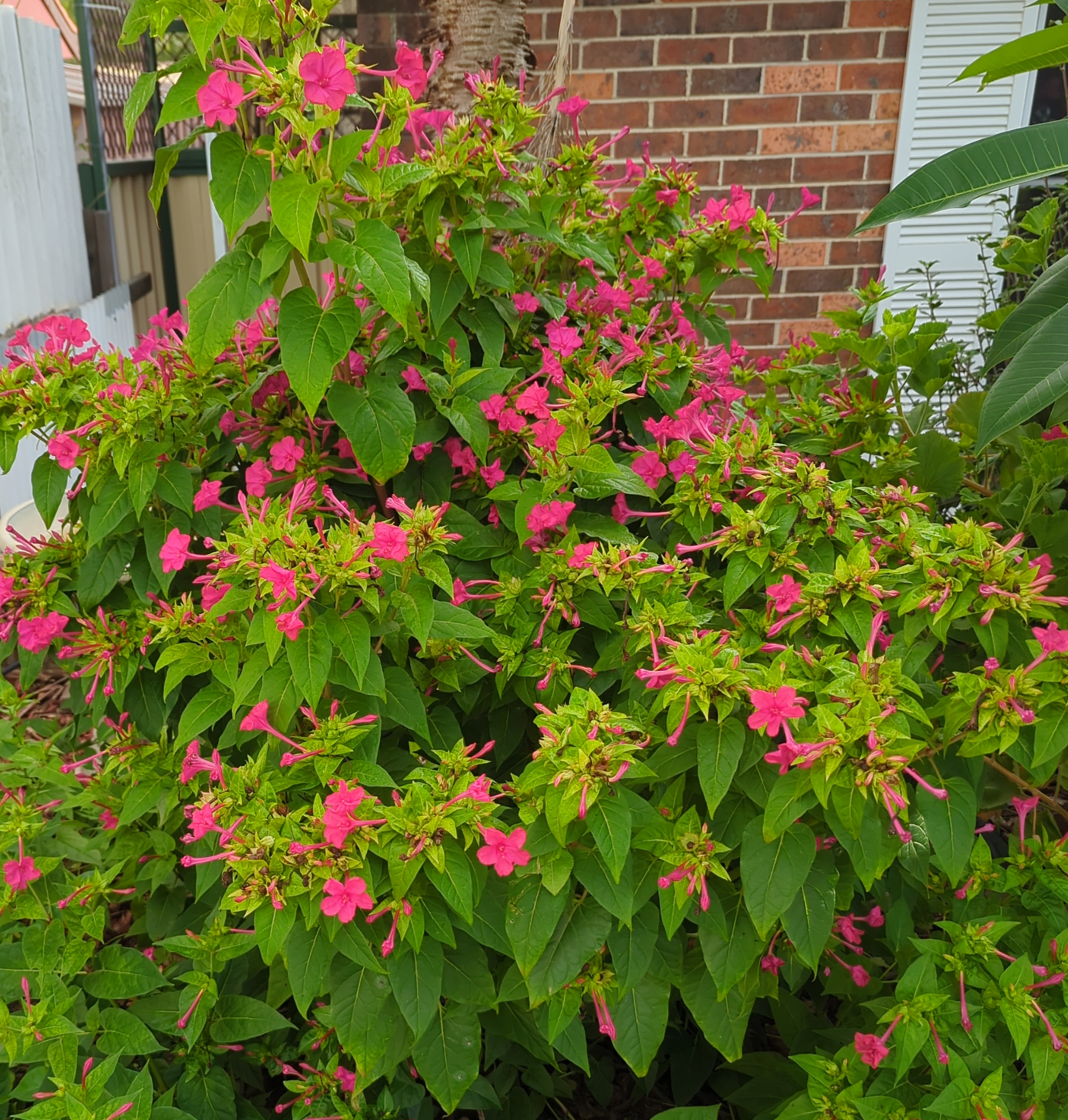
Mirabilis jalapa, the marvel of Peru or ‘four o’clock flower’ is a perennial, herbaceous, bushy plant that is native to the tropical regions of North, Central and South America: Mexico, Guatemala, Chile and Peru It is believed to have been cultivated by the Aztecs for medicinal and ornamental purposes.
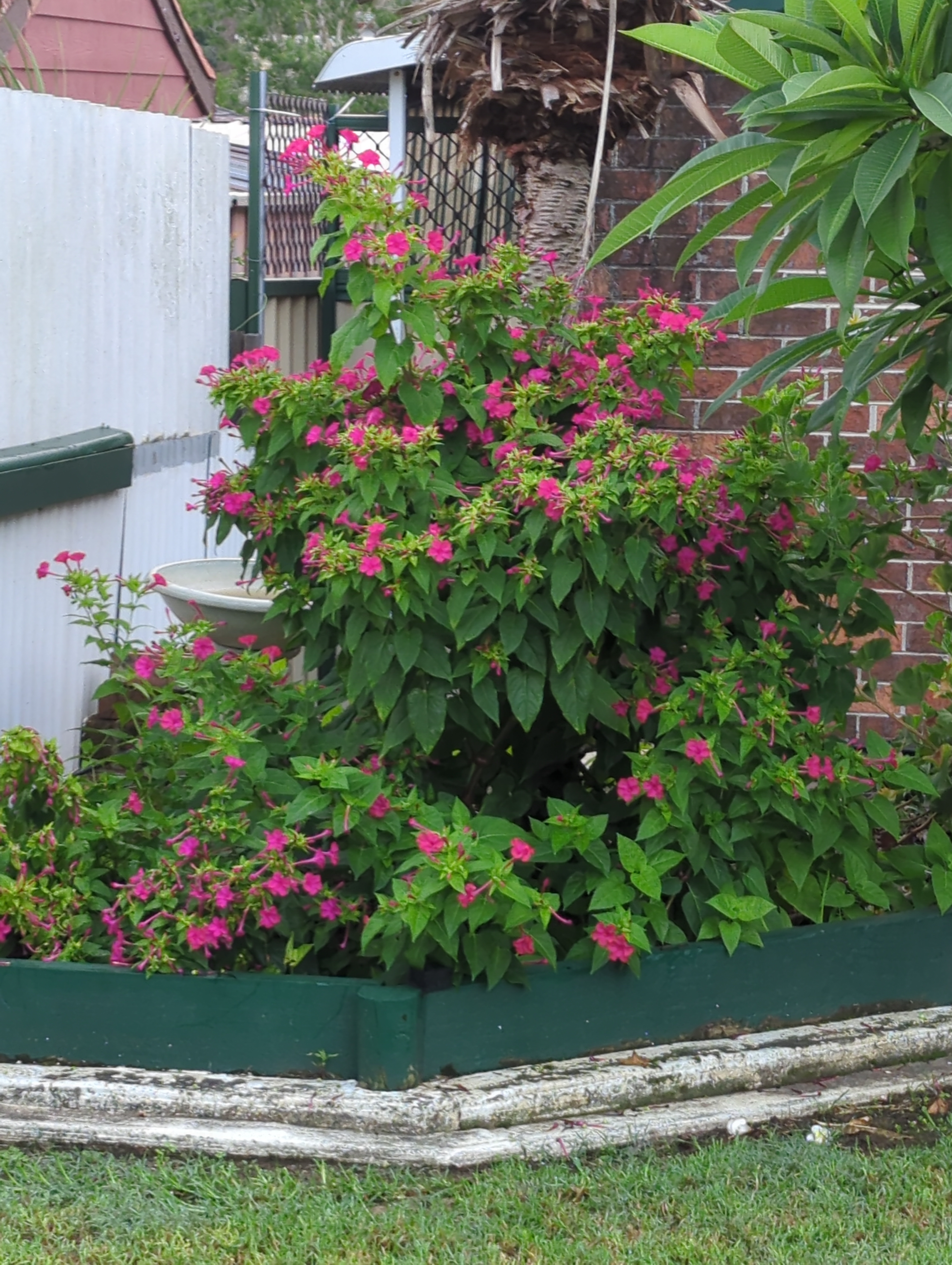
It grows to 60cm in height and width arising from a fleshy tuberous root. It is fast growing and often sprawling in growth habit.
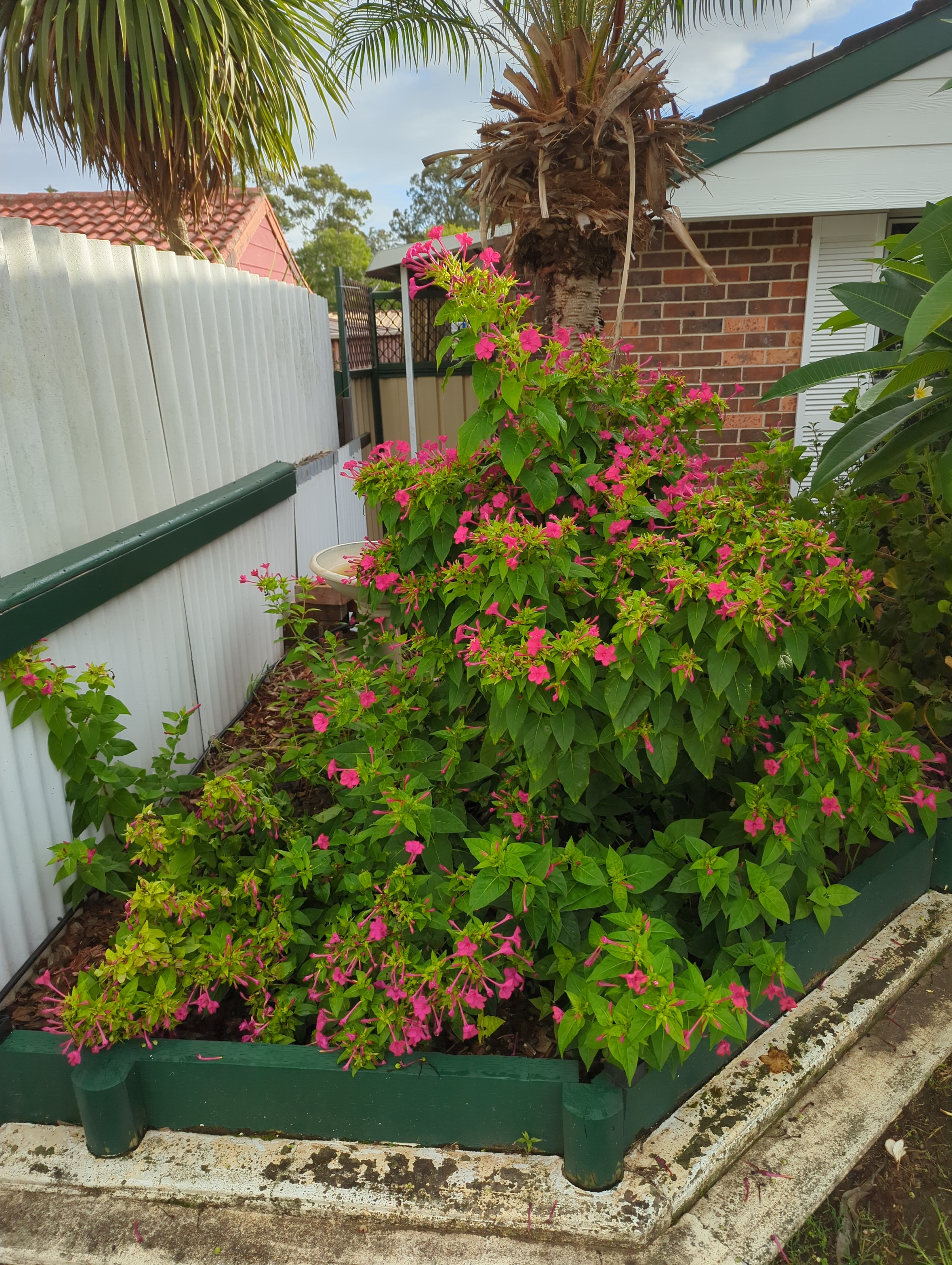
The image above shows the shrub-like, Mirabilis jalapa and its erect, spreading,and multi-branched growth.
The leaves are opposite and ovate shaped, bright green up to 10 cm long with a pointed end with smooth edges.
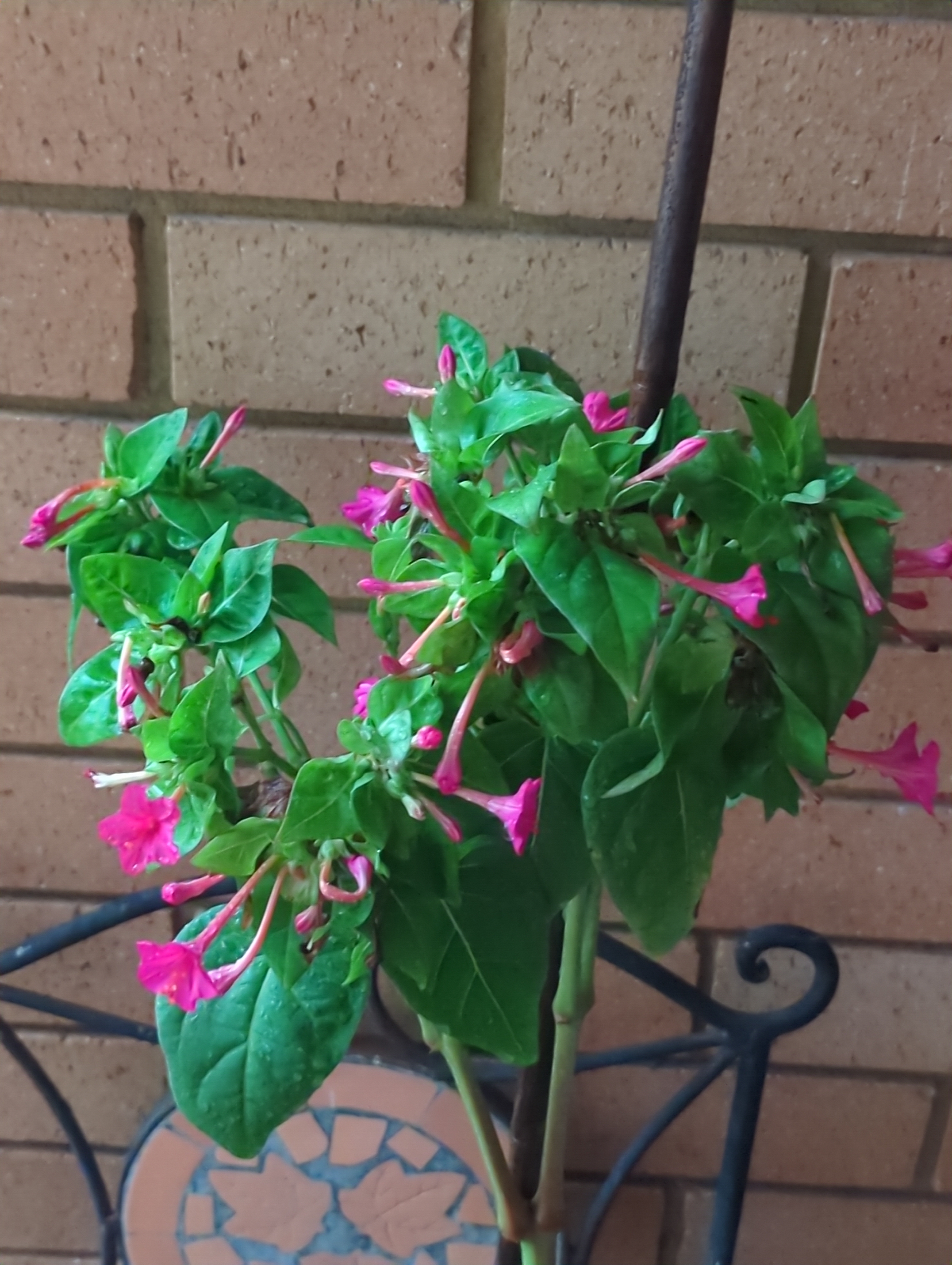
As seen in the image below, the squared stems of the Maribilis jalapa plant are light or bright green but may have a yellow or pink hue.
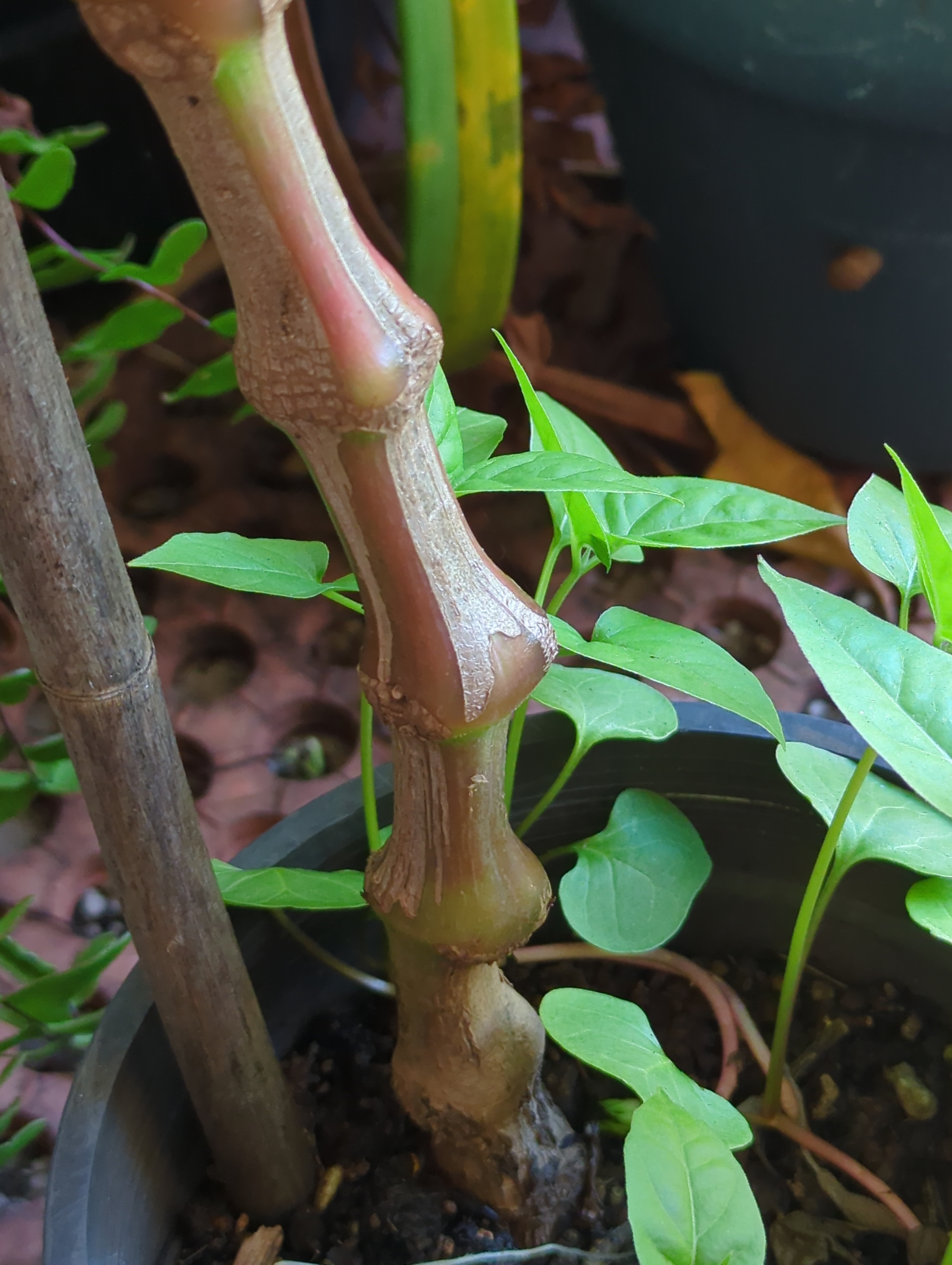
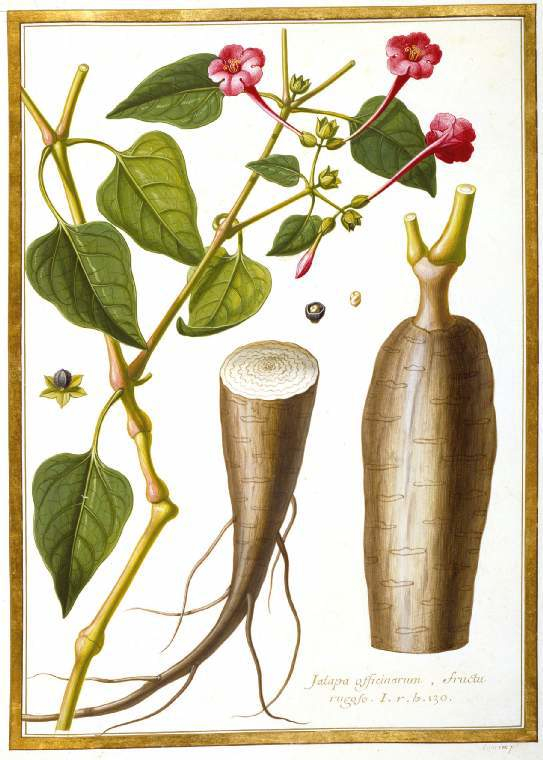
The plants produce elongated, dark-colored, swollen to tuberous taproots that can be 30 cm or more long where they are grown as a perennial in temperate areas.
Below is a botanical image of the Mirabilis jalapa showing the tuberous root.
Credit: The Fitzwilliam Museum (2026)
Web page available at: https://data.fitzmuseum.cam.ac.uk/id/image/media-14788
Accessed: 2026-04-02 11:24:08
Flowers of the Mirabiblis jalapa plants can be shades of white, yellow, and bright pink, magenta, and red. Flowers of different colours can be found on the same plant and can even be bi-coloured, speckled, or variegated.
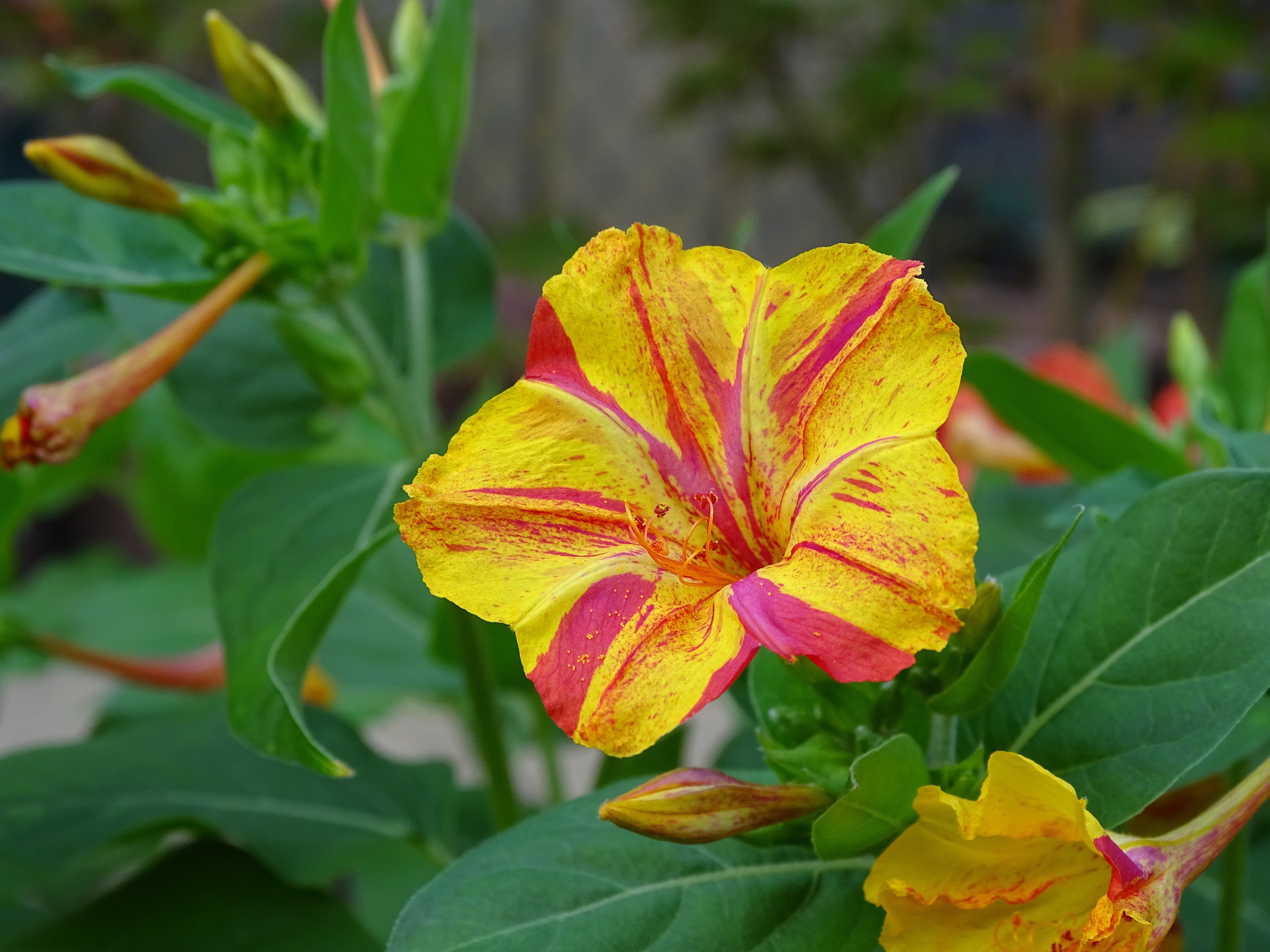
The flowers do not have petals. They are a pigmented modification of the calyx. Similarly, the ‘calyx’ is an involucre of bracts, that is. a whorl or ring of bracts directly beneath a flower cluster,. These bracts protect the developing flowers.
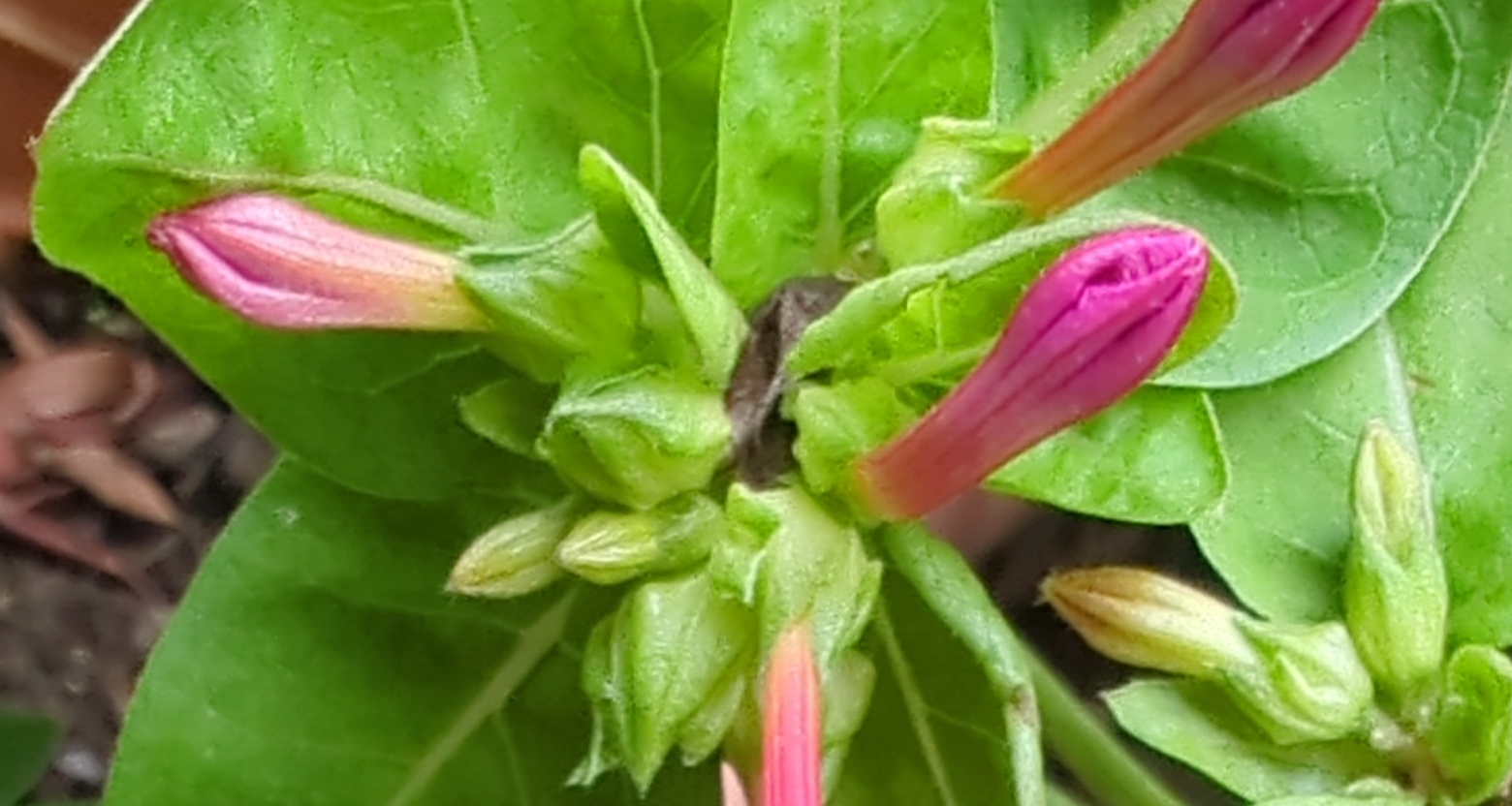
The flowers are funnel-shaped and pentalobed, they have no cup which is replaced by bracteal leaves.
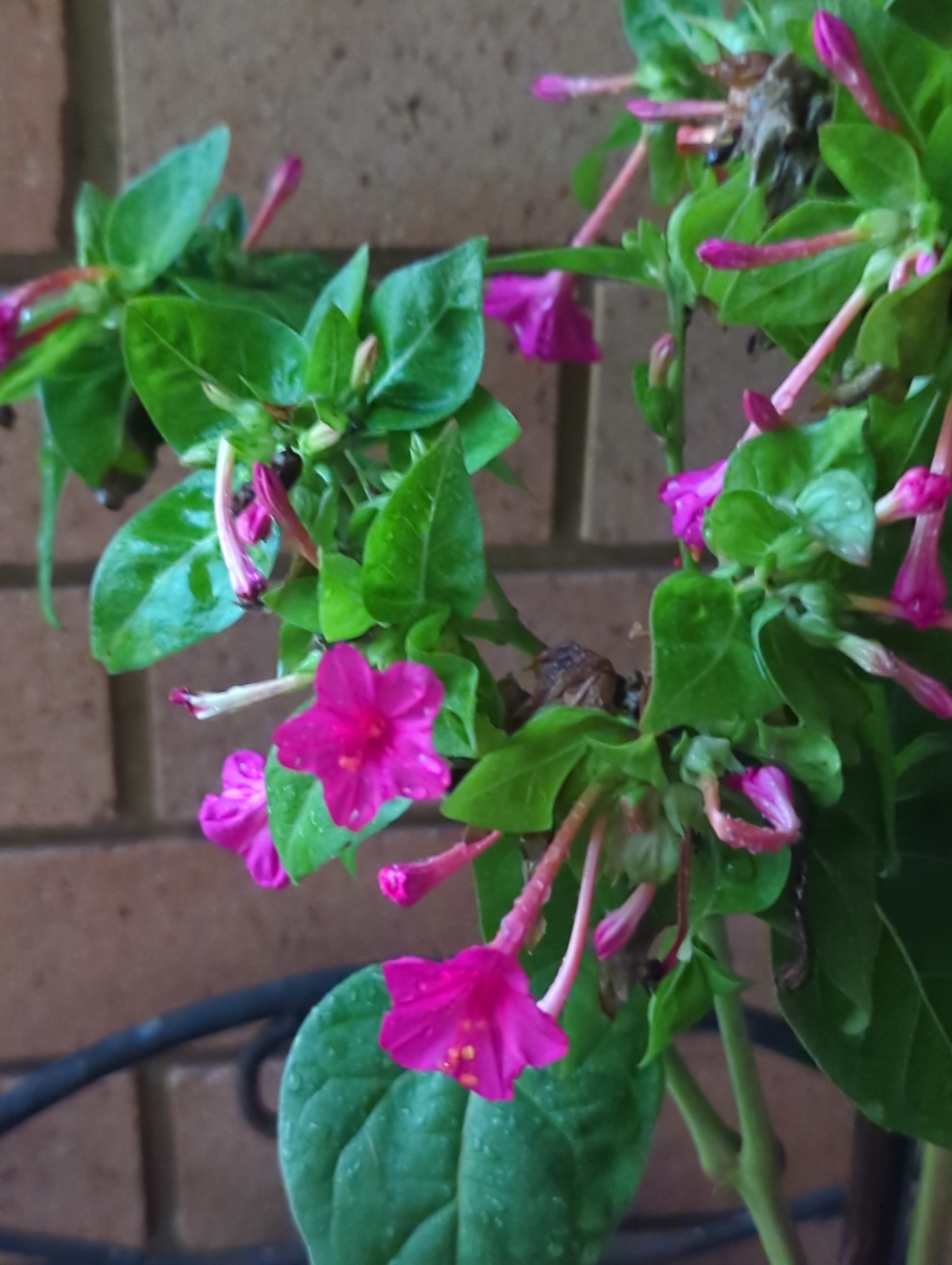
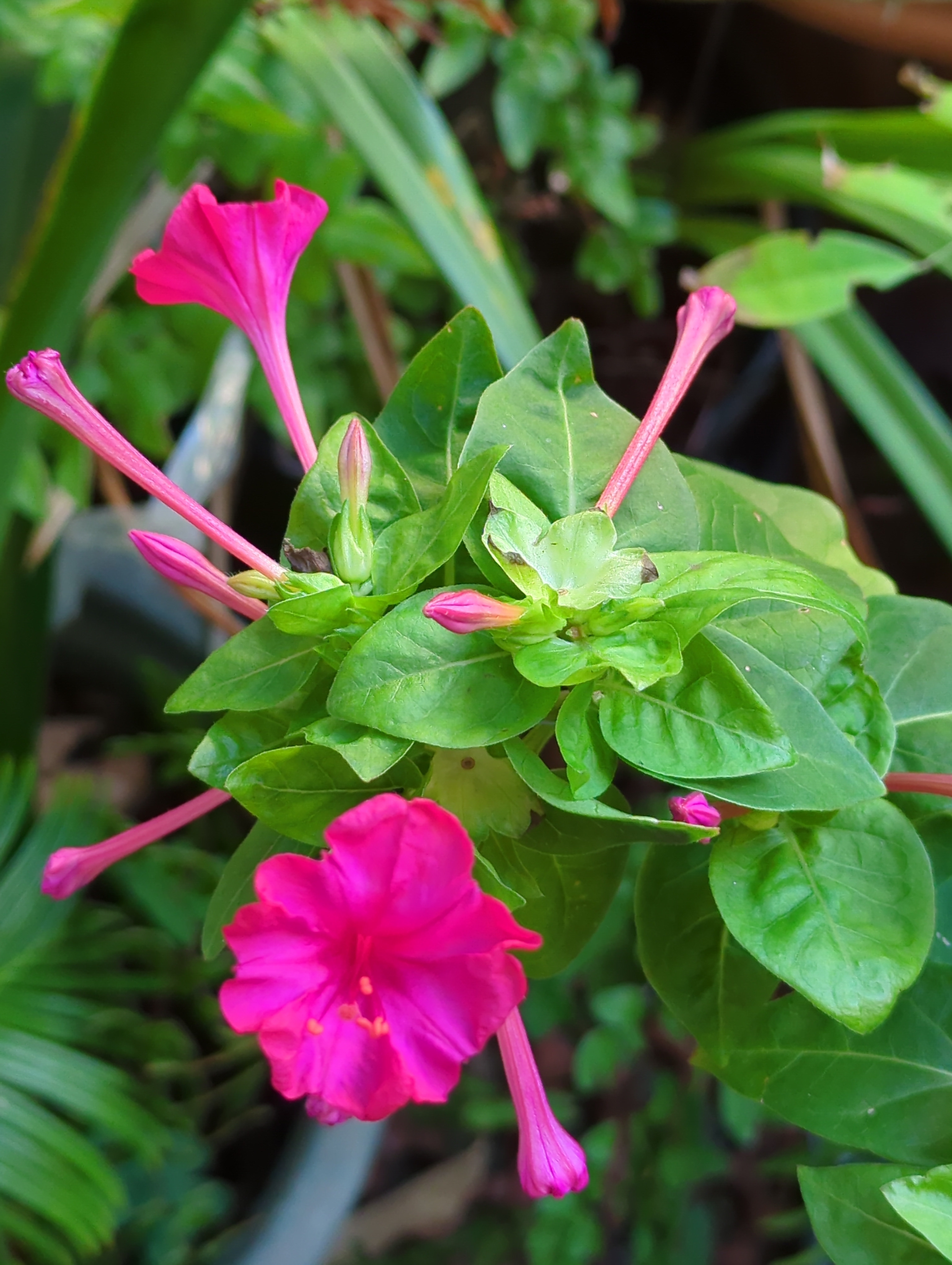
The inflorescences contain three to seven unopened flowers. In the image below see these clusters of unopened flowers with one flower fully developed.
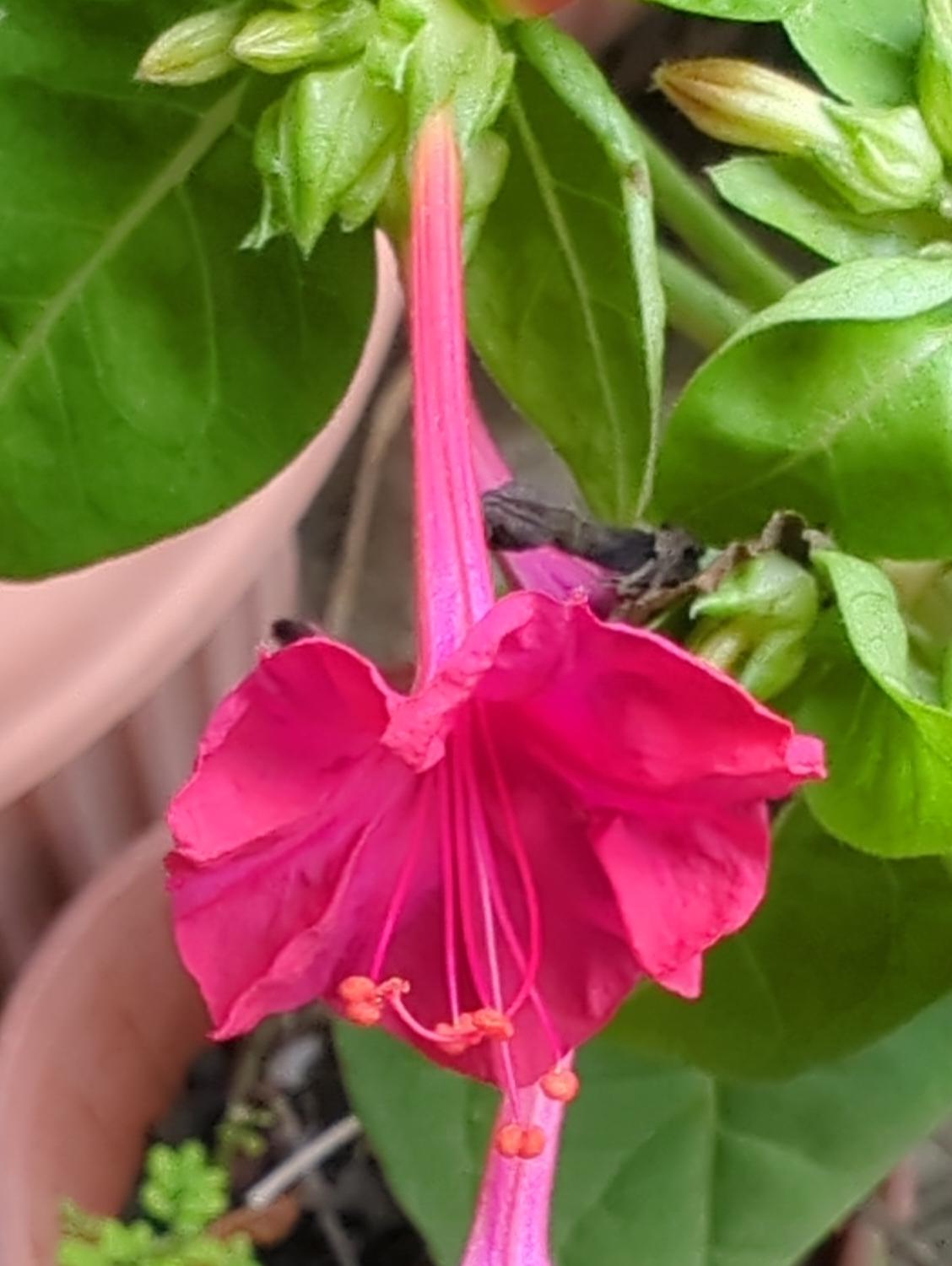
The tubular or trumpet-like part of the flower is a pigmented calyx of partially fused sepals.
Each flower is circa 5 cm long and flares out to about 2.5 cm across at the end that has five lobes.
Three to five long pink stamens with yellow pollen carrying antherss and a pink style even longer than the stamens project from the centre of the tubular flower as seen below.
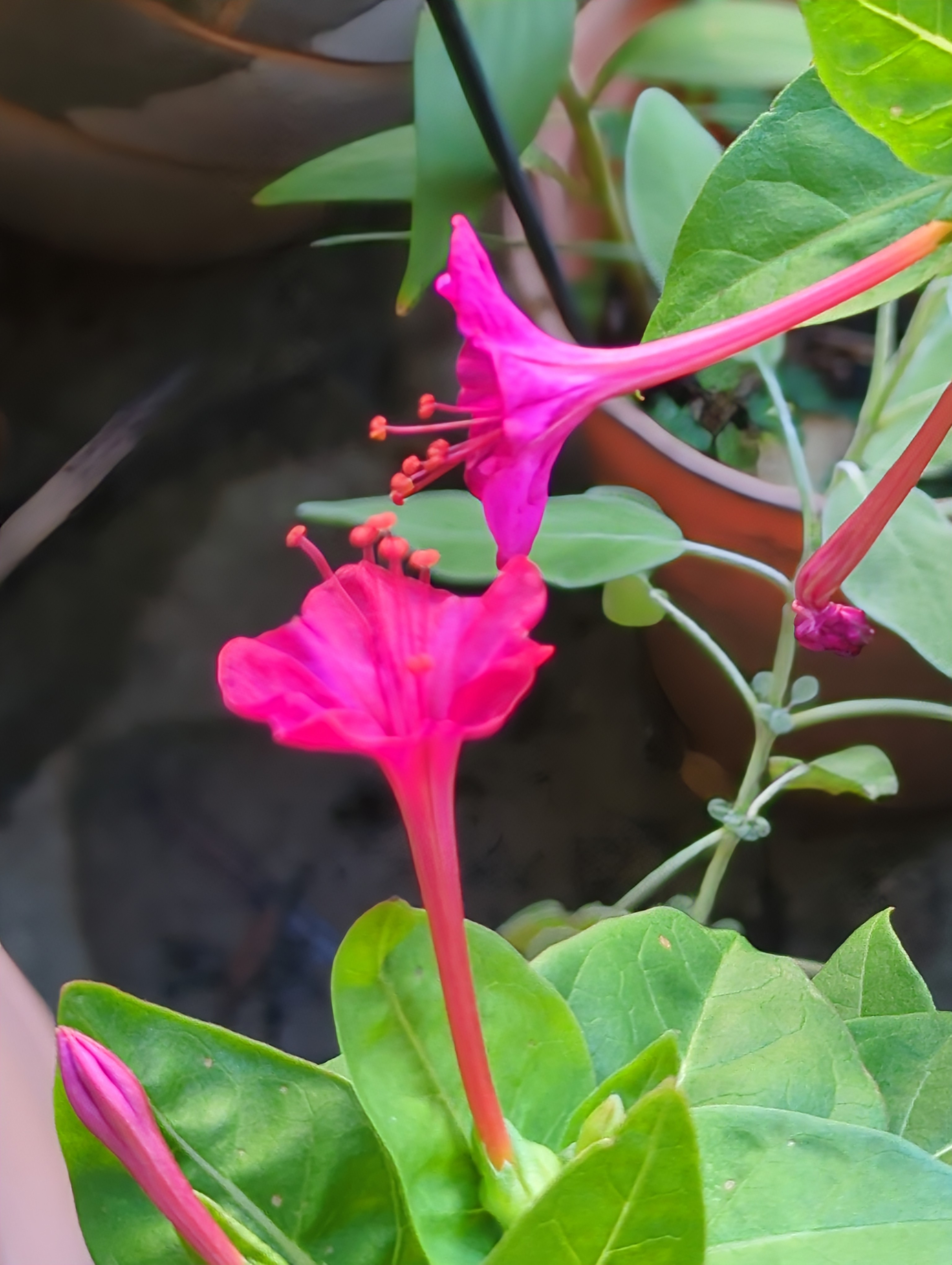
The beauty of the flared part of the trumpet with its five lobed fused sepals can be seen in the image below.The ridges on the flared lobes give the appearance of petals.
The flowersof Mirabilis jalapa, like thir namesake, open in late afternoon or early evening and close by noon the next day. They will close earlier in overcast or rainy conditions. They are pollinated by moths and other night pollinators and also attract butterflies.
The flowers are lightly fragrant especially in the evenings.
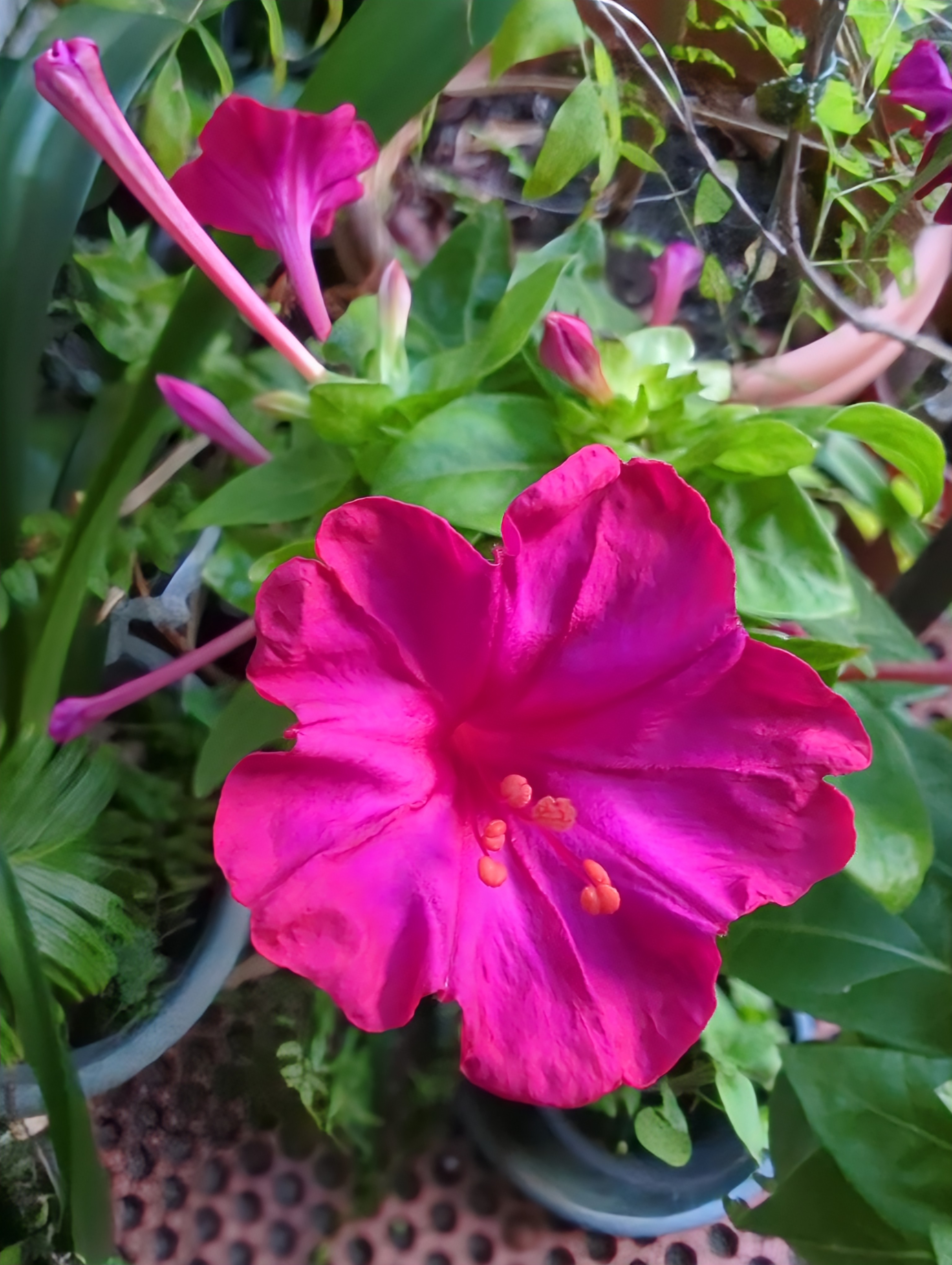
In autumn, after the Mirabilis jalapa is pollinated and wilts the bract at its base spreads out and dries to light greenish brown and a seed develops.
These are dark, leathery, 5-ribbed, spherical “seeds”, a fruit that is a nut-like achene, with a wrinkled surface about 15 mm in width.
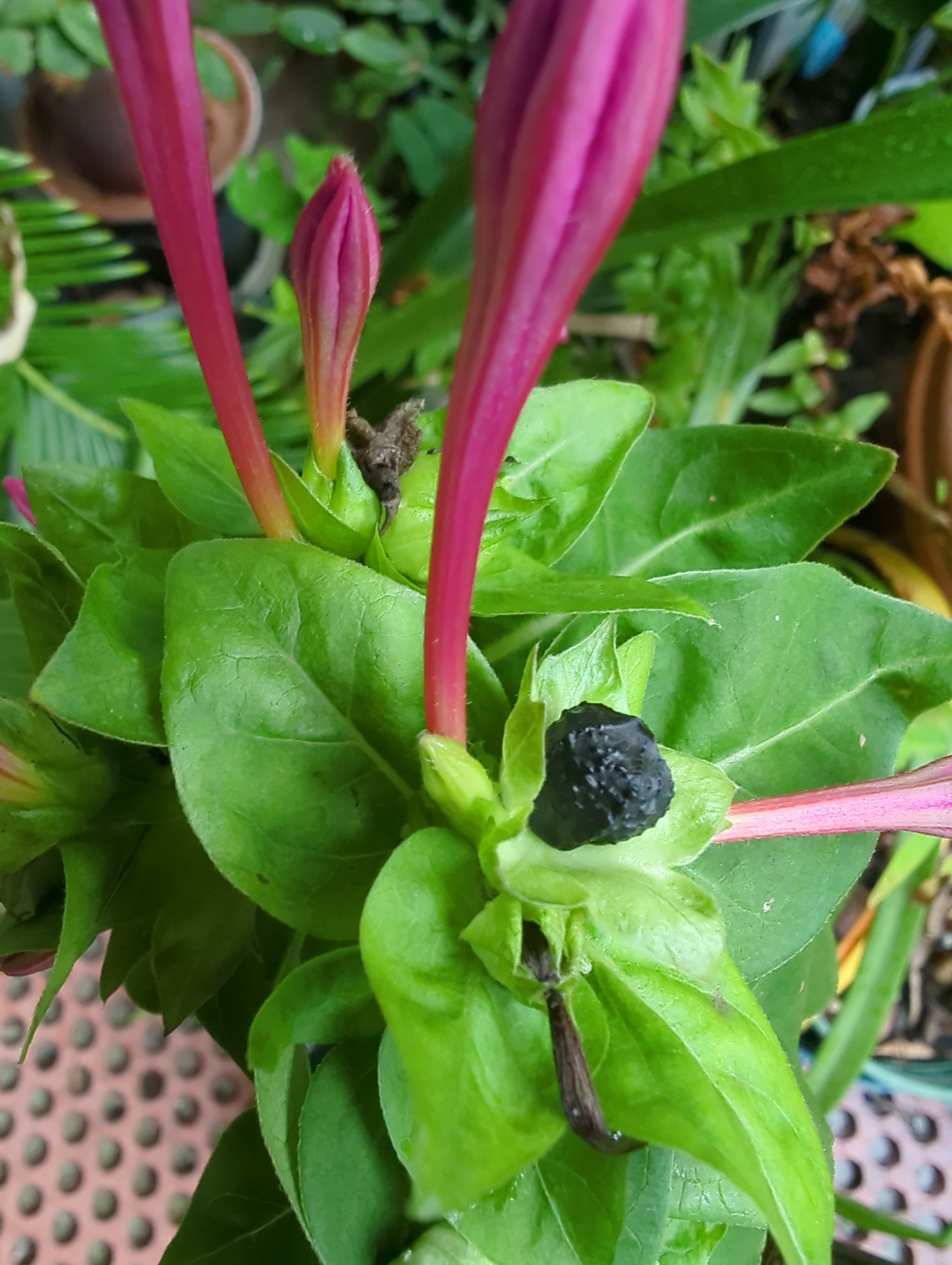
The image below shows detail of an achene and another one below forming at the base of a wilted flower. These archenes are actually quite dense and hard and fall like small stones to the base of the plant. The gardener may allow these to germinate and spread or pluck them out as they appear.
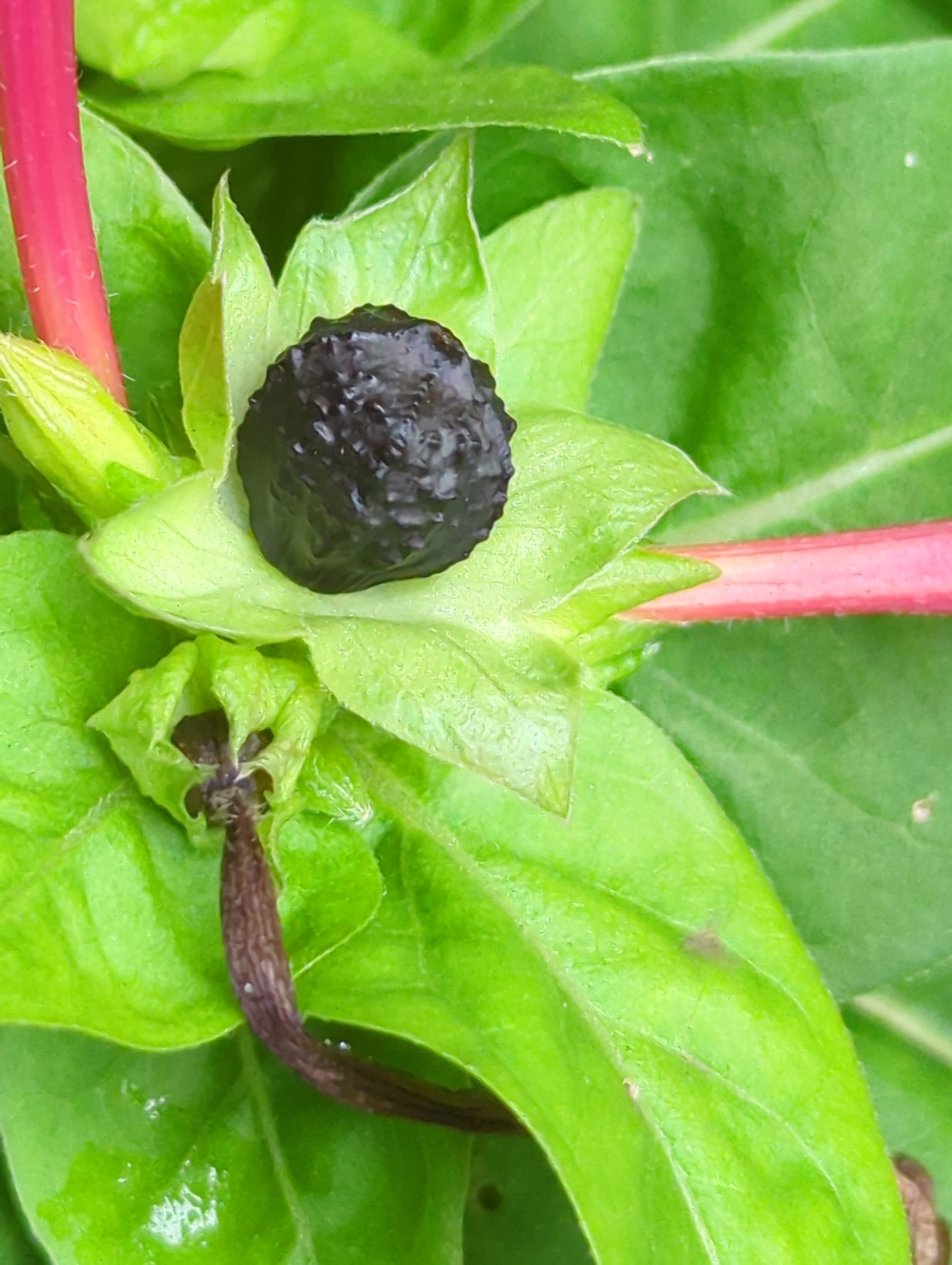
When the achenes of the Mirabilis jalapa flowers drop to ground and the conditions are moist and receptive new seedlings grow.
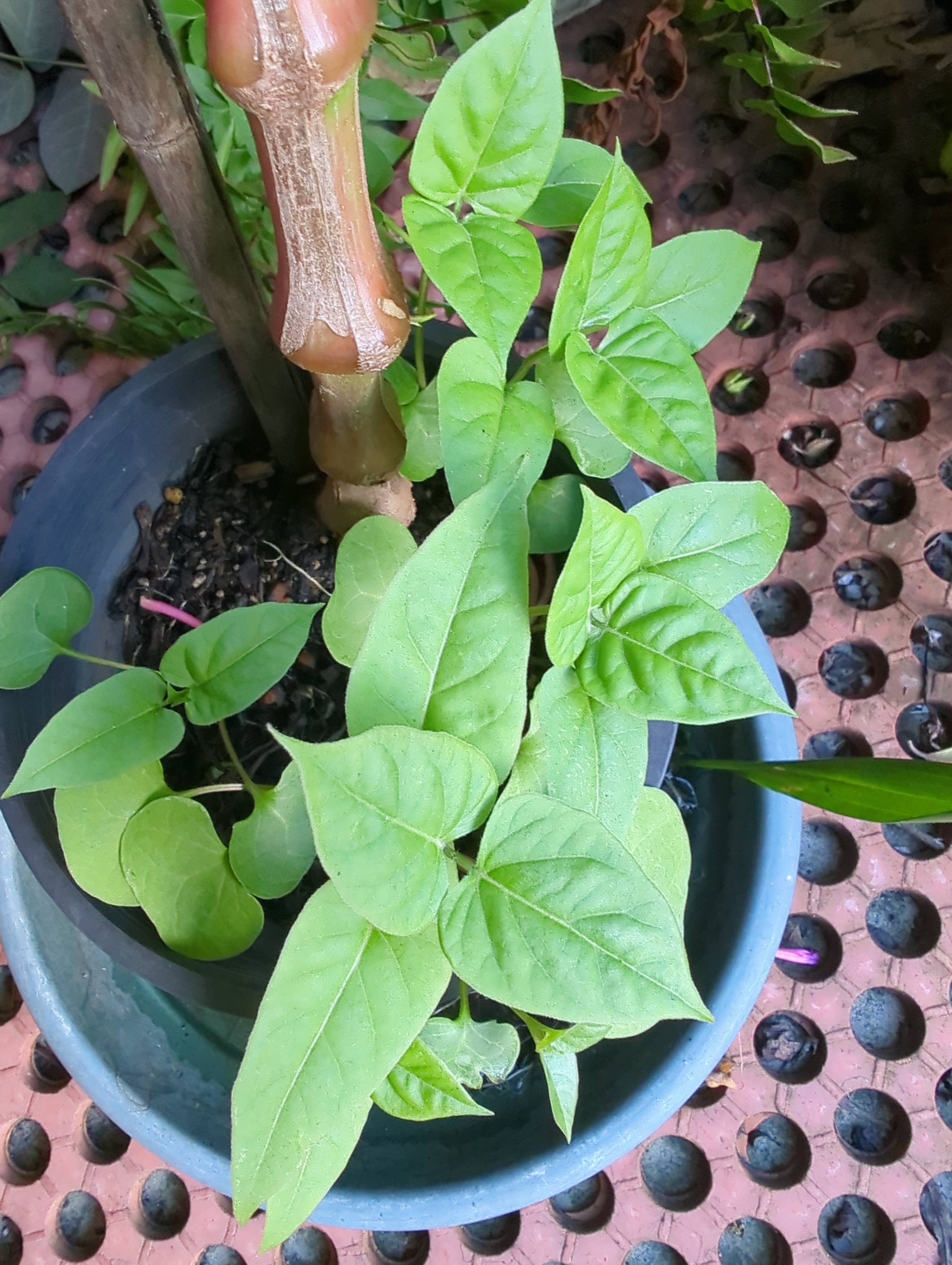
My plant flowered and I havested some of the archenes (seeds). Some fell into the base of the plant in the pot.
They took 5-7 days to germinate. These emerged around the 1st March 2026.
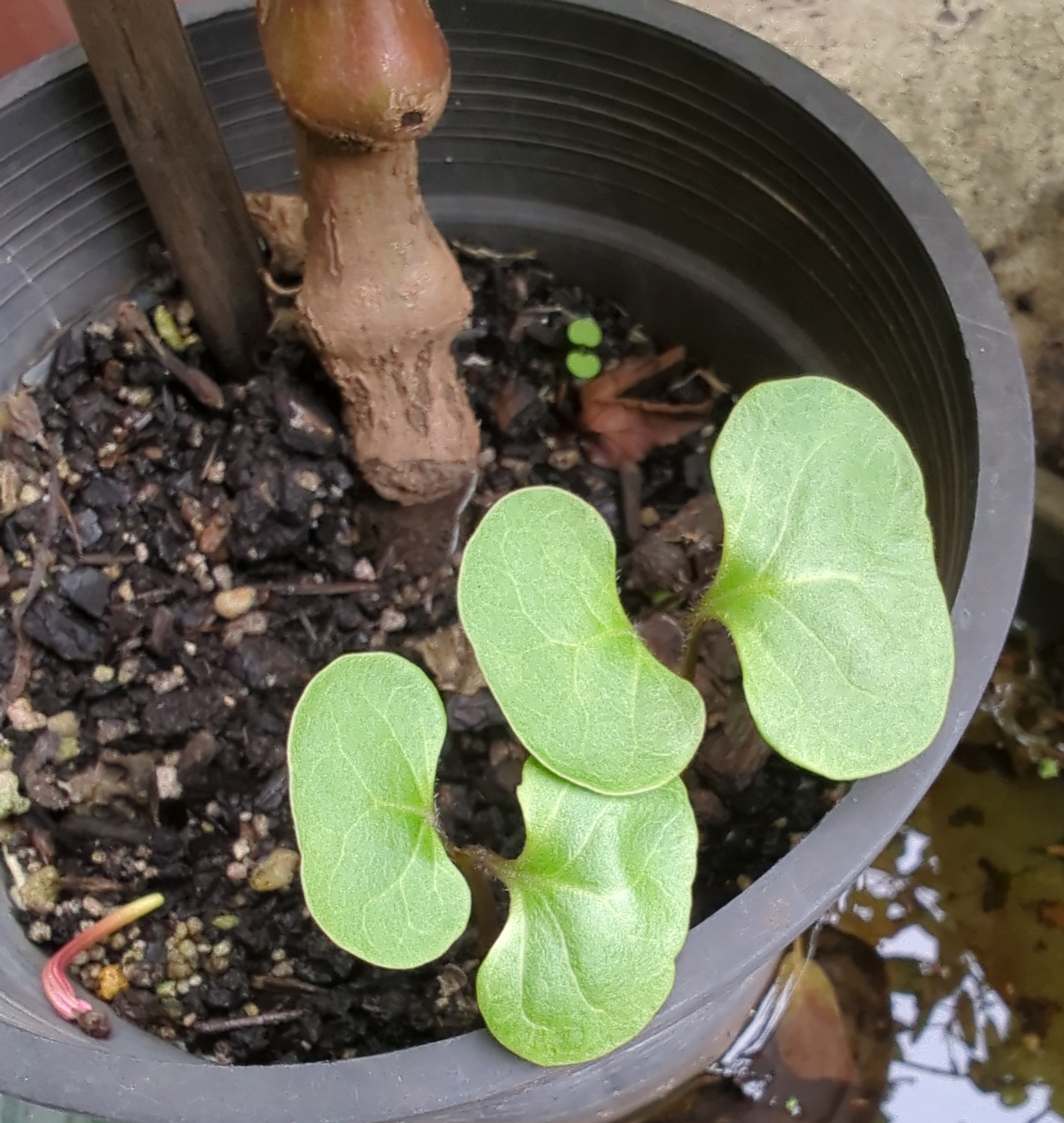
After 7 days (7 March 2026) the true leaves formed.
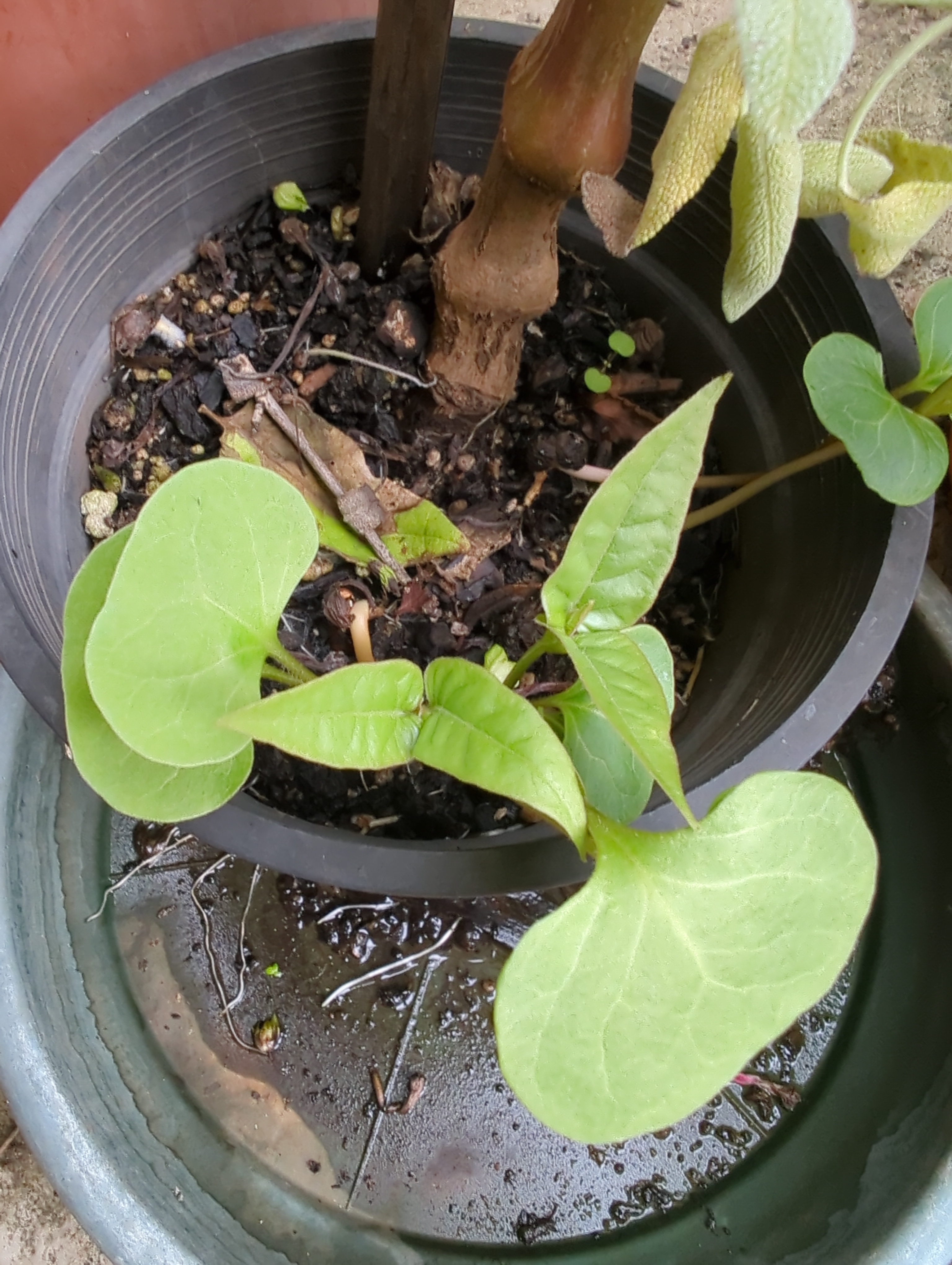
After a month (1 April 2026) the plants have added leaves and are growing well and are strong enough to be transplanted.
Cultivation of Mirabilis jalapa:
Planting Site and Soil:
As the plant is is perennial select a permanent site that will be undisturbed. Seeds should be planted in spring.
Select a site that gets 6 hours of full sun with some protection from extreme afternoon sun. They will becoeme leggy and not bloom as profusely in locations that are too shady.
Dig the soil through to a depth of 30 cm and dig in compost and aged manure to enrich it. Mirabiis jalapa prefer a soil with a pH of 6.0 to 7.8.
Soak the hard, black seeds in water overnight or scarify the seed coat to speed up germination
Sow seeds directly in the garden after the last frost or start them indoors 6–8 weeks before the final frost date. Plant seeds 2cm deep and space plants 30 -60 cm apart to allow for their mature growth.
Keep the planting site moist but not wet until the seeds germinate. Then protect the tender seedlings from pests. Alternately grow seedlings in seed raising mix and then plant them out when they have matured.
Watering:
Do not let the Mirabilis jalapa plant dry out. Water whenever the top 2-5 cm of soil becomes dry. Wster judiciously avoiding overwatering because soggy soil can cause root rot. Mulching around the plant keeping it away from the stem will conserve moisture.
 The Grantham Gardener