

Today is the first day of autumn and this is the first Planting Guide of the season.
The following is a list of vegetables and herbs that you can plant in March in Sydney, a temperate zone. Just click on the name for the growing guide for each vegetable:
- Amaranth
- Beans – broad beans, fava beans
- Beetroot
- Broccoli transplant seedlings
- Brussels sprouts
- Cabbage
- Carrot
- Daikon
- Endive
- Kale
- Kohlrabi
- Leeks
- Lettuce
- Mizuna
- Mustard greens
- Parsley
- Radish
- Rocket
- Shallots
- Silverbeet
- Spinach
- Turnip
Plant of the Month: Olea europaea- ( European Olive Tree)

The olive and its precious oil is at the centre of my cooking and the delicious fruits are so versatile and valued the world over.
Olive oil and olives, are a main component of the Mediterranean diet. Olive polyphenols, are associated with many of the beneficial effects of olive oil on health, including antioxidant, anti inflammatory, and enhanced wound healing effects as well as being beneficial against diabetes, cardiovascular disease , neurological disease, depression, and nonalcoholic fatty liver disease. In addition, olive polyphenols have been shown to have beneficial effects against other important diseases, including cancer.
This olive tree has ancient origins. Fossil evidence indicates the olive tree had its origins 20–40 million years ago in the Oligocene, in what now corresponds to Italy and the eastern Mediterranean Basin. The olive plant was first cultivated some 7,000 years ago in Mediterranean regions.
The Olive tree of Vouves (Greek: Ελιά Βουβών) is an olive tree in the village of Ano Vouves in the municipal unit of Kolymvari in Chania regional unit, Crete, Greece. Scientists from the University of Crete have estimated it to be 4,000 years old. One of the oldest olive trees in the world, it still produces olives today.
The olive tree, Olea europaea, meaning ‘European olive’, is an evergreen tree or shrub, in the family Oleaceae, native to Mediterranean Europe, Asia, and Africa. The species, introduced by colonists, is also cultivated in in Australia, New Zealand, North and South America and South Africa.
The olive tree is short and squat and 8–15 m in height. It is found traditionally in the Mediterranean Basin, where the soils are well draining, infertile limestone soils and the summers are hot and dry, with lots of rain in winter and low chance of frosts. The trees do need a period of dormancy brought on by cold conditions (daily average below 12°C ) to trigger flowering. These are the ideal growing conditions for growing olive trees.
A few weeks ago I spied some beautiful mature trees in the Sydney basin, loaded with olives and so, even in Sydney’s hot but humid conditions, the olive trees are bearing good crops. The site is in full sun and three large mature trees are laden with fruit.

In Melbourne’s east, which is often subject to frosts, the young tree in the image below, in a raised, well drained and protected position, is doing well and bearing a good crop too. Melbourne summer’s are hot and dry and there is plenty of rainfall in winter but with frosts and the chance of winter hail.
This image was taken in mid March.
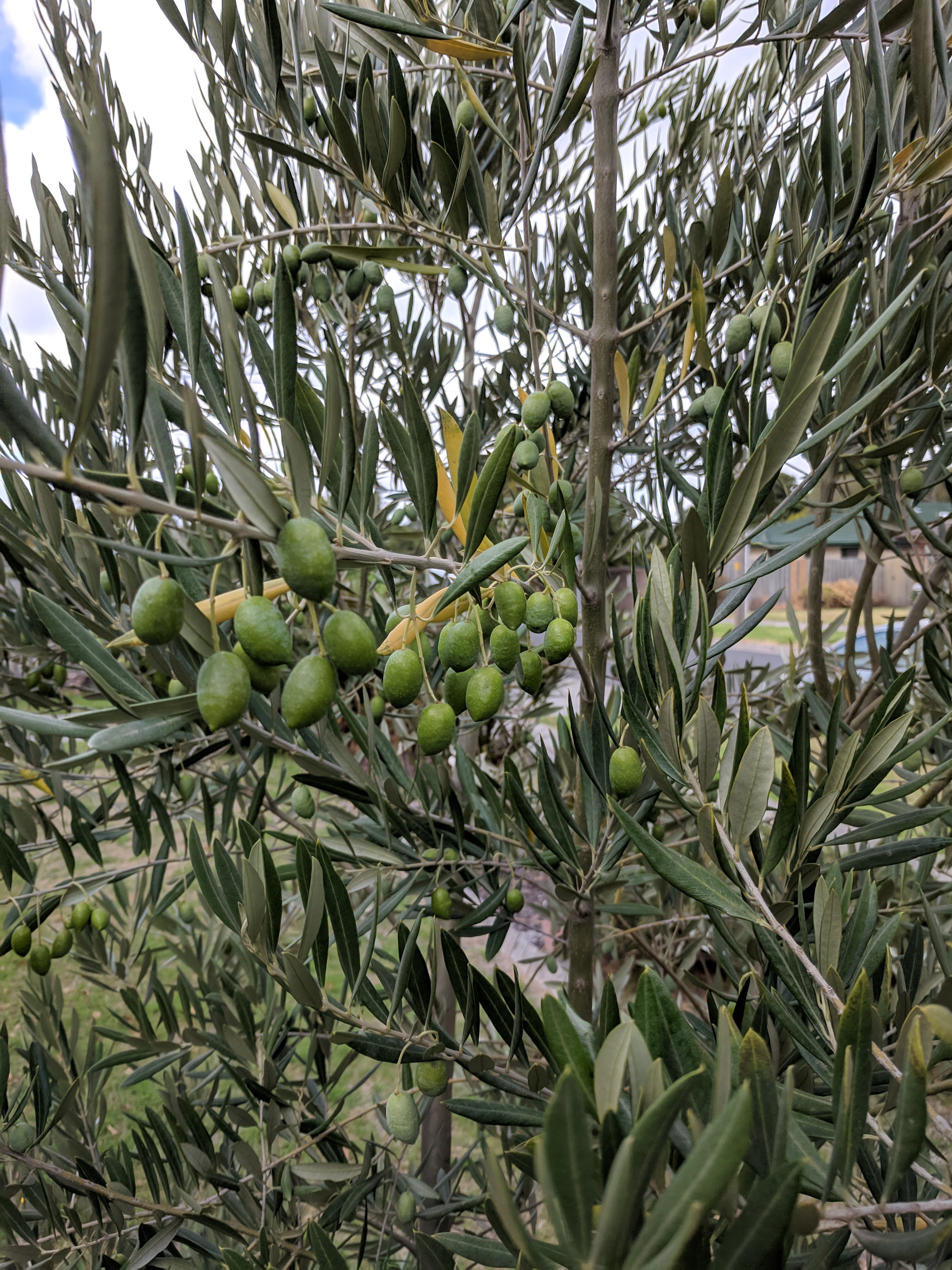
This shows that you too could grow an olive tree in your garden with a little attention to the environmental conditions and soil, in a sunny location or even in a large pot.
In optimal conditions, a mature olive tree at about 10 years of age should be around 3 to 4 meters high and could give a yield of around 40kg per year.
So even in less favourable conditions, a mature olive tree can give a good crop of olives for the home gardener bearing in mind that it will take at least 5 years for the tree to bear fruit and they will not bear fruit fully until they are 10 years old.
Harvest time determines the colour of the olive and the taste of the oil, and is usually in late autumn, early winter (April / May / June) in most areas in Australia.
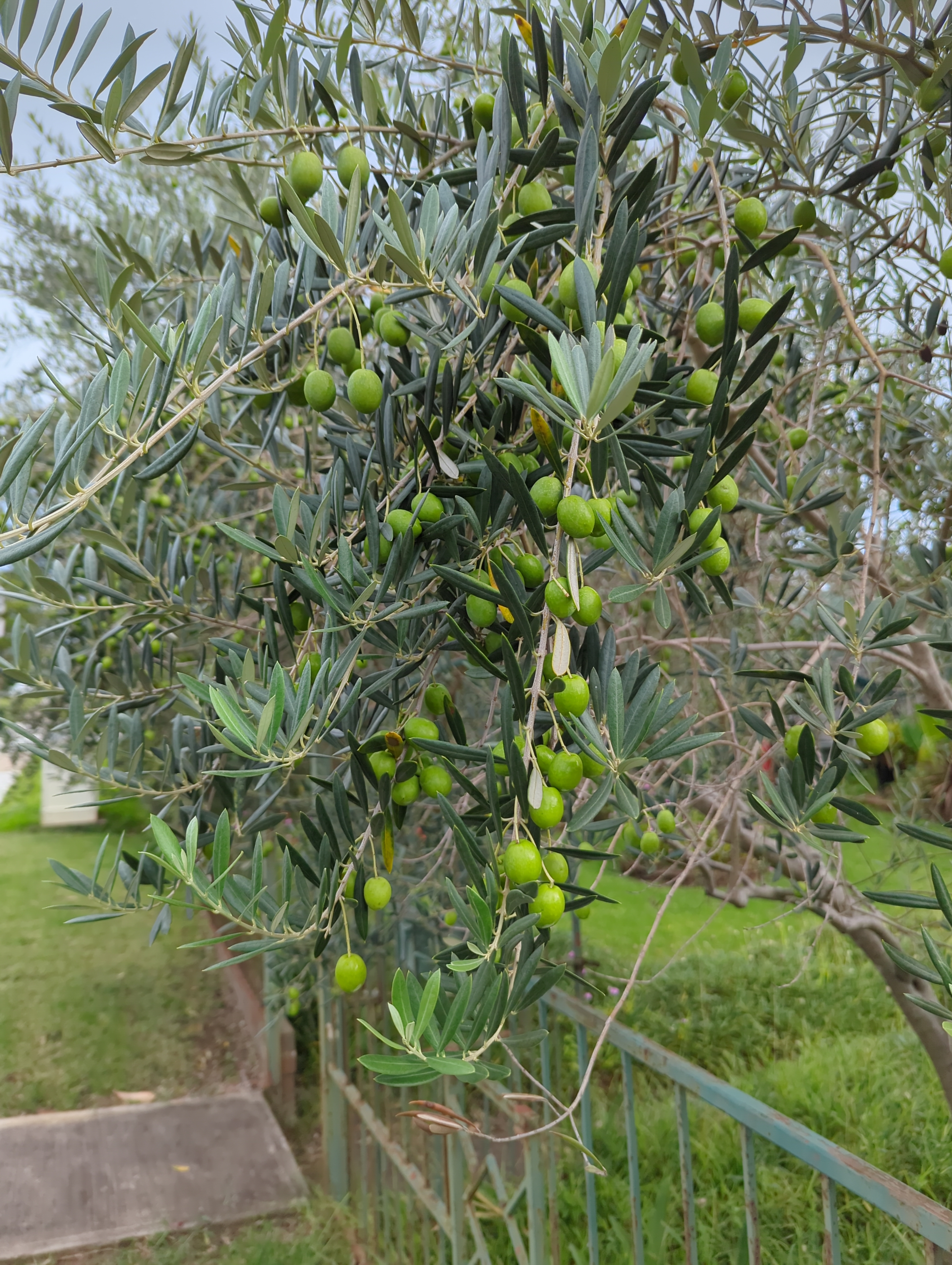
The image below shows the olives in Melbourne at mid May

.Below is a botanical image from 1887 by Franz Eugen Köhler, Köhler’s Medizinal-Pflanzen. It shows botanical details of the different parts of the plant. Click on the image for more detail.

Details of the image of the Olive tree. A flowering branch (natural size); 1 unopened flower, enlarged; 2 open flowers, ditto.; 3 split and separated flower, ditto.; 4 anthers (pollen vessels) from front and back, ditto.; 5 pollen grains, ditto.; 6 defoliated flower, without crown, ditto.; 7 same in longitudinal section, ditto.; 8 ovarium in cross section, ditto.; 9 stone, natural size; 10 same in longitudinal section, ditto.; 11 stone bowl, seen from edge, ditto.; 12 same in longitudinal section, ditto.; 13 same, the narrow side in longitudinal section, ditto.; 14 same in cross section.
In Australia, the flowering season for olive trees is between September and November.
Growing on the previous year’s wood, and after exposure to low temperature, lateral buds of olive tree develop into inflorescences while terminal buds continue to grow vegetatively. The racemes of flowers emerge from the axils of the leaves.
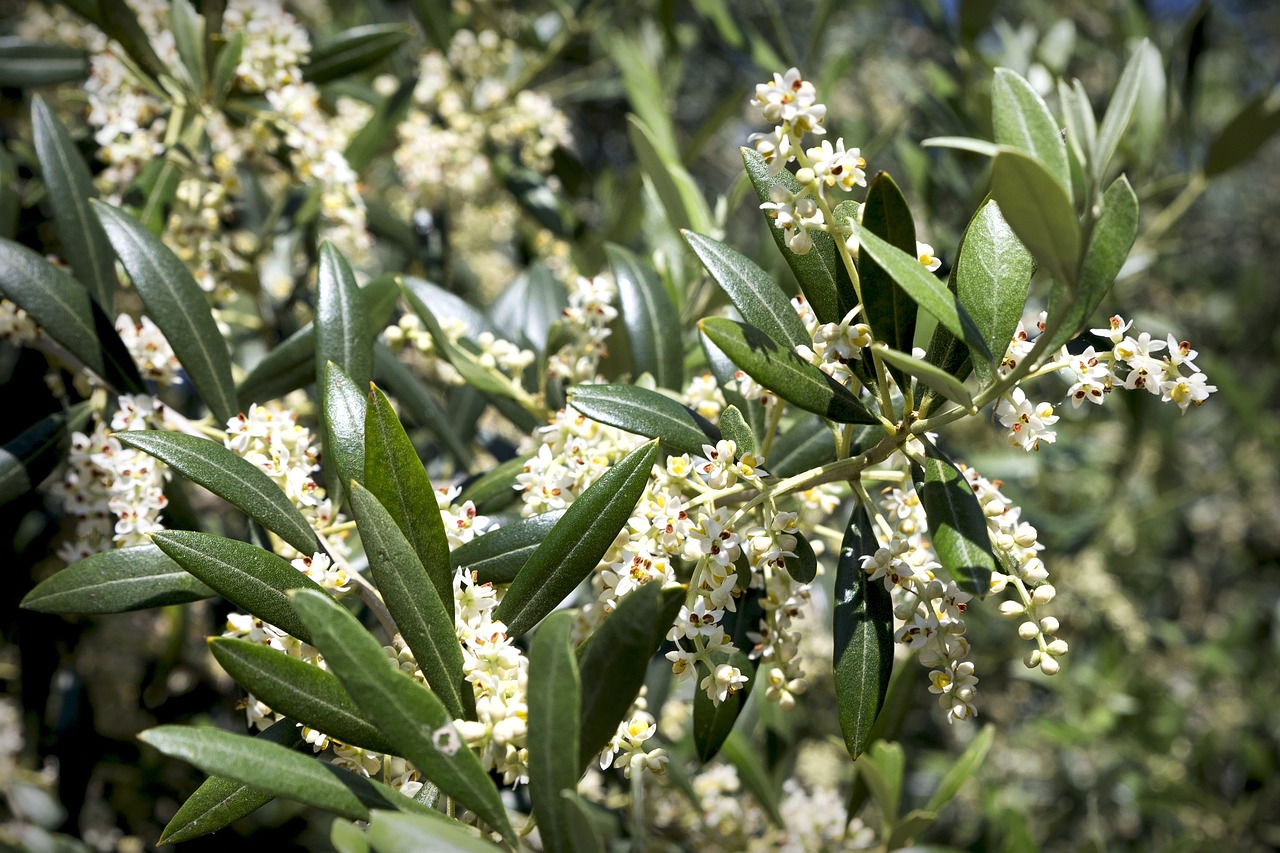
The inflorescence is a cyme of 15-30 solitary flowers. Perfect Flowers have both stamen (the male part) and pistil (the female part) and self pollinate. A perfect flower has four sepals and four petals, two stamens and a two fuse superior ovary. Staminate flowers have only stamens and lack a pistil. These are aborted according to the environmental conditions to conserve energy.
Flowers are divided symmetrically in halves. They are hypogynous i.e, the sepals, petals and stamens are borne on the receptacle beneath the ovary.
The calyx has 4 lobes. Sepals meet but do not overlap. The flowers have 4 fused petals. Each flower has 2 stamens with anthers that are two celled and longitudinal.

At pollination the anthers shed pollen on the stigma of the pistil. Only 1-2% of flowers are able to set fruit. Research suggests that cross-pollination generally improves the fruit set of most varieties especially when the environment conditions are not optimal. Generally having two or three different varieties growing close will facilitate adequate cross-pollination.
This is born out in the garden I visited that has 3 trees close together all bearing good crops of olives.
For detail click on the image below that shows the opened flowers and also buds yet to emerge.

The leaves are a silvery green under and a deeper olive colour on the surface. They are oblong, measuring 4–10 cm long and 1–3 cm wide. They are simple and pinate and opposite on the branches. These hard, thin leaves are adapted to prevent water loss.

The trunk is typically gnarled and twisted. Very old and ancient trees are very beautiful.

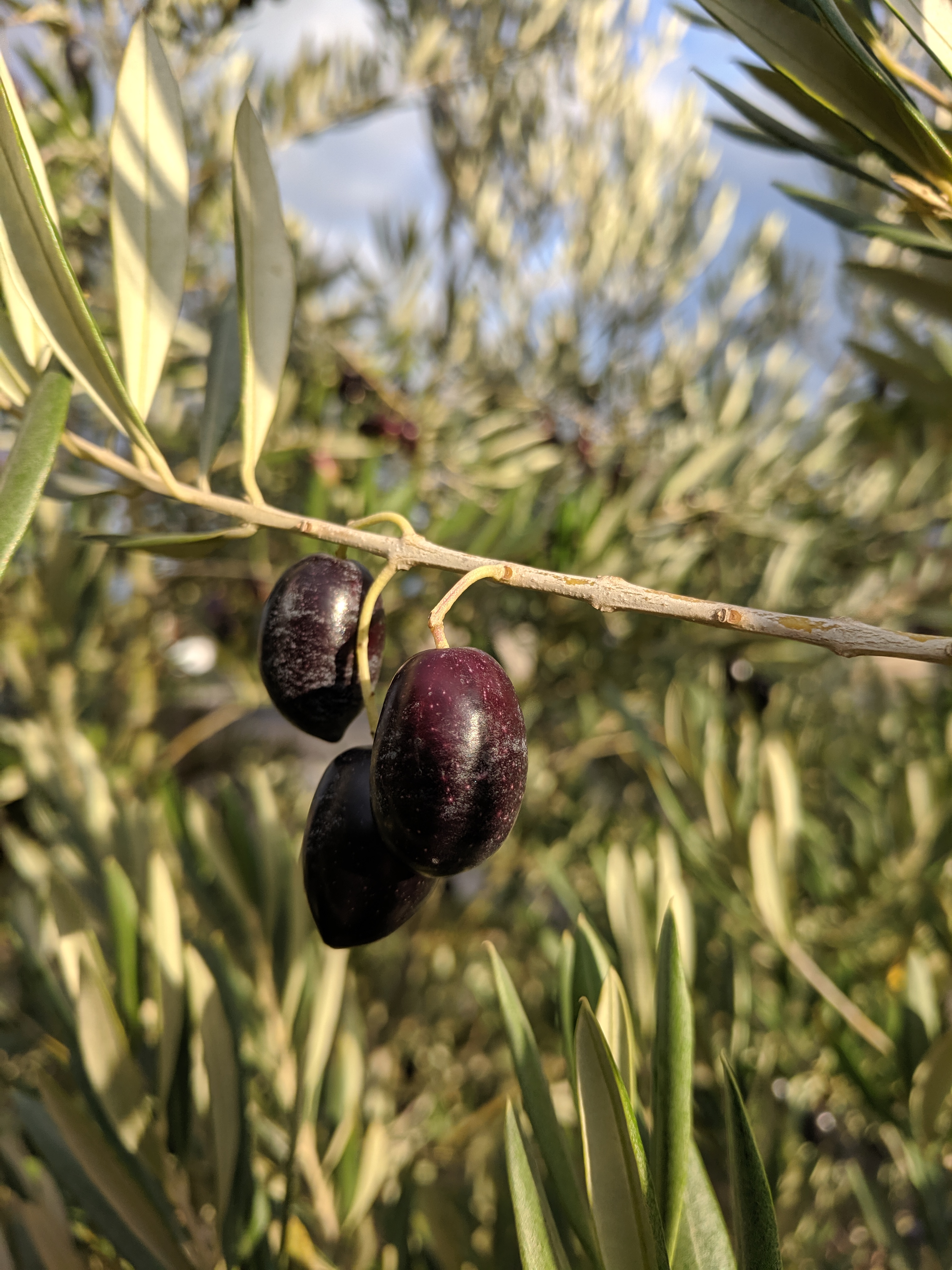
Olive fruit is a drupe, which is oblong with smooth, waxy surfaces. It is green or yellowish-green when immature, and turns red, purple, or black at full maturity (requiring 6–8 months). Mature olive fruit has a typical drupe structure with a thin protective exocarp, a fleshy mesocarp and a stony endocarp which surrounds the seed.
Soil and Site:
Select a site that receives full sun. It should be protected from winds, avoiding a low area that collects cold air or frost. A north facing spot is preferred. The trees do need a period of dormancy brought on by cold conditions (daily average below 12°C ) to trigger flowering. Consider the micro climate of the planting site. Proximity to buildings, paving and asphalt that can act as heat sinks that will affect the environmental temperature and so the setting of flowers.

Also avoid planting the tree where fallen fruit will stain walkways or patios or be a hazard under foot.
When choosing a cultivar consider the root system of the variety you are planting. Consult your nursery about the mature height of the tree. The root system will be at least as wide as the canopy and even more at maturity. You may need to consider proximity to buildings, fences, pipes and overhead power lines when selecting your site to avoid any damage. Choose the best sized cultivar for the space you have in your garden.
The soil should be well-drained. Olives are completely intolerant of poor drainage .Sandy loam is ideal, but olives will grow in most soils. The soil should have a pH is in the range of 5.5 to 8.5 for the best growth. Test your soil and amend accordingly. Add dolomite to the soil. You can add a cup full of dolomite to each square metre of ground. If growing in pots add a little dolomite to the potting mix.
If in doubt about the quality of the drainage, make a mound or a raised bed in which to plant the tree. The root system is shallow and spreading and water will drain away.
Choose a self pollinating variety suitable in size for the selected site from the many cultivars available to suit your needs.
Planting:
Plant olive trees in spring or autumn, avoiding planting olives during hot, dry summer weather.
After preparing the site bed and the soil, dig a hole half again as deep and twice as wide as the tree’s roots. Put a tree stake in place before planting. Water the root ball and gently tease out the roots
Set the plant in the hole so that the soil mark from the nursery pot on the stem is at the surface level Spread the roots out in all directions.
Re-fill the hole, firm in the soil so that there are no air pockets among the roots and water in the soil thoroughly.
Keep the plant well watered with deep watering in the months to come to encourage a good root system.
Prune out suckers and low branches during winter, to encourage growth and remove the tips of stems that have grown too long to maintain a good shape. Pruning any crossed branches and forming a vase shape as the olive tree grows at pruning time will also benefit the olive tree and bring sun into the centre of the plant.
Watering:
Ensure that the trees get adequate water and are not stressed during the period of flower setting and development ( late autumn early winter). In winter, a lack of water will cause leaf development at the expense of flower development.
Water stress during late winter / spring can result in flowers that do not develop properly and then prematurely drop without setting fruit.
In general, a good deep water once a week, especially during establishment phase is important. Take into account the local environmental precipitation and check the appearance of the tree if in doubt. it is critical to avoid “wet feet.”
Harvesting:
Once the olive tree has matured to fruit, harvesting the olives can be done from mid-autumn to early winter. For green olives, pick your fruit when it turns from dark green to light green, or wait for them to turn black, but still firm, for black olives. They can be picked by hand or, when the tree is mature, spread a sheet or tarpaulin on the ground underneath the tree, then shake the tree to free the fruit.
The olives can then be processed for the table. Here is a site that explains the easy process:
https://grampiansoliveco.com.au/news/how-to-cure-table-olives
Olive oil and olives, are a main component of the Mediterranean diet. Olive polyphenols, are associated with many of the beneficial effects of olive oil on health, including antioxidant, anti inflammatory, and enhanced wound healing effects as well as being beneficial against diabetes, cardiovascular disease , neurological disease, depression, and nonalcoholic fatty liver disease. In addition, olive polyphenols have been shown to have beneficial effects against other important diseases, including cancer.
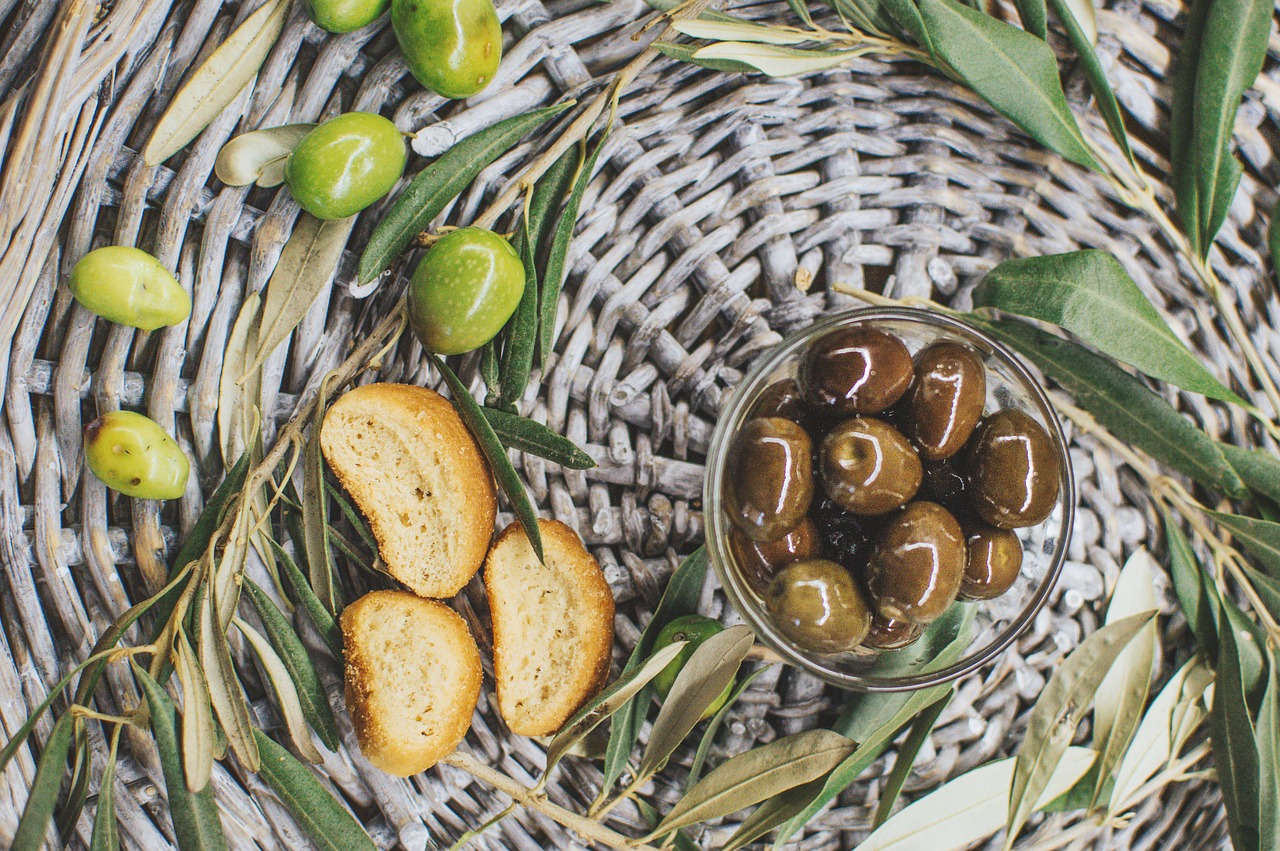
There are many recipes on this site using olives and olive oil but my favourite is the moreish Rosemary and Olive Palmiers. For the recipe just click on the heading below:
 The Grantham Gardener