This is the first day of winter and this is the first planting guide of the season. The following is a list of vegetables that you can plant in June in Sydney, a temperate zone (just click on the link for the growing guide for each vegetable).
- Beans
- Cabbage seedlings
- Garlic
- Kale seedlings
- Lettuce
- Mustard greens
- Onion
- Peas
- Radish
- Snow Peas
- Strawberry plants
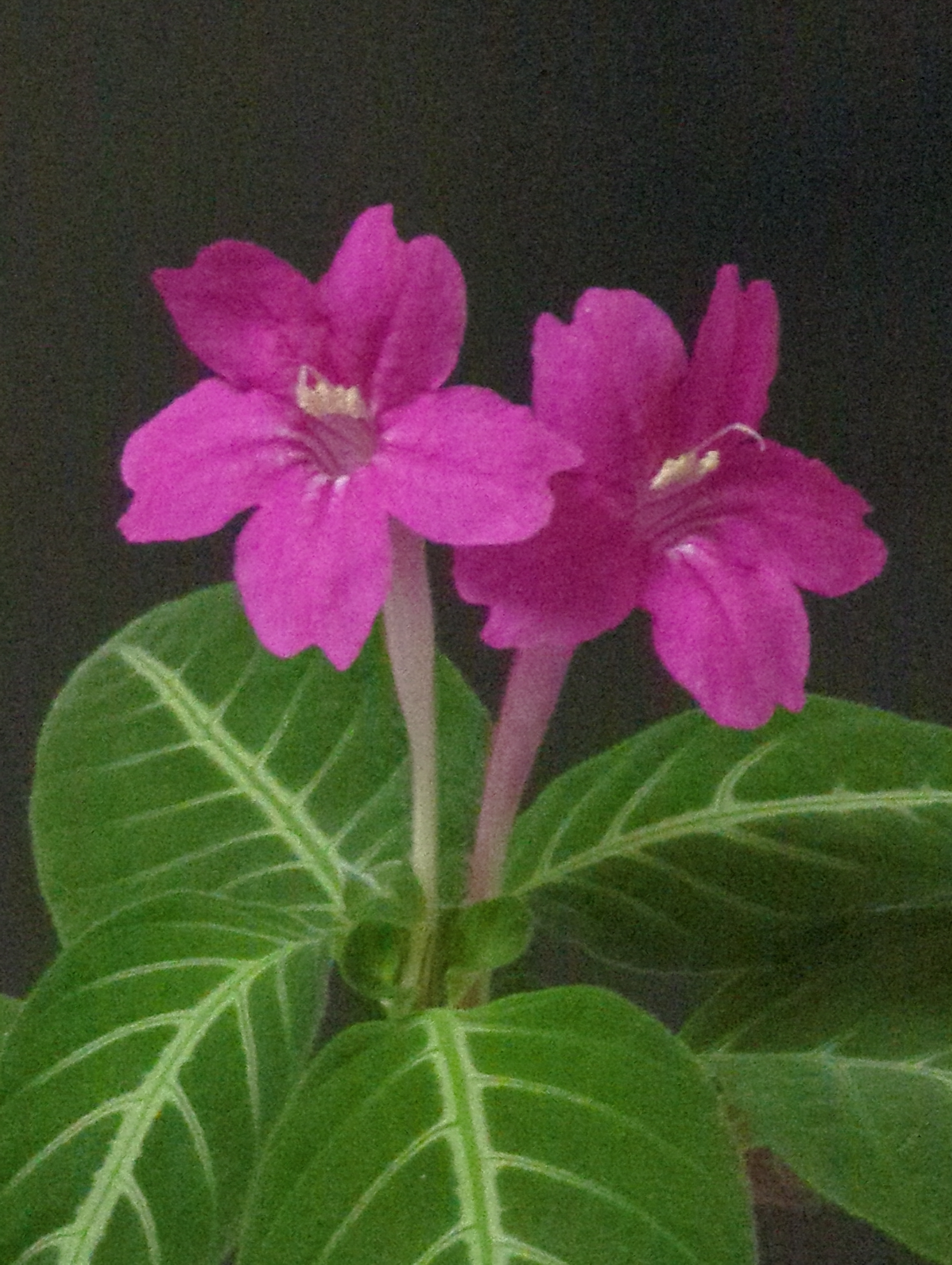
Plant of the Month: Ruellia makoyama – (monkey plant or trailing velvet plant)
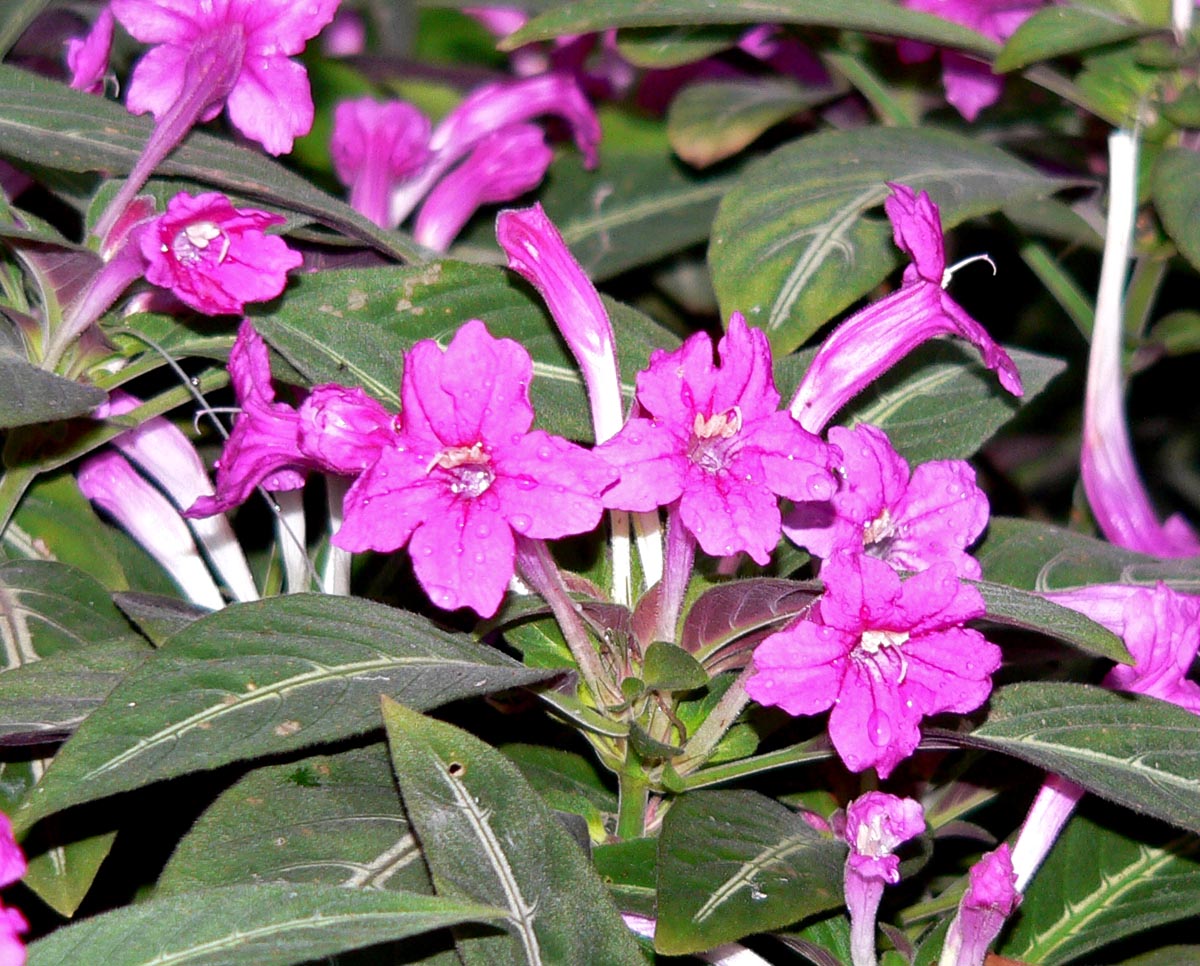
Image credit Stan Shebs (2005) CC BY-SA 3.0 ” Ruellia makoyana at Balboa Park“. This image shows the Ruellia in full flower.
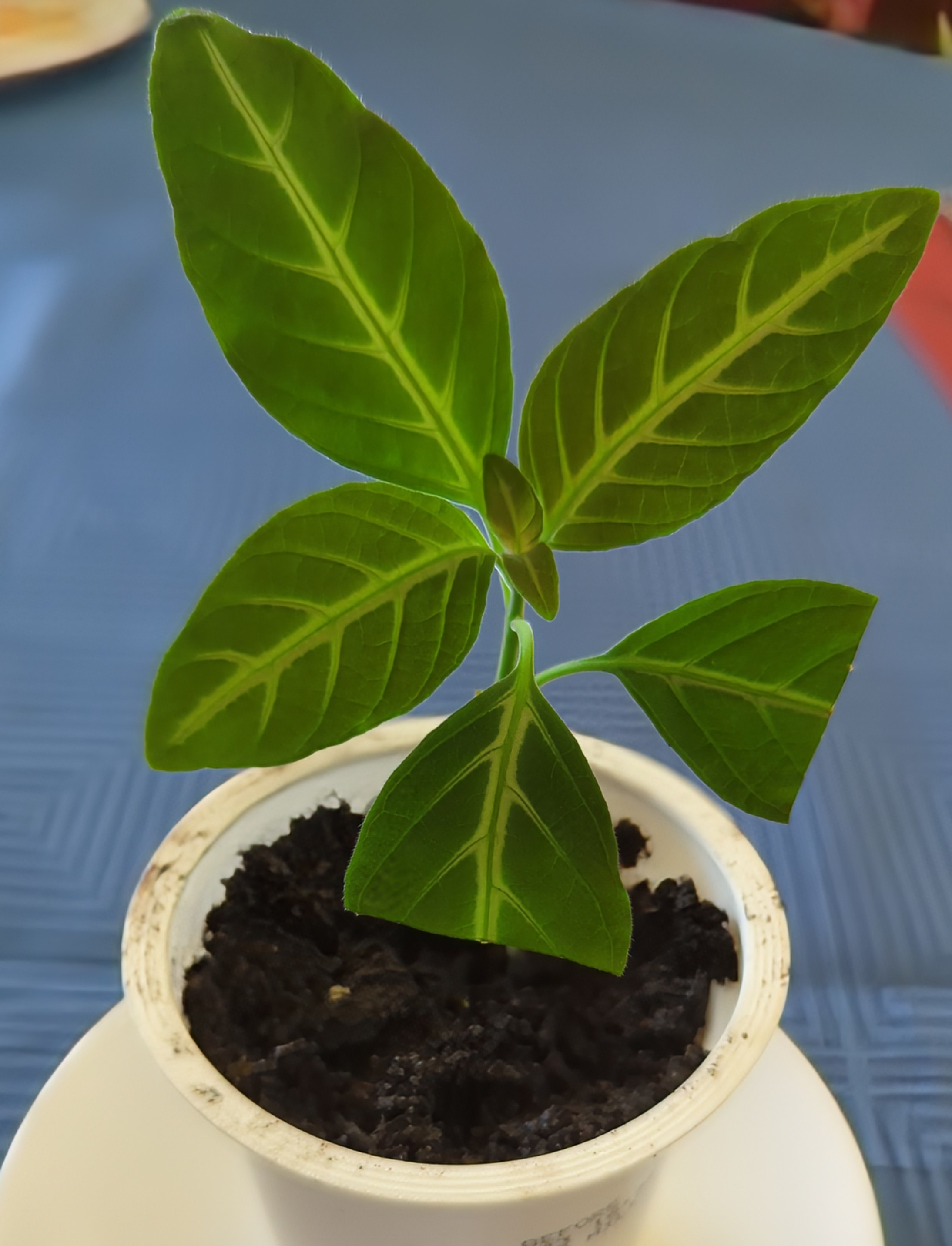
Two years ago I was given a cutting of a a very old plant that had just developed a flower bud. The plant was at least 20 years since it was potted and grown indoors. It had never flowered in all its time indoors and this was the first bud! I identified the plant to be Ruellia makayoma also called the monkey plant or trailing velvet plant and potted the cutting.
Placed in a well lit spot indoors, my Ruellia makoyama has flourished and I have repotted it as it has grown. Even as an immature plant it has flowered every June since since I was given the cutting in June 2024. The lesson for the old plant was that it did not have enough light to flower.
Ruellia makoyana is an evergreen perennial species in the family Acanthaceae and a native to Brazil. It thrives naturally in the humid, shaded understorey of these forests, where it grows as a groundcover or subshrub.
It grows to 60 cm tall by 45 cm wide, with a naturally trailing growth habit. This makes it useful as a hanging plant.
As shown on the botancal image below, the plant features velvety, ovate dark green leaves with silvery veining and purplish red undersides, It produces tubular, trumpet-shaped pink flowers with red markings, that bloom in late autumn and winter when triggered by shorter days.
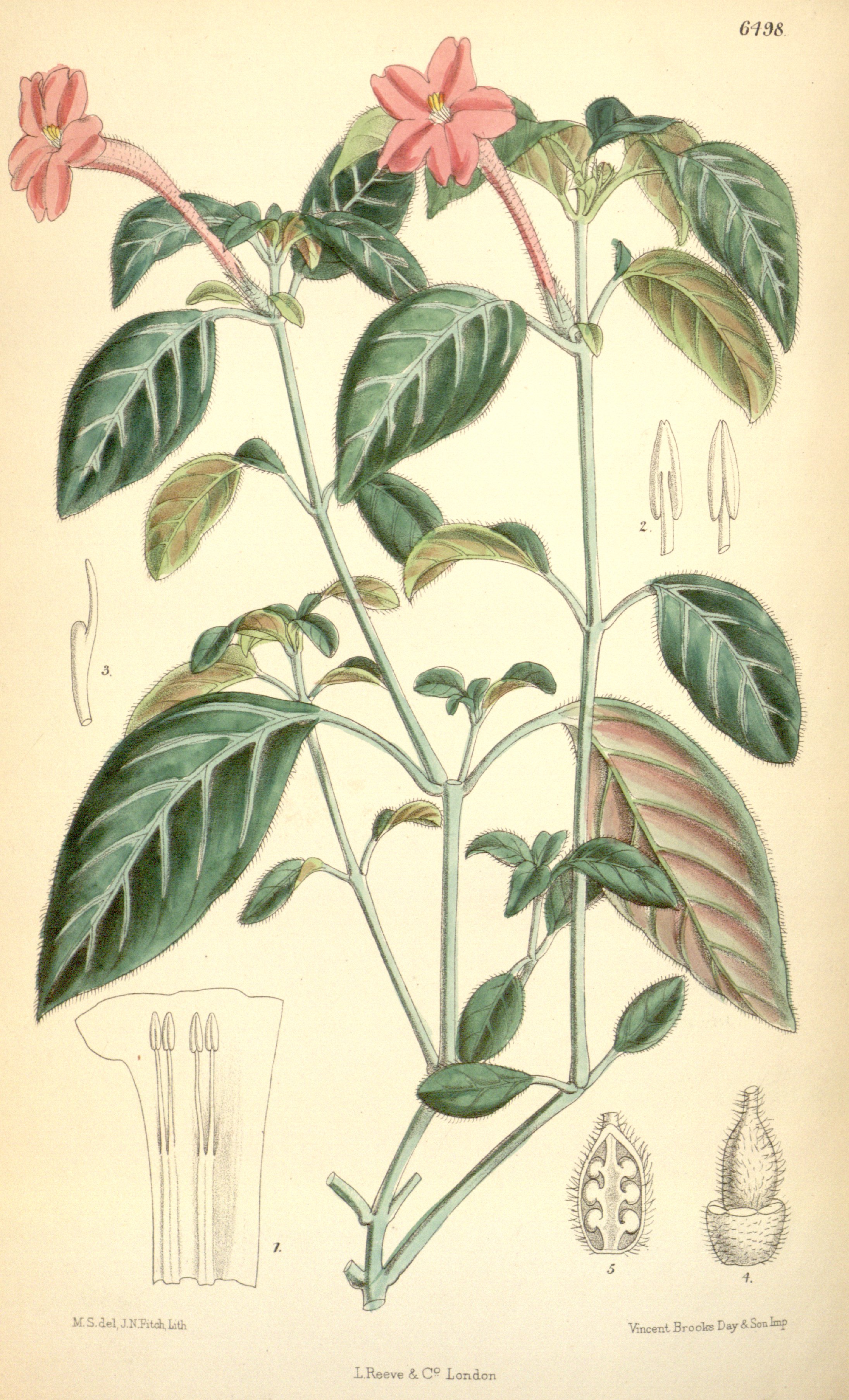
Image credit: Matilda Smith, Public domain, via Wikimedia Commons (Ruellia Portellae Botanical Magasine 106: 6498)
The following images show the emergence of a Ruellia flower in its stages.
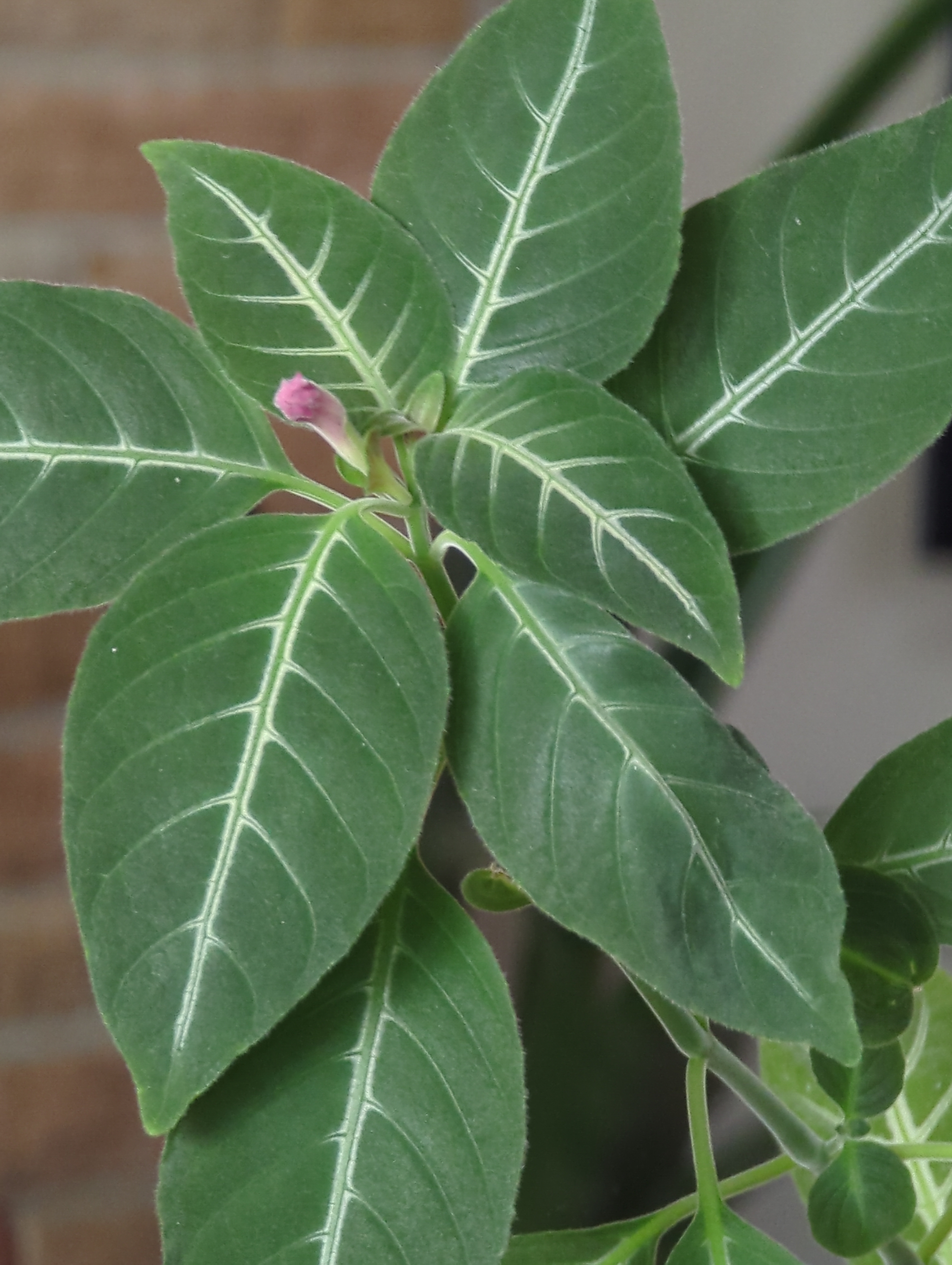
In the image below a bud emerges and rises from its protective calyx at the leaf junction.
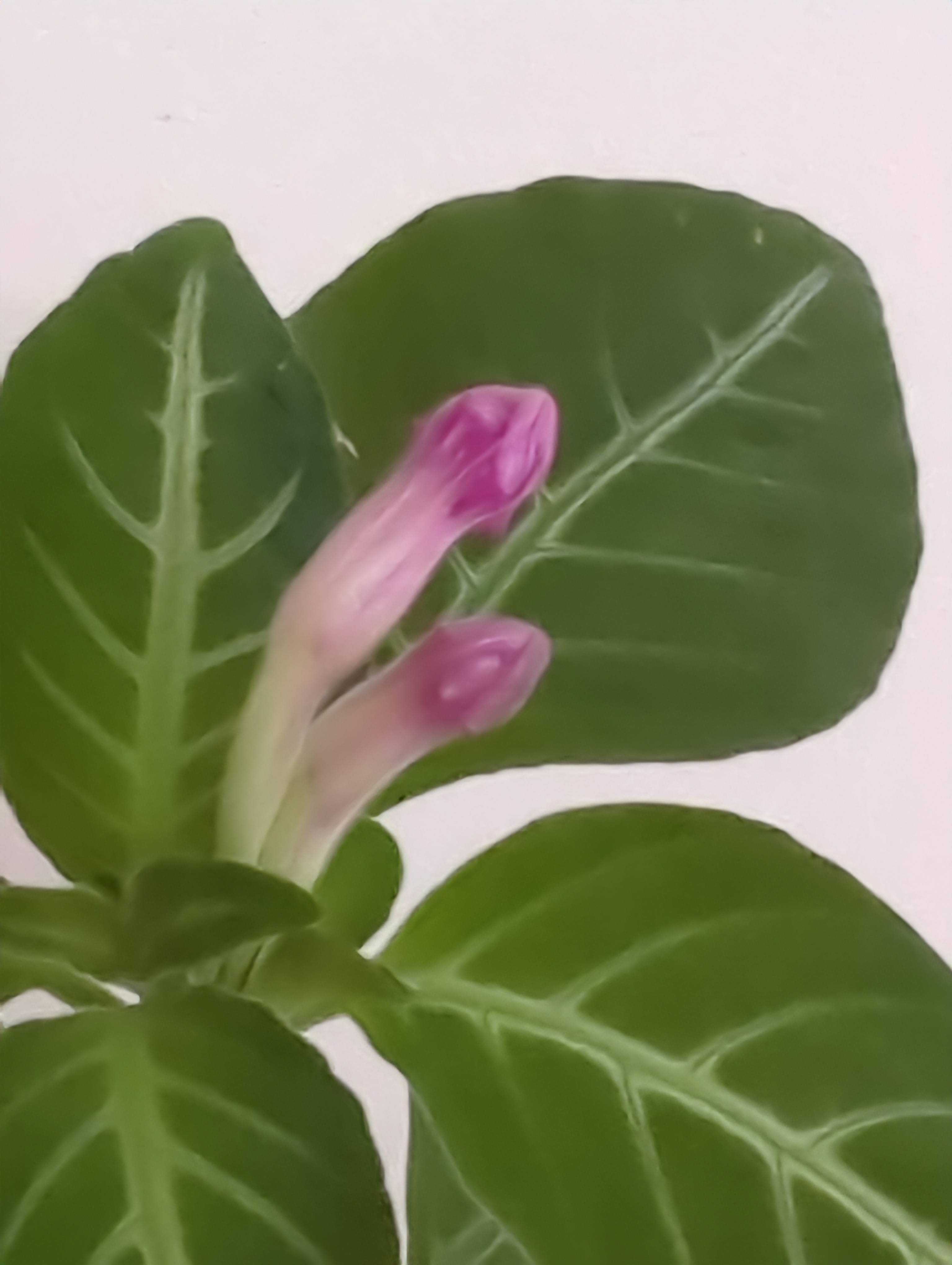
Here two buds have emerged and are elongating.
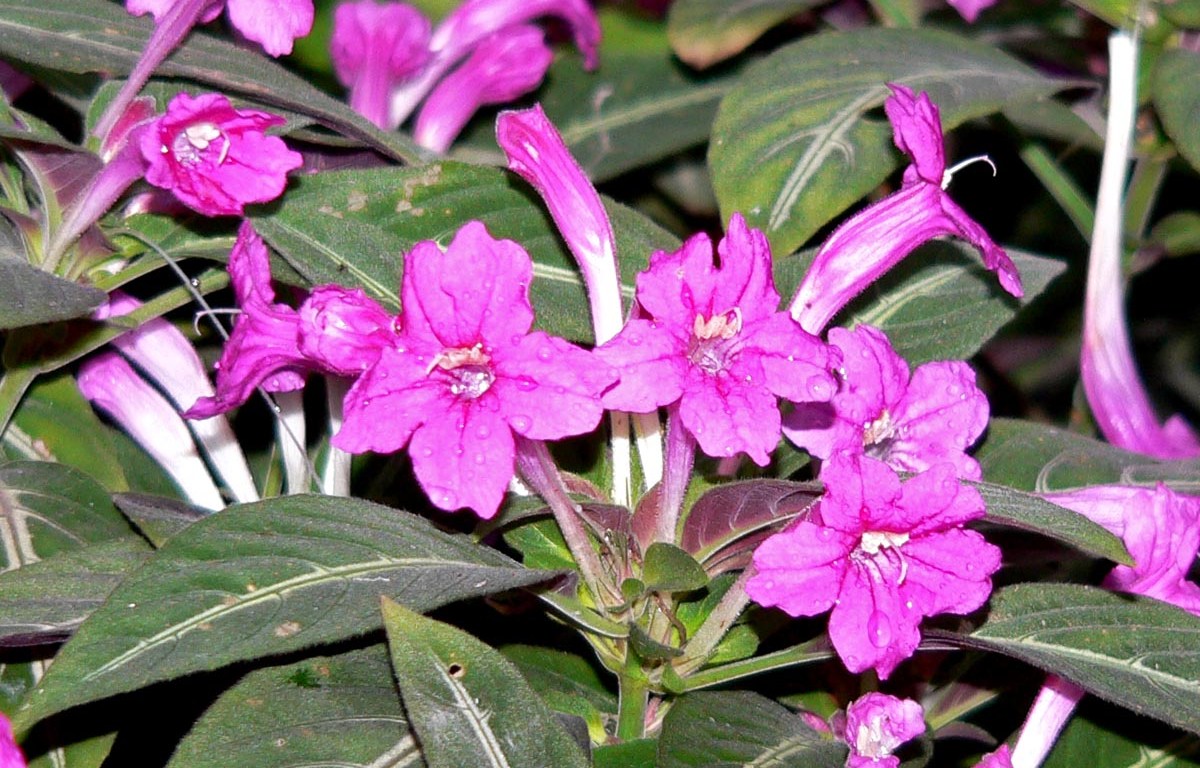
The bright pink, trumpet-shaped flowers are approximately 5 cm long. Each flower rises above the foliage on a slender tubular receptacle and and at the corolla, has five petals that are partly fused at the bottom. The flower widens gradually from the base, ending in an open or flared shape. where petals have dark/ red markings and central groove to help pollinators to the reproductive part of the flower. The outer edge of each petal is lobed in the centre.
Each flower has four stamens that are thin filaments topped with pollen laden anthers.(See image below).
The long curved style is located in the center and and emerges beyond the stamen scan be seen in the image below. it consists of the stigma (sticky tip that receives pollen). It is a tube connecting stigma to ovary which contains ovules that develop into fruit after fertilization located at the bottom of the receptacle below the corolla of petals.
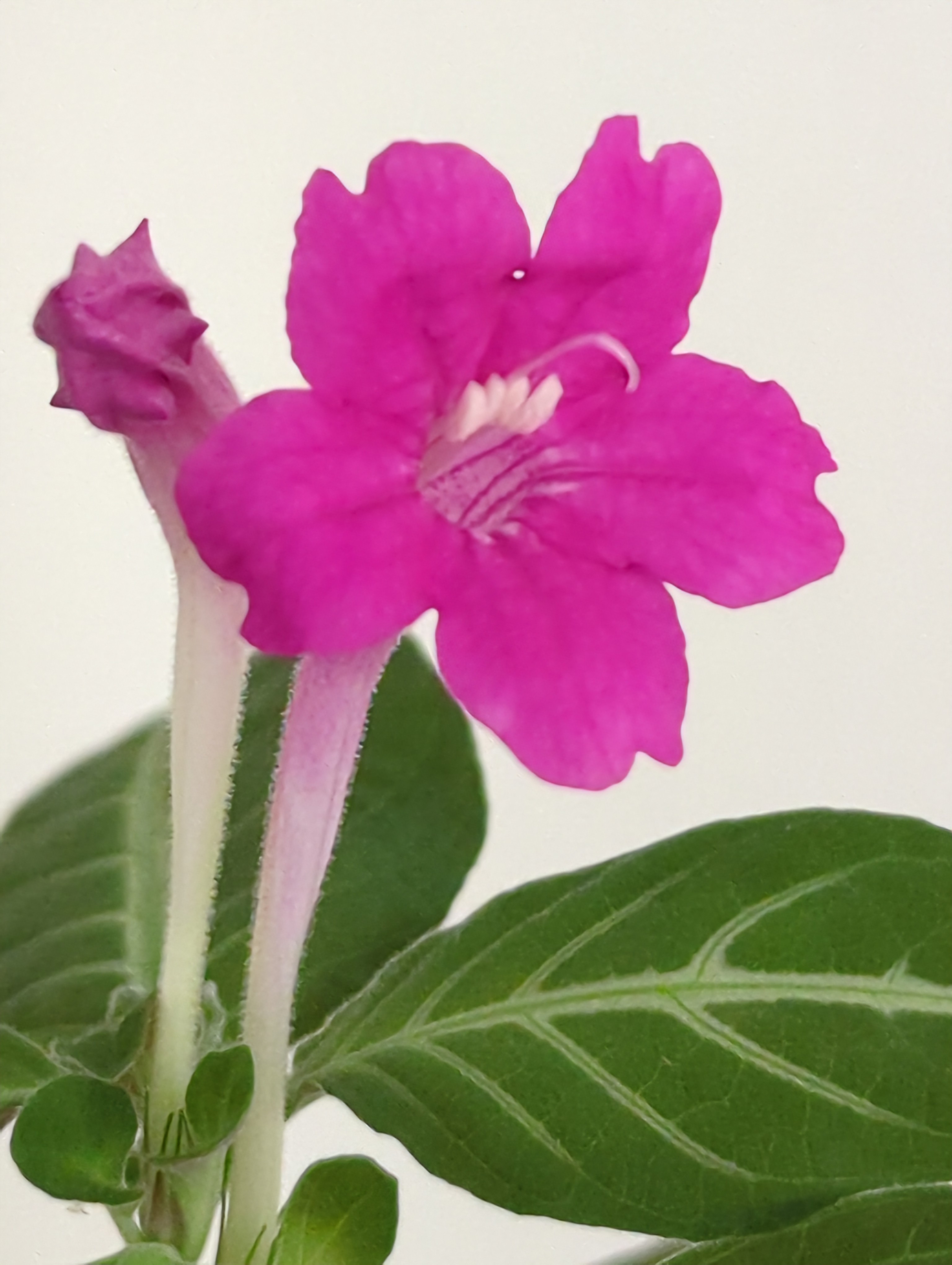
The long curved style is located in the center and and emerges beyond the stamen scan be seen in the image below. it consists of the stigma (sticky tip that receives pollen). It is a tube connecting stigma to ovary which contains ovules that develop into fruit after fertilization located at the bottom of the receptacle below the corolla of petals.
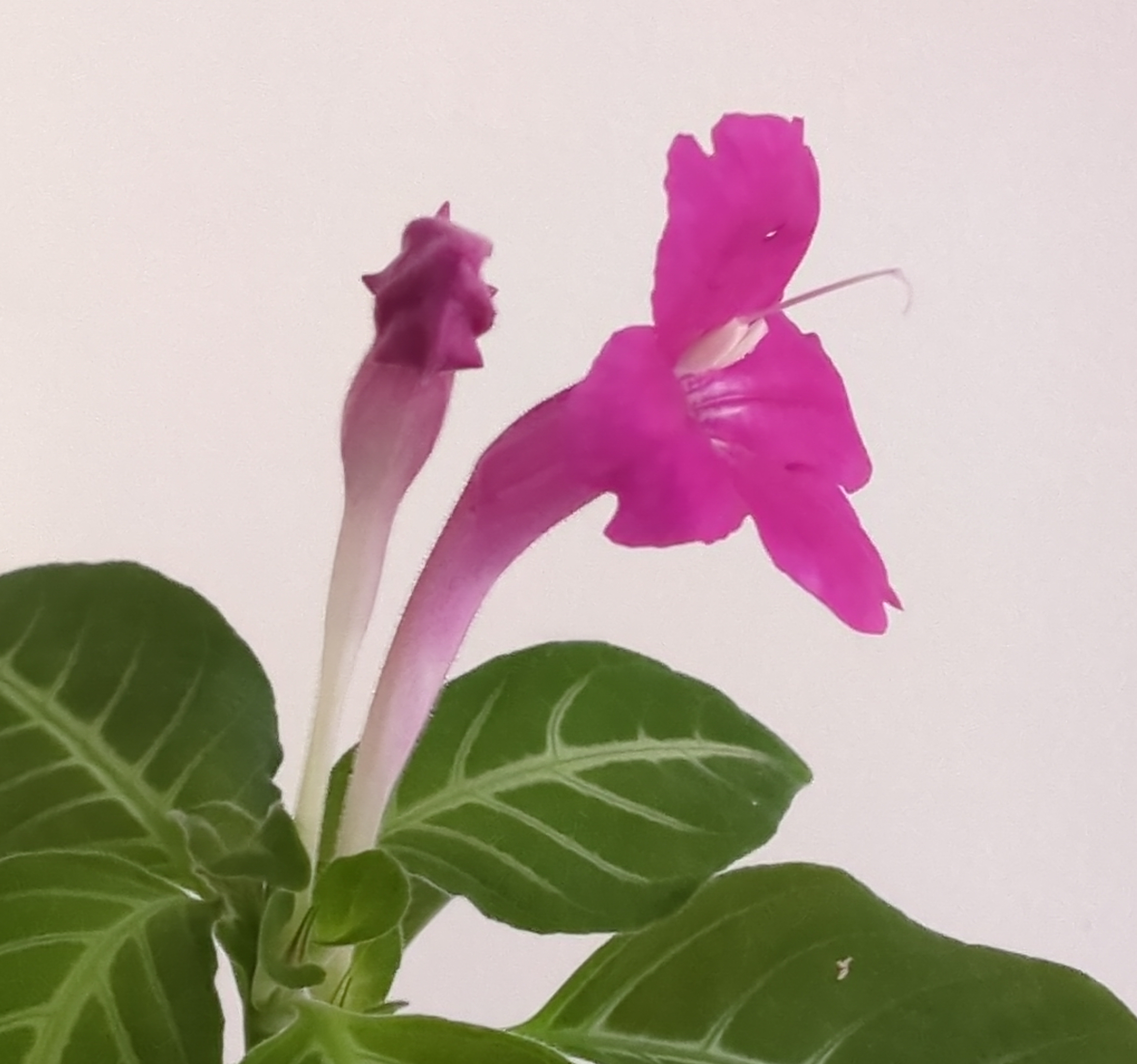
The flowers open and last about 5 days but on a large mature plant new blooms appear almost continuously, so the plant remains in flower for weeks or months beginning in autumn through winter.
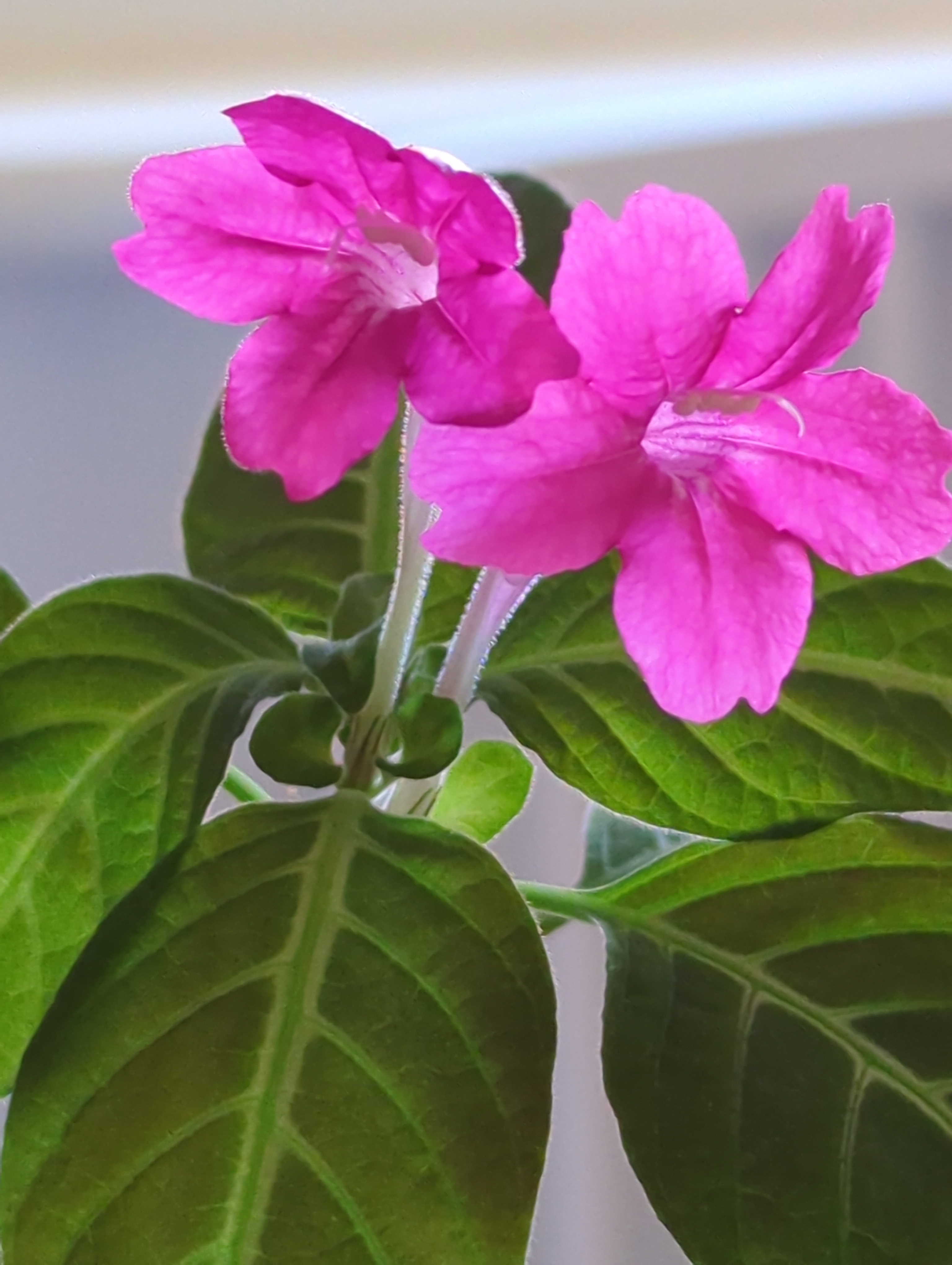
The flowers of the Ruellia makoyama are so beautiful and bright. I am looking forward to seeing my plant grow more stems but I am so grateful for being given this cutting.
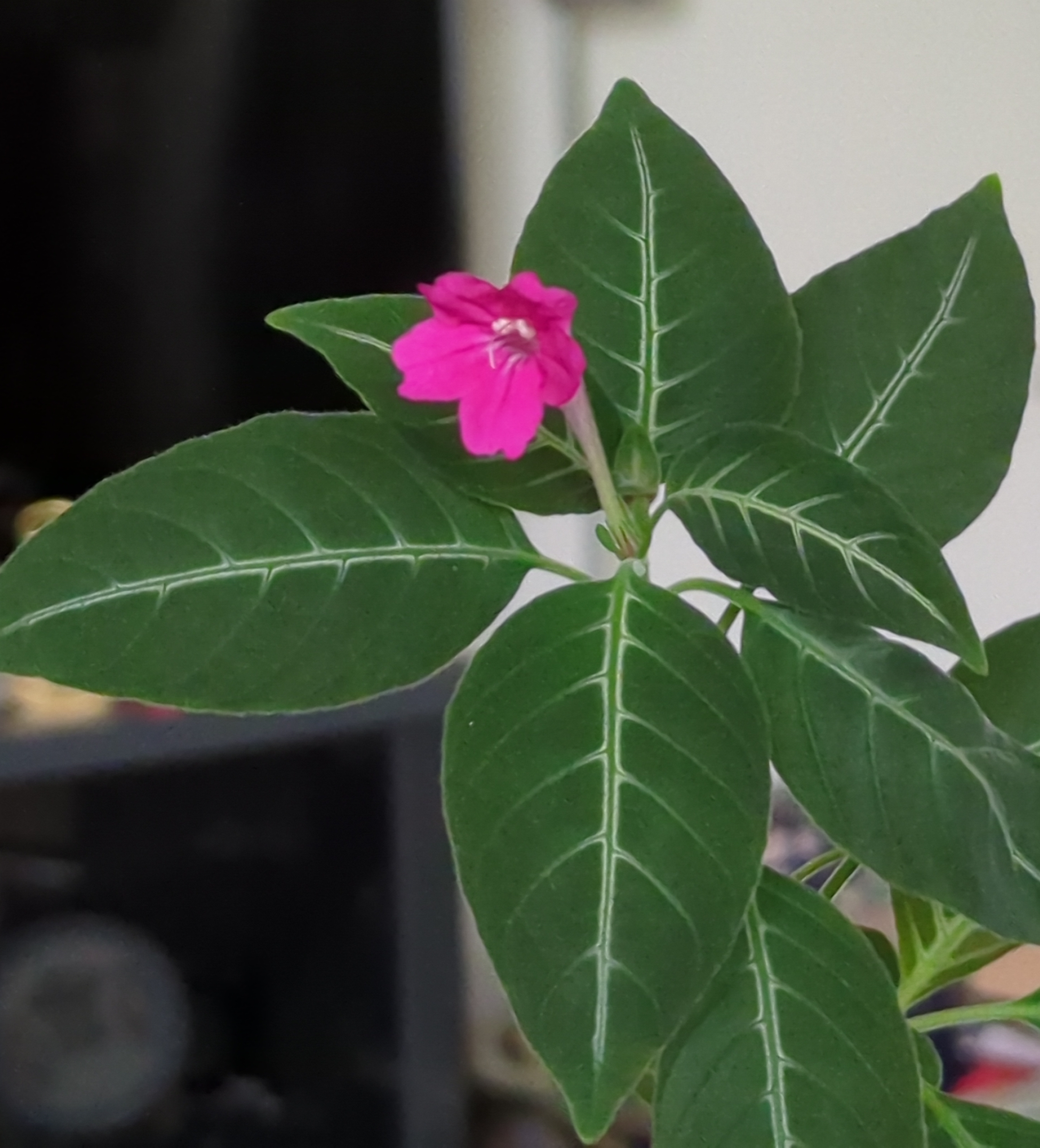
The leaves of the Ruellia grow in opposite arrangement where two leaves or leaflets grow per node, on opposite sides of the stem. in this opposite pattern, the successive leaf pairs grow at right angles (decussate) to the pairs below. This leaf arrangement prevents shading and gives the plant meximum light. This is important as it is an understorey plant.
The image below shows how dense the mature plant looks with its trailing habit. Even when not in flower the striking velvety leaves are so attractive.
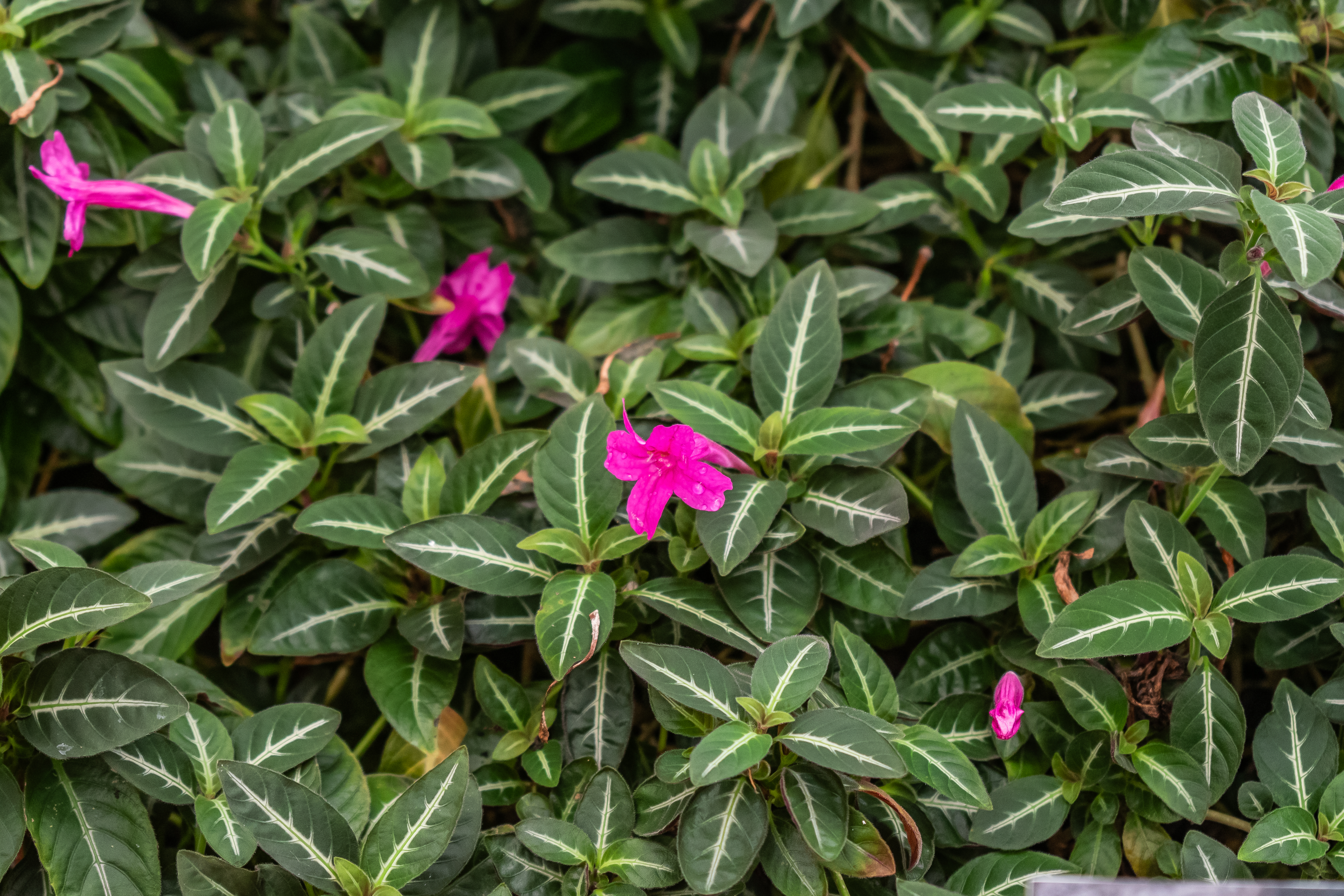
Image Credit: Tournasol7 CC BY 4.0 “Ruellia makoyana in Lyon Botanical Garden in tropical greenhouse“.
Cultivation:
While Ruellia makoyama prefers warm, humid climates, it’s commonly grown indoors across the world. Even here in Sydney the winter temperatures get too low to grow the plant outdoors. With a little attention to its watering needs the Ruellia makoyama is an easy plant to grow in pots or hanging pots.
Site and Soil:
When planting Ruellia makoyama select a quality potting mix and mix through some perlite to ensure good drainage. While the Ruellia makoyama requires moist conditions it cannot tolerate soggy soil. The pot should have adequate drainage holes to help this too.
When transplnting young plants. do this at the end of spring, after the bloom. Mature plants will need transplanting every two years into a new pot one size up. Transpanting into a much larger pot will risk having too much wet soil around the plant and cause root rot.
Light and Temperature:
The plant needs warm temperatures throughout the year above 16 C. It also requires high humidity. This can be achieved by placing the pot amongst other potted plants that create their own micro climate or on a tray with large stones and water, making sure that the bottom of the pot is not submerged in any way.
Plenty of sunlight is also recommended for optimal growth, even during the colder months.
Water:
Water the plant regularly throughout the year to keep the soil evenly moist but not soggy. I use rainwater I collect for this purpose to ensure that it is not too alkaline.
Water with high alkalinity can lead to leaf chlorosis, a condition causing the leaves to yellow due to a lack of chlorophyll.
Propagation:
Propagate Ruellia makoyana from tip cuttings with stems with at least one pair of well-developed leaves.
For good success ideally take cuttings in the early spring and plant in moist soil. This being said I took my cutting in late autumn and planted it into moist soil with little effort.
To achieve higher humidity levels I chose to set the potted cutting in the midst of my african violets set in a bright spot.
You can also put the potted cutting in a large plastic bag till the plant takes root.
Pinch out the tips of the stems to encourage new growth.