
The following is a list of vegetables you can plant in July in Sydney, a temperate zone, (just click on the link for the growing guide for each vegetable)
Plant of the Month – Zygopetalum Crinitum Orchid
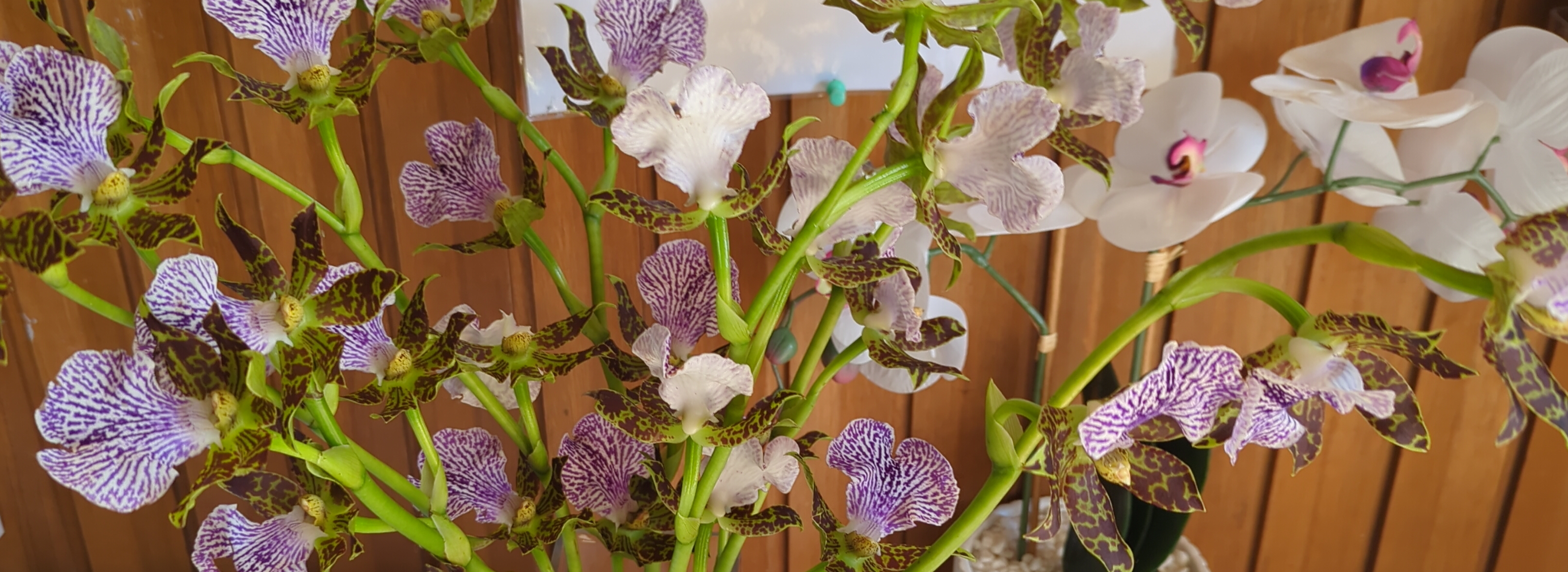
Recently, I was so surprised to enter a room graced by a vase of Zygopetalum orchid spikes covered in beautiful orchid blooms. The real surprise was the heady scent, not unlike that of hyacinths, that filled the whole room. Such an intoxicating scent that I had not expected in an orchid. The plant was Zygopetalum crinitum.This experience made me want to investigate further and I share this with readers here.
Zygopetalum is a small genus of 6 species that are epiphytic members of the orchid family (Orchidaceae). They grow in cool rainforest environments and are native to Peru, Paraguay, Bolivia, Brazil and Northeast Argentina.
The genus name, Zygopetalum, derive from the Greek word, zygon, meaning “yoked” and petalon, meaning “petal.” This literally means “yoked petal” and refers to the lip that yokes other segments of the flower together.
Zyopetulum orchids are very popular indoor plants because they are easy to grow, and for the beauty of the flowers and their heady fragrance.
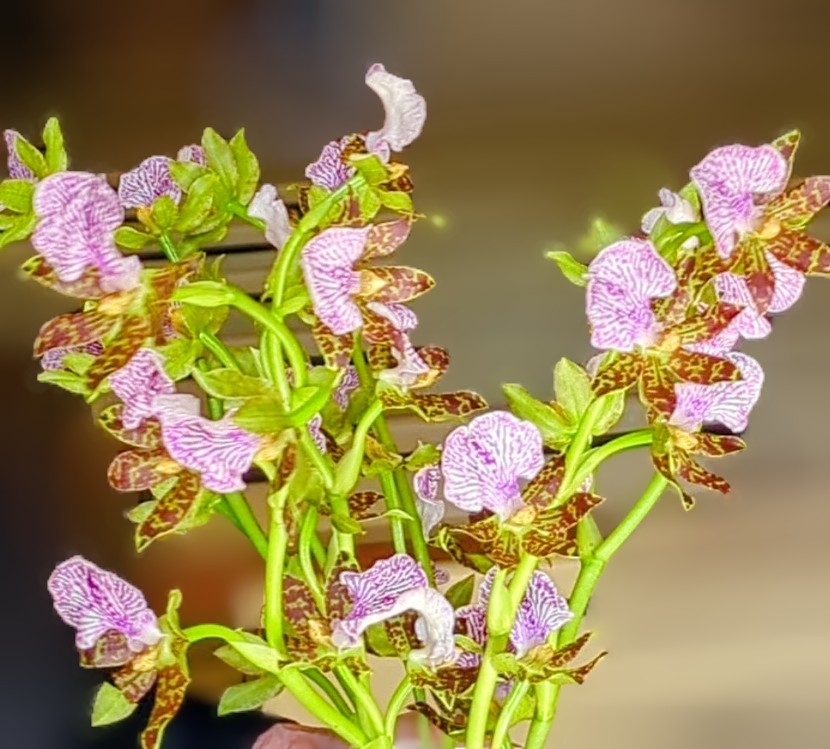
The inflorescence is an erect, raceme spike often reaching 60 cm in length that extends beyond the leaves. These arise from a pseudobulb, a storage organ found in many epiphytic and terrestrial orchids. It is derived from a thickening of the part of the stem. (see the diagram in the botanic image below. You can click on the image for more detail.) These grow laterally from the base of the pseudobulb,
Each spike bears 4 to 12 flowers, each measuring 5–7.5 cm in diameter
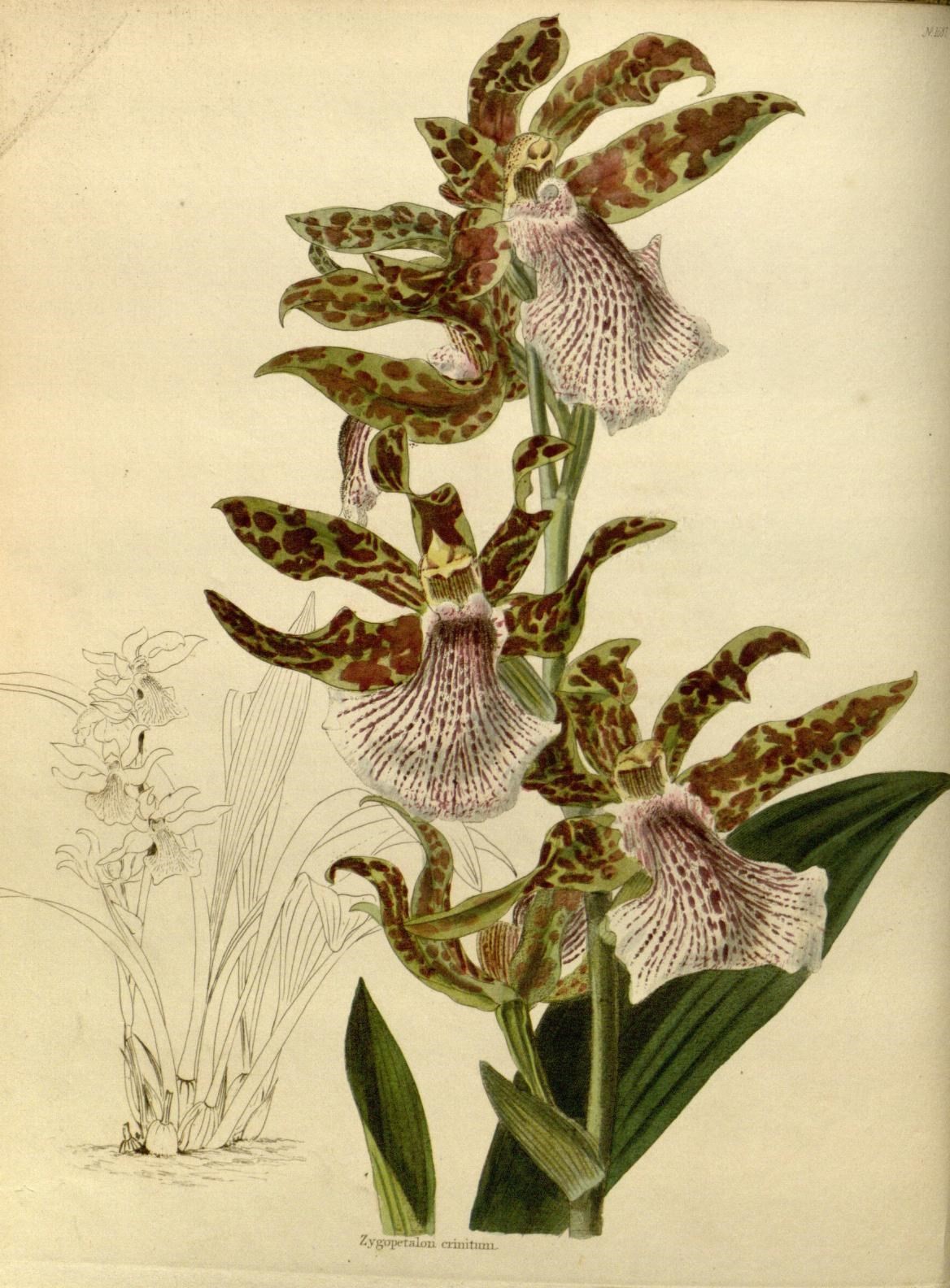
Zygopetalum orchids have glossy, strap-like, and deeply ribbed leaves. These grow in fans from the ovoid-conical pseudobulbs and are typically light green and up to 60 cm long.
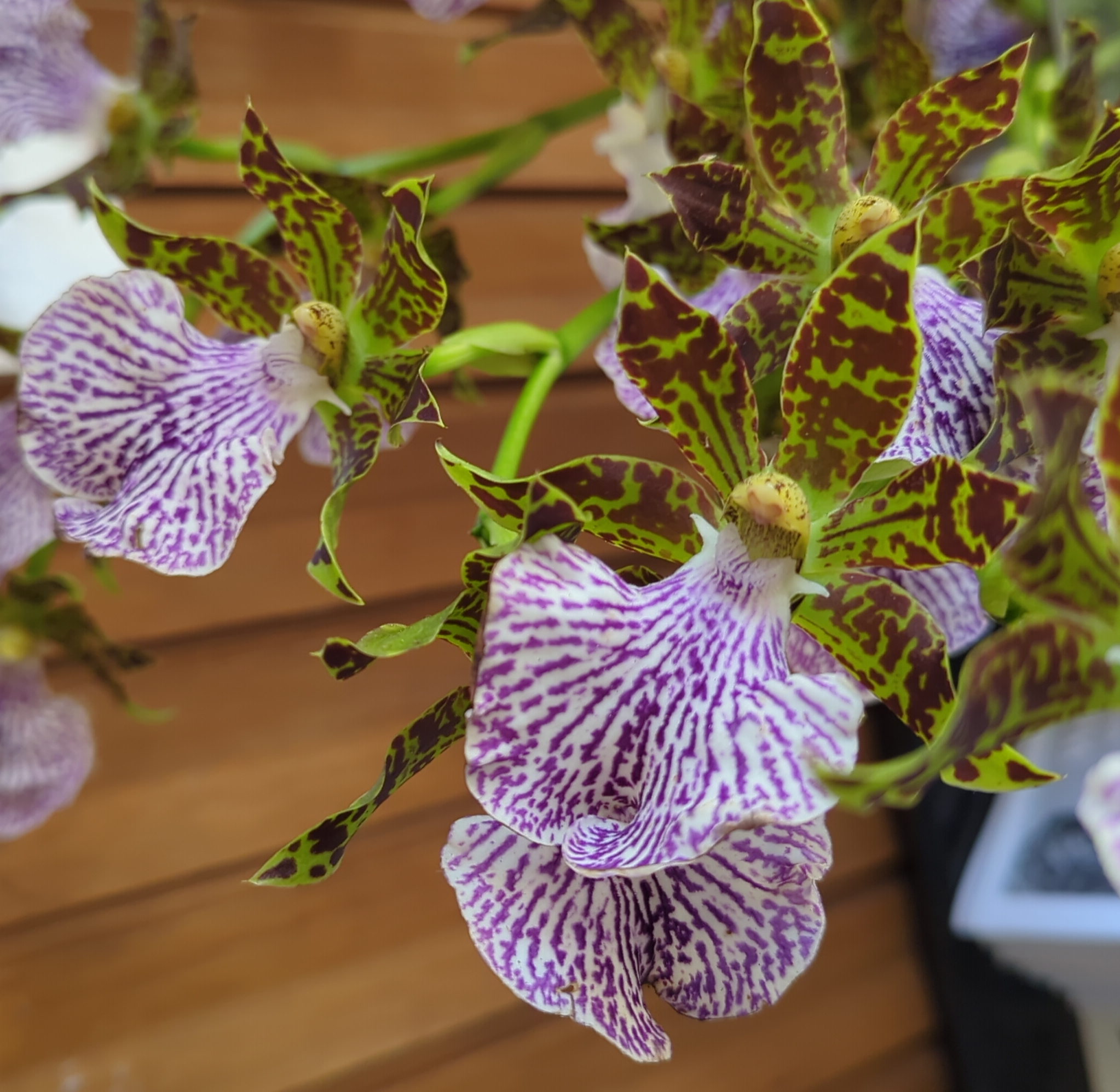
The flowers have green petals and sepals that are spotted with purple, brown, or burgundy.
The most attractive part of the flower is the large, tri-lobed lip (labellum), which is typically white and streaked with purple, violet, or blue, topped with a yoke-shaped crest (from where the genus gets its name, meaning yoked petal.)
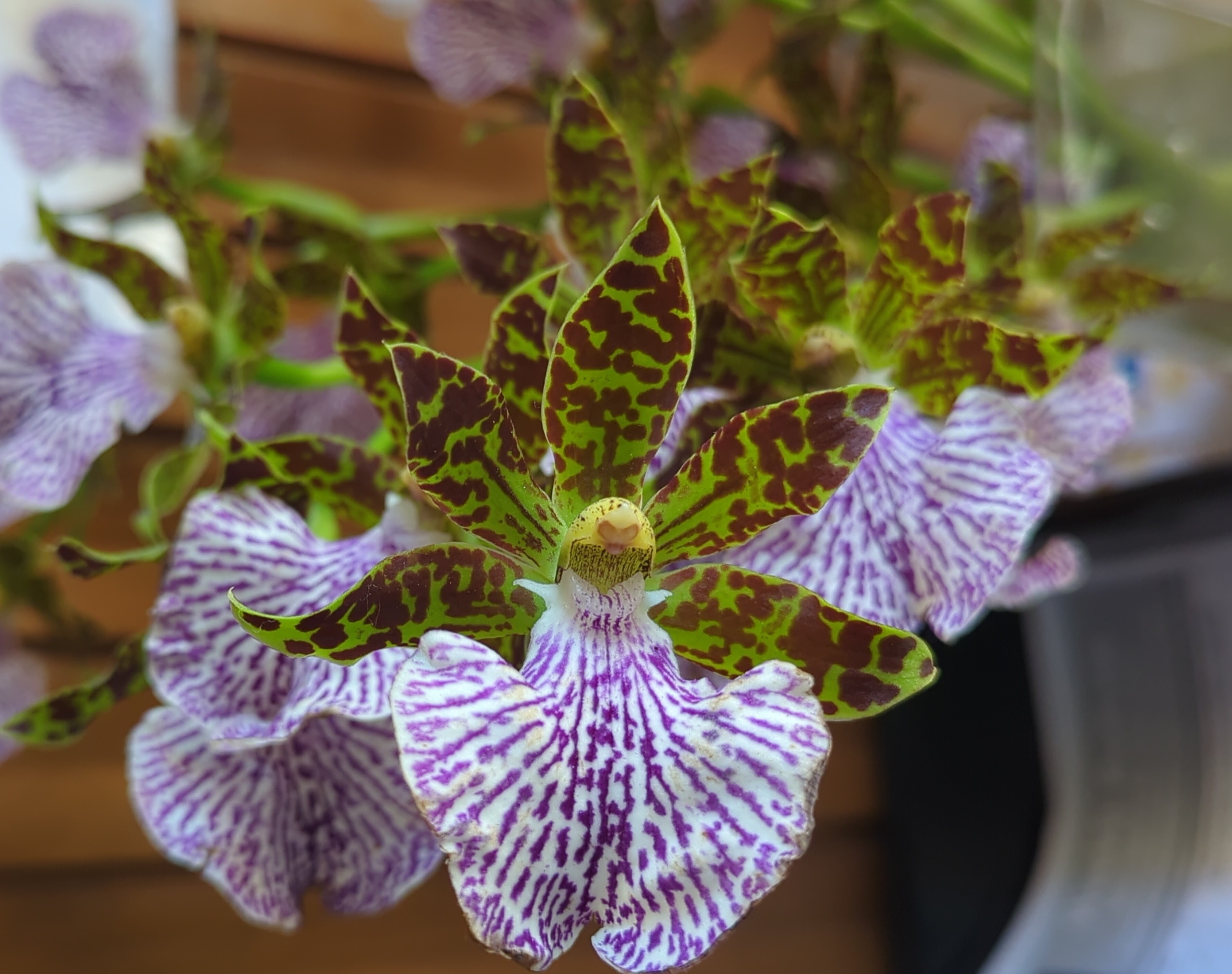
Zygopetalum flowers usually appear in winter or early spring and can last from several weeks up to three months if protected from direct sunlight during the blooming stage.
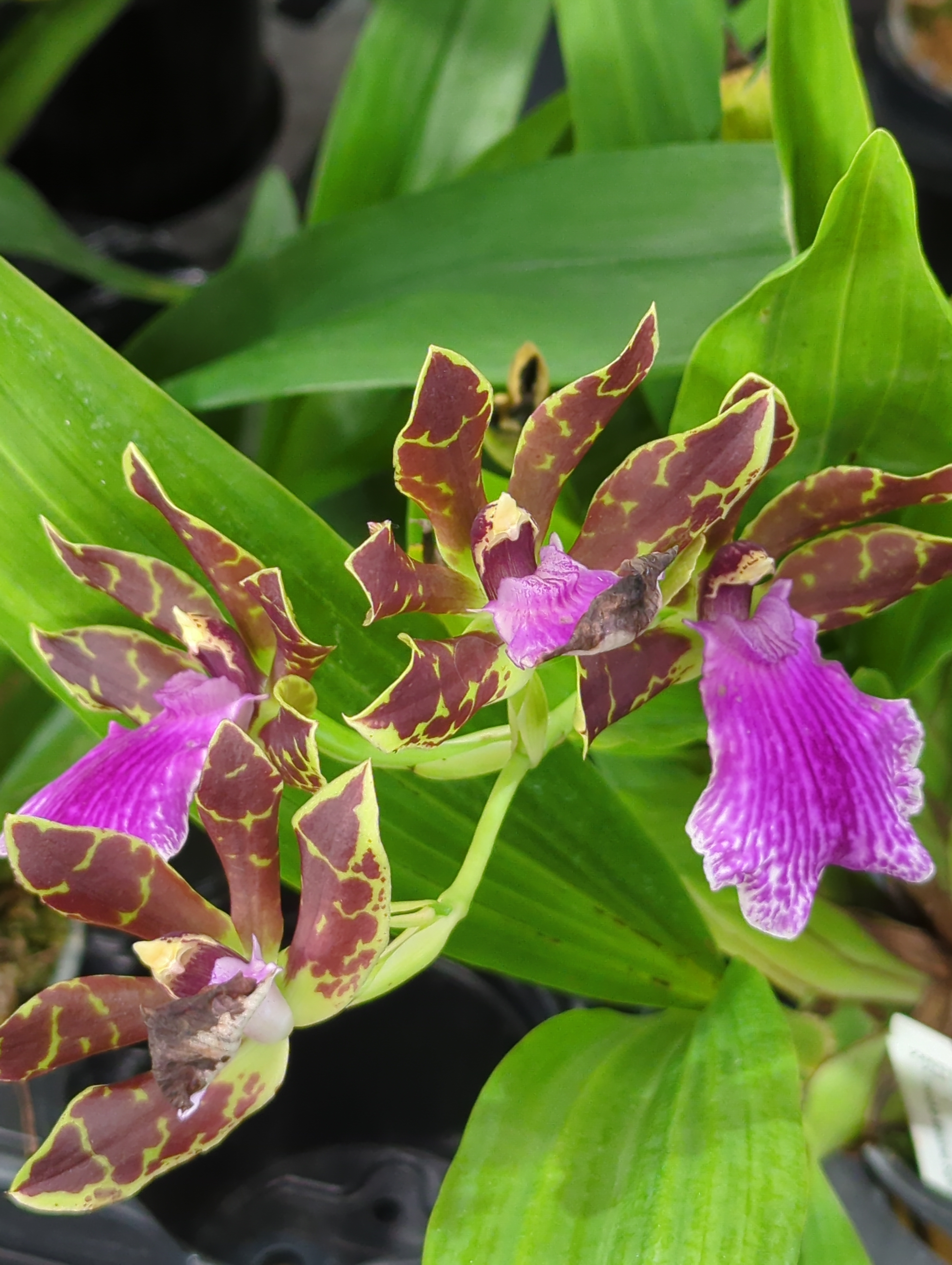
There are many hybrid species of Zygopetalum and the three images below show the highly striped petals and deeply coloured labellum of Zygopetalum Jumping Jack ((Skippy Ku x Artur Elle)
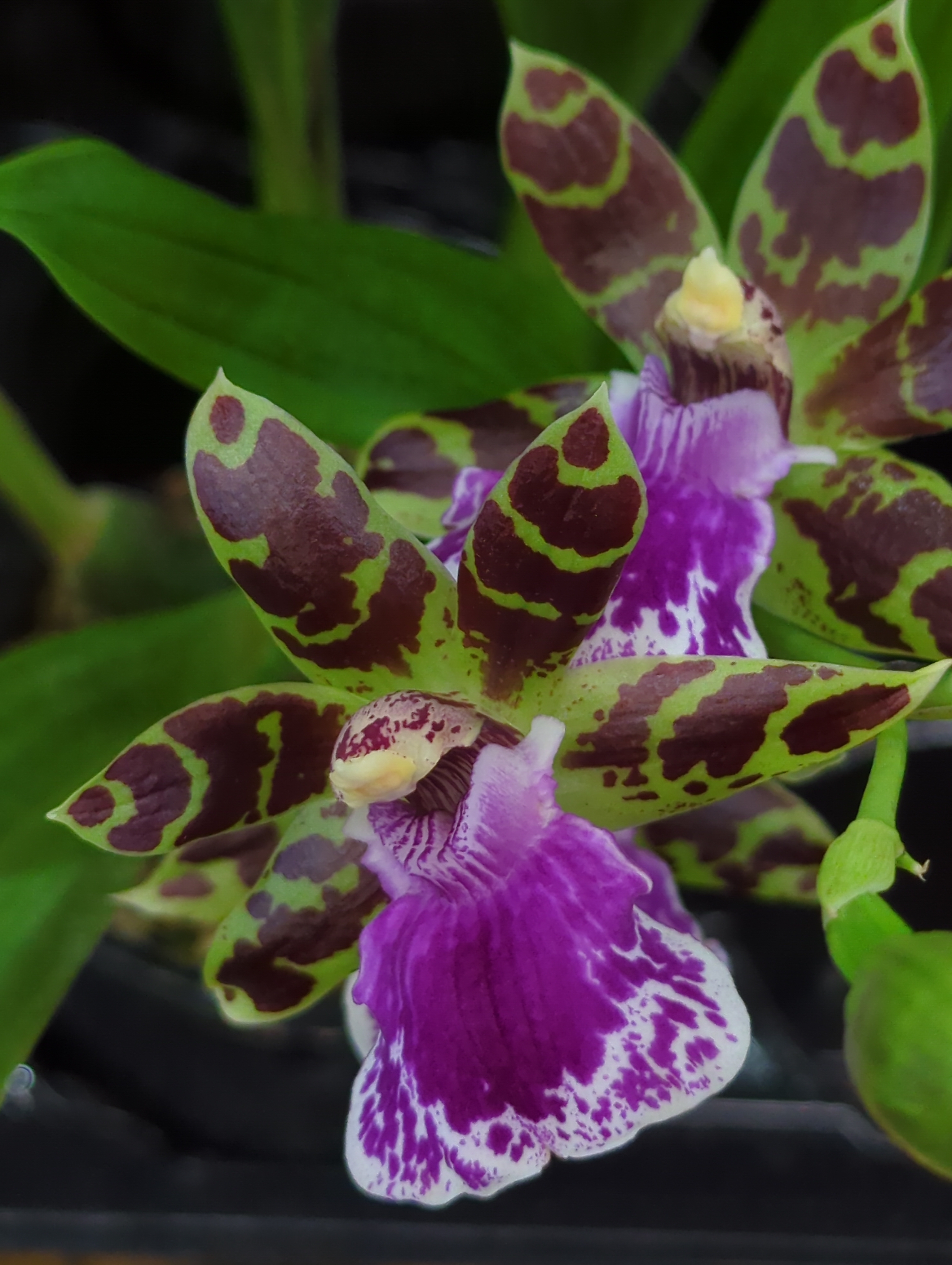
Note the glossy leaves and their texture. These beautifully complement and contrast with the beauty of the flowers.
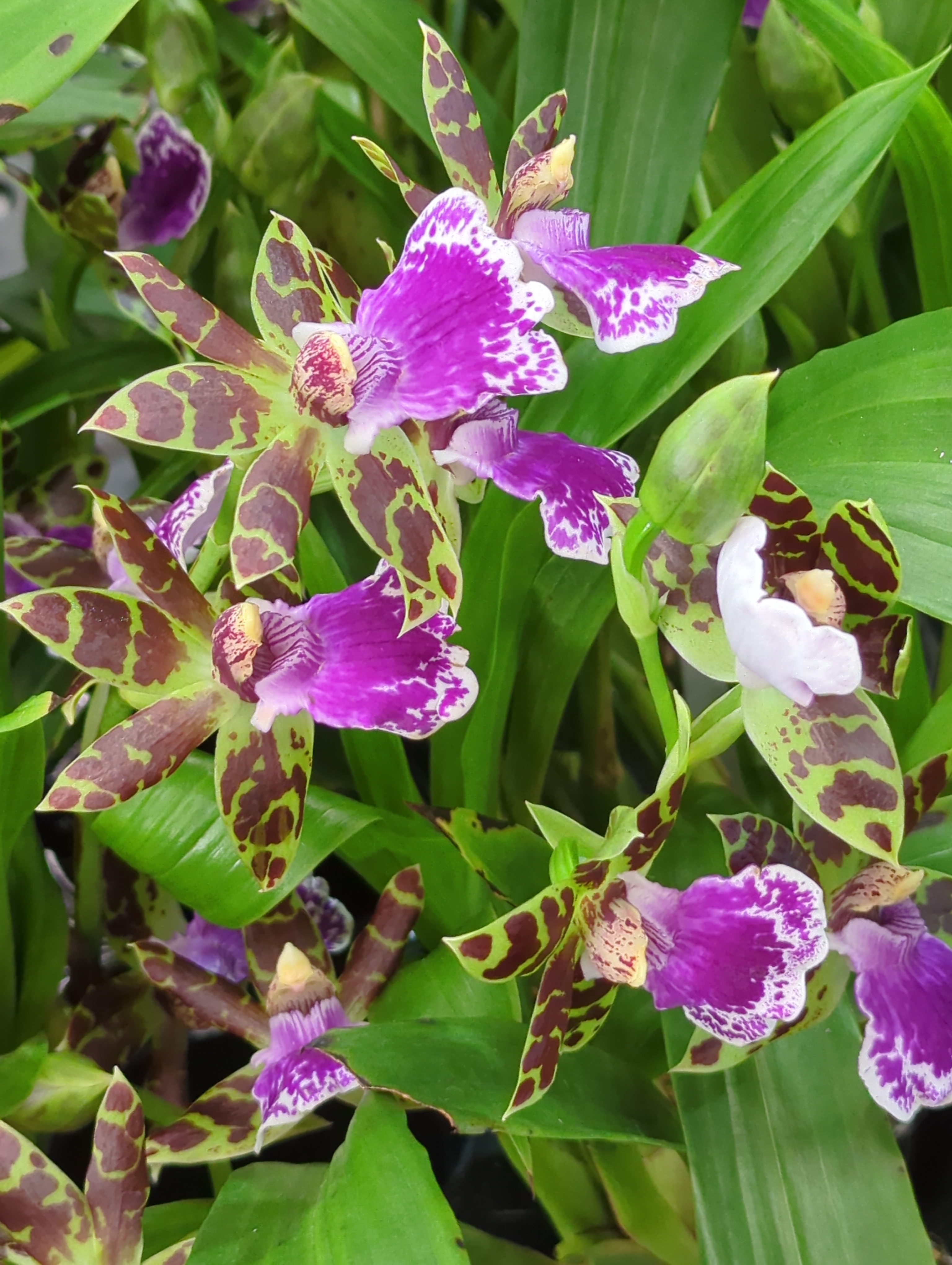
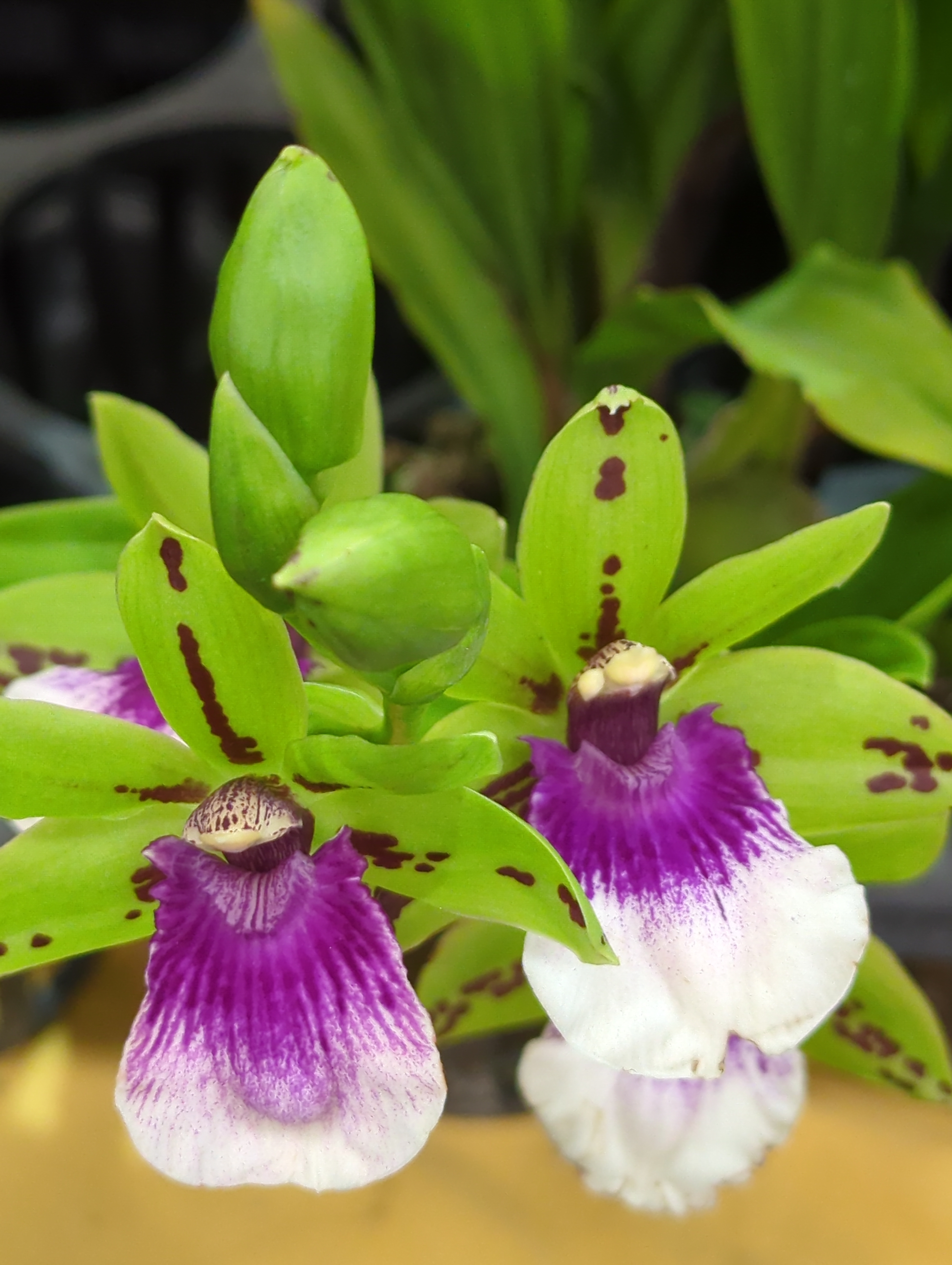
The image below shows the hybrid Zygopetulum Adelaide meadow which has light green petals with less spotting and a bright showy magenta and white labellum
Cultivation:
Considerations:
Zygopetulum orchids mostly grow in rainforests and are therefore used to a humid environment but as they are epiphitic they cannot tolerate soggy potting mixes. They are used to sheltered filtered light and protected from rain by the overhead trees they grow upon. These natural conditions should be taken into consideration when growing them in the indoor environment.
Container and Potting Soil:
Choose plastic or clay pots that are shallow with adequate drainage holes; clear plastic orchid pots allow monitoring of root health.
Select a pot that will hold at least 3 pseudobulbs with a margin of free space of 2.5 cm at the sides of the pot. This will allow the plant to grow over 1-2 years.
The best soil composition for planting Zygopetalum orchids is a light, porous, and moisture-retentive mix that ensures excellent drainage while preventing the roots from drying out completely. Choose a premium orchid potting bark and amend with perlite to ensure adequate aeration around the roots.
Light Conditions:
Zygopetalum orchids need bright but indirect light intensity in order to thrive. Positioned where they get plenty of light but never direct sunlight on them.
Temperature and Humidity:
Zygopetalum orchids prefers a temperature of 15-29 C. (Cool nights are needed to trigger flowering.) and flourish in a humidity of 65-75%.
Keep the plants away from drafts, heat sources,and air conditioning unit
Watering:
Zygopetalums require plenty of water during the growing period. These orchids do not go on a fully dormant during winter, so this must be considered.
In their native habitat the rainforest, winter and autumn are wet while spring and summer are wetter. This means that Zygopetalum should be watered every two days in the hotter months and around once a week in when the growing phase in autumn when the water storing pseudobulbs are mature.
Never leave the soil to completely dry because Zygopetalum orchids do not experience any dry period in their natural habitat.
When watering Zygopetalum orchids, avoid getting the pseudobulbs wet to avoid rotting and fungal infections. Aa these plants are sensitive to mineral build-up use rainfall or distilled water.
I hope you will look out for this stunning orchid to bring beauty and fragrance to your home.
The image below is an image taken of Zygopetalum crinitum growing on a tree in Brazil.
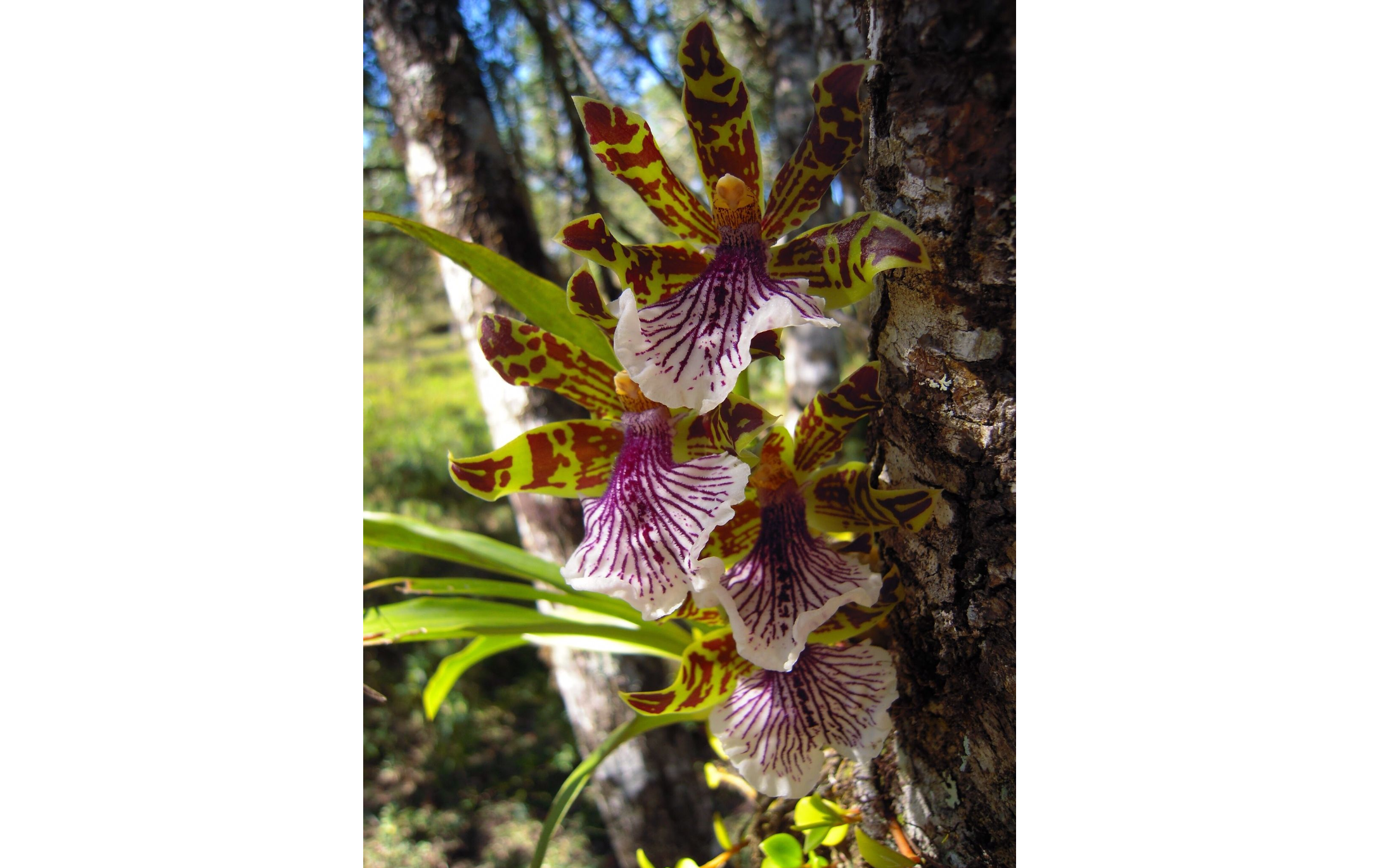
Zygopetalum crinitum G.Lodd. observed in Brazil by Mariana Amado Costa (licensed under CC BY-NC 4.0)

